
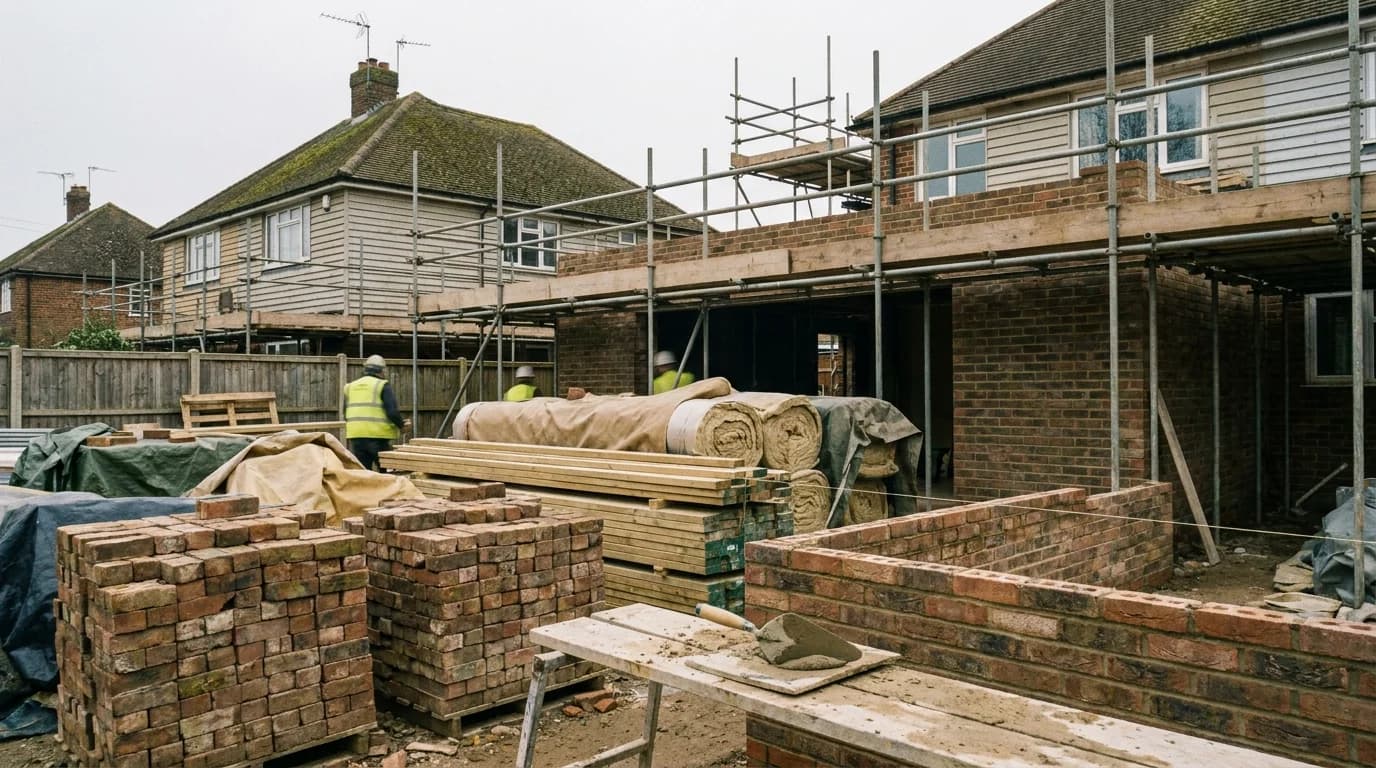
How to avoid cowboy builders: a homeowner checklist
Cowboy builders cost UK homeowners millions every year. Learn the warning signs, the essential checks and the paperwork that protects you before any work begins.
- Category
- Avoiding builder scams
- Author
- Star Hawk Builders Merchant
- Date
- 12 September 2024
- Read time
- 6 min
Avoiding builder scams · Star Hawk Builders Merchant
Cowboy builders cost UK homeowners millions every year. Learn the warning signs, the essential checks and the paperwork that protects you before any work begins.
6 min read · Published 12 September 2024
A good builder will transform your project. A bad one can leave you with shoddy work, an empty bank account and months of stress. Cowboy builders and rogue traders are not always easy to spot at first, but there are clear warning signs if you know what to look for.
If you are comparing builders for an extension or renovation, our case studies show the kind of well-run projects Star Hawk Builders Merchant supplies, and you can request a quote once you have a materials schedule.
Whether you are planning a loft conversion in Reading, an extension in High Wycombe or a full renovation in Guildford, the checks below will help you hire with confidence.
Warning signs that should make you walk away
Some red flags are obvious. Others are easier to miss when you are excited to get started.
- Pressure tactics: "I can start tomorrow if you pay a deposit today" or "This price is only valid until 5pm."
- No paperwork: no written quote, no contract, no insurance documents.
- Cash only: especially large upfront payments with no VAT invoice.
- Vague about materials: cannot explain what blocks, insulation or timber they will use.
- No fixed address: only a mobile number and a generic email address.
- Unrealistically cheap: if one quote is 40% lower than the others, ask why.
Trust your instincts. A professional builder will welcome questions and give you time to decide.
Do these checks before you sign anything
1. Ask for references — and visit them
A reputable builder will have recent customers happy to show off the work. Ask for two or three addresses and turn up unannounced if possible. Look at the finish, ask about deadlines, and ask whether the final price matched the quote.
2. Verify insurance
Ask for a copy of:
- Public liability insurance (usually at least £1m).
- Employer's liability insurance if they have staff.
- Contractor's all-risk insurance for larger projects.
Do not just look at a certificate. Call the insurer or broker to confirm the policy is active.
3. Check the company
If they trade as a limited company, search Companies House. Look at:
- Date of incorporation (brand-new companies are higher risk).
- Filing history and whether accounts are up to date.
- Any dissolved or struck-off companies with similar names.
Sole traders can be perfectly legitimate, but you still need a written contract and a verifiable address.
4. Get three itemised quotes
Three quotes give you a market price. Make sure each quote covers the same scope:
- Labour and materials separately.
- Waste removal.
- VAT.
- Payment schedule.
- Start and estimated completion dates.
If one quote is missing details, ask for a revised version. Vague quotes lead to disputes later.
Check their online presence and reputation
A legitimate builder usually has some digital footprint. Look for:
- A professional website with a business address and contact details.
- A registered company number and VAT number if applicable.
- Reviews on Google, Checkatrade or Which? Trusted Traders, read with a critical eye.
- Photos of completed work that look consistent rather than generic stock images.
Be suspicious if the only trace of the builder is a mobile number and a Facebook page created last week. Action Fraud warns that rogue traders often change names and numbers to stay ahead of complaints.
Ask a builders merchant
Builders merchants see the same trades week in, week out. They know who pays their bills, who returns faulty materials without argument and who runs tidy, organised sites.
If you are unsure about a builder, ask the trade counter at your local merchant whether they have heard of them. Star Hawk staff across the South East work with reputable local builders every day and can often confirm whether a trader is known and respected.
The contract protects both of you
A simple written contract should include:
- A detailed description of the work.
- Materials specification, including grades and quantities where relevant.
- Total price and payment schedule.
- Start date and estimated completion date.
- What happens if there are delays.
- Warranty period (typically six to twelve months for snagging).
For larger projects, consider using a JCT homeowner contract or having a solicitor review the document.
Manage payments carefully
The golden rule is: never pay the full price before the job is complete. A fair schedule looks like this:
- Up to 25% deposit on signing.
- Staged payments as milestones are completed (foundations, watertight, plastering, final fix).
- Final 5–10% retained until snagging is finished.
Pay by bank transfer or card wherever possible so there is a record. Cash is harder to trace and offers less protection if things go wrong.
Watch the materials
Cowboy builders sometimes cut costs by substituting cheaper materials without telling you. Ask for a materials schedule before work starts and compare deliveries against it.
For example, if your specification calls for 7.3N concrete blocks, 25kg Portland cement and 100mm PIR insulation, check that those exact products arrive on site. A reliable builders merchant can supply a written delivery note that matches your order, giving you an independent paper trail.
What to do if things go wrong
If a builder disappears, does substandard work or demands more money unexpectedly:
- Stop work and gather all paperwork, photos and communications.
- Write to the builder formally setting out the problem and a reasonable deadline to fix it.
- Contact your insurer if you have legal expenses cover.
- Report rogue traders to Trading Standards and Action Fraud.
- For disputes over workmanship, a chartered surveyor or independent expert report can be valuable evidence.
Keep records during the build
Even after you have hired a reputable builder, good record-keeping protects both of you. Keep copies of:
- The signed contract and any variations.
- All invoices and payment receipts.
- Delivery notes for materials.
- Photographs of work at each stage.
- Emails or messages confirming decisions.
If a dispute arises, these records are your evidence. A cowboy builder often relies on the fact that homeowners cannot prove what was agreed.
Get a second opinion if something feels wrong
If the builder starts asking for money outside the agreed schedule, refuses to show you building control sign-off, or the quality of work drops suddenly, stop and get advice. A quick visit from an independent builder or surveyor can tell you whether your concerns are justified.
It is much cheaper to pause work for a day than to let poor workmanship continue for a week. Trustworthy builders will understand your caution; only cowboys will try to make you feel guilty for checking.
Finally, never feel embarrassed to walk away from a builder who makes you uncomfortable. A legitimate trade professional understands that a home is your biggest asset and will respect a careful hiring process. Cowboys rely on speed, shame and silence to take your money.
Bottom line
The cheapest quote is rarely the best quote. A professional builder will be transparent about costs, materials and scheduling from day one. Do your checks, get everything in writing, and keep control of payments. The extra effort at the start will save you thousands later.
Frequently asked questions
What are the biggest warning signs of a cowboy builder?
Pressure to decide immediately, quotes far below everyone else, no fixed address, no insurance, requests for large cash deposits, refusal to put anything in writing, and unusually vague answers about materials or scheduling.
How do I check a builder is legitimate?
Ask for a VAT registration number if applicable, check Companies House, verify insurance certificates directly with the insurer, and follow up references by visiting past jobs in person.
Should I always get three quotes?
Yes. Three itemised quotes give you a sensible price range and help you spot a quote that is unrealistically low or suspiciously high.
What payment terms are fair?
A small deposit (up to 25%) is normal, followed by staged payments tied to completed milestones. Never pay the full balance before the job is finished and snagged.
Need materials for your project?
Send us your material schedule and we'll come back with stock availability, a written quote and a delivery slot, usually within the hour during trade hours.
Related articles
More guides and advice to help your building project run smoothly.
First-time homeowner's guide to building works
Planning your first building project can feel overwhelming. This guide breaks down budgeting, scheduling, choosing materials and working with builders so you can move forward with confidence.
How to find the right builder for your project
Finding the right builder is the difference between a smooth project and a nightmare. Here is a practical vetting process that protects your money, your home and your sanity.