
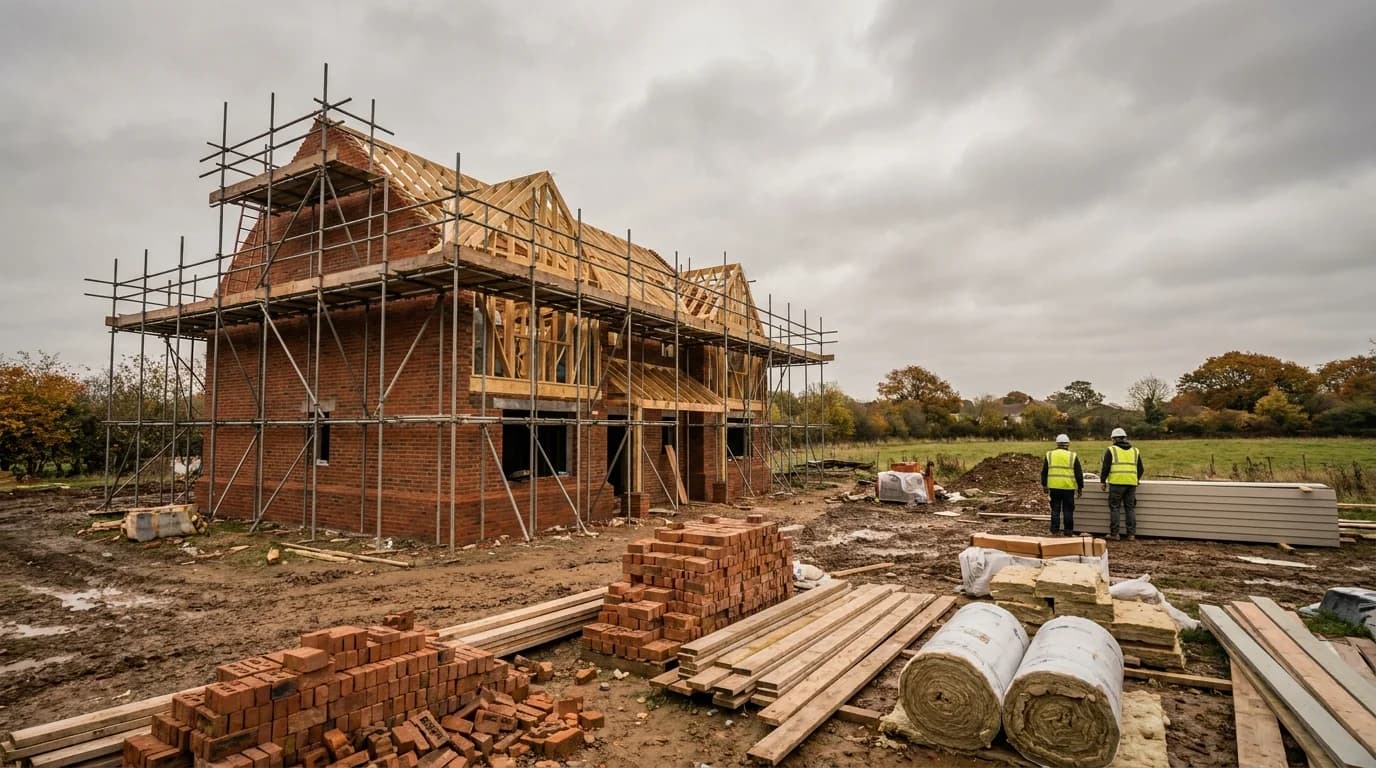
The best time of year to start building work
Spring and summer are busy, expensive and hard to book. Winter is quieter, trades are more available and prices can be softer. Here is how to choose the right season for your project.
- Category
- Timing & seasonality
- Author
- Star Hawk Builders Merchant
- Date
- 18 January 2024
- Read time
- 6 min
Timing & seasonality · Star Hawk Builders Merchant
Spring and summer are busy, expensive and hard to book. Winter is quieter, trades are more available and prices can be softer. Here is how to choose the right season for your project.
6 min read · Published 18 January 2024
Most homeowners instinctively want to start building work in spring. The days are longer, the weather is warmer and it feels like the right time to begin. The problem is that everyone else thinks the same thing.
Spring and summer are the busiest seasons in construction. Builders are fully booked, prices are firmer and good trades are harder to find. If you are flexible about when you start, you can often get better value, faster scheduling and more attention by thinking differently about the calendar.
Why spring and summer are so busy
From March to September, demand for builders surges. Homeowners who put off work over winter suddenly want to start. Gardens, extensions and loft conversions all become urgent because people want the disruption done before the next Christmas or summer holiday.
The result:
- Longer lead times. A builder who can start in six weeks in January may need twelve to sixteen weeks in April.
- Firmer pricing. When builders have a full order book, they do not need to sharpen their pencil to win work.
- Less flexibility. A busy builder is juggling multiple sites. If your project hits a snag, you may wait longer for them to return.
That does not mean spring is a bad time to build. It is simply the most competitive time, which usually means the most expensive.
The case for starting in autumn or winter
October to February is the quieter season for most domestic builders. This is when you can often negotiate better terms and get a more focused team on your project.
Better availability
Tradespeople who were fully booked in summer often have gaps in winter. A builder who could not even quote in June may be able to start in November. That availability means:
- Shorter lead times.
- More consistent attendance on site.
- Less pressure to rush the job to move on to the next one.
Softer pricing
When demand drops, prices often follow. You may not see a formal discount, but quotes in winter can be 5–10% lower than the same project quoted in May. Builders would rather keep their team working through the quiet months than lay people off.
More attention from your builder
A builder with fewer simultaneous projects has more mental bandwidth for yours. Site supervision is tighter, problems are solved faster and communication is usually better.
What works in winter — and what does not
Winter is not ideal for every stage of construction. Some tasks are straightforward in cold weather; others need protection or should wait.
Works well in winter
- Groundworks and foundations: Digging and concrete pouring can proceed if frost protection is in place.
- Structural steelwork: Steel beams and frames can be erected in cold, dry weather.
- Blockwork and brickwork: Can continue with covers and heating, though very cold or wet days may slow progress.
- Internal trades: Carpentry, electrics, plumbing, plastering and tiling are largely unaffected by cold weather once the building is weathertight.
Better left for warmer weather
- External rendering: Frost can damage fresh render. Most renders need temperatures above 5°C to cure properly.
- Exterior painting: Cold and damp weather prevents paint from curing and adhering correctly.
- Landscaping: Turf, planting and patio laying are best done in spring or autumn.
- Roof tiling in heavy frost: Tiles can become brittle and more likely to break.
The key is sequencing. Start the structural and weathertight work in winter, then schedule the external finishes for spring.
The extra costs of winter building
Winter savings are not automatic. Cold weather can add costs that offset some of the labour discount:
- Temporary heating: Propane or electric heaters to keep workspaces above freezing.
- Frost protection: Heated blankets, insulation boards and enclosures for fresh concrete and mortar.
- Shorter working days: Less daylight means fewer productive hours.
- Site access: Mud, ice and snow can slow deliveries and make the site harder to work on.
For most projects, these costs are modest if planned for. The mistake is to pretend winter is the same as summer and then panic when the temperature drops.
How to plan a winter start
- Get your planning and building regulations approved in summer. Do not let paperwork delay you once the builder is ready.
- Order materials early. Merchant stock and delivery slots can tighten before Christmas.
- Discuss winter working with your builder. A good builder will already have a plan for frost protection and sequencing.
- Build in extra time. Allow an extra week or two for weather-related delays.
- Schedule external finishes for spring. Get the building watertight and warm, then finish the outside when conditions improve.
Sequencing work around the weather
Smart sequencing is what makes an off-season build successful. The aim is to keep the project moving while protecting anything that cold or wet could damage.
Start with the messy, weather-tolerant stages: demolition, excavation, foundations and drainage. These are unaffected by rain and only stop in severe frost or snow. Next, get the structure up and the roof on so the building is watertight. Once the shell is secure, internal trades can continue comfortably through the coldest months.
Talk to your builder about a temporary heating plan before work starts. A small diesel or electric heater in a sealed extension costs far less than repairing frost-damaged work. The Federation of Master Builders recommends agreeing a winter-working plan in writing so both sides know who pays for protection and what happens if weather stops play.
Booking your builder in the off-season
If you want to start in November or January, begin talking to builders in late summer. Many trades set their winter schedules in September and October, and the best ones still get booked up even if the market is quieter.
Get at least three written quotes and ask each builder specifically about their winter experience. A builder who has worked through several winters will be confident about frost blankets, concrete accelerators and drying times. One who sounds nervous about cold weather may not be the right choice for a January start.
Do not forget that building regulations approval still applies whatever the season. Inspections for foundations, damp-proof courses and insulation are easier to arrange in winter because building control officers also have lighter diaries.
Regional differences
In the South East, where Star Hawk operates, winters are generally mild enough for most structural work to continue. Frost is less severe than in the North or Scotland, and rainfall, while frequent, is manageable with good site management.
That makes Berkshire, Buckinghamshire, Surrey, Hampshire, Oxfordshire and West London particularly good regions for autumn and winter starts.
The best month to start different projects
| Project type | Best start months | Reason |
| Extension | September–November or January–March | Avoid spring rush; get watertight by winter. |
| Loft conversion | October–February | Mostly internal work; winter has little impact. |
| Renovation | September–March | Internal trades can continue through cold weather. |
| New build | September–November | Groundworks before frost; structure through winter. |
| Garden office | April–June | Exterior finishes need warmer, drier weather. |
| Driveway/patio | April–June or September | Ground needs to be workable and dry. |
The real answer: the best time is when you are ready
Seasonality matters, but it is secondary to being properly prepared. A well-planned winter project with a good builder will run more smoothly than a rushed spring project with a poor one.
Before you decide when to start, make sure you have:
- Planning permission or permitted development confirmed.
- Building regulations approval in progress or granted.
- A fixed written quote and contract.
- A builder who is genuinely available.
- Materials scheduled and first deliveries booked.
- Finance in place and a payment schedule agreed.
If you can tick those boxes in autumn, starting in winter can save you money, time and stress. If you are not ready until April, then accept that you are in the peak market and book your builder as early as possible.
Whenever you start, get your material prices locked in early. Request a quote from Star Hawk Builders Merchant and find your nearest branch for same-day or next-day delivery across the South East.
Frequently asked questions
Is it cheaper to build in winter?
It can be. Labour rates are often slightly softer in winter because demand is lower, and some merchants offer end-of-year deals. However, cold-weather working can add costs for heating and protection.
Can you pour concrete in winter?
Yes, but it needs protection. Concrete should not be allowed to freeze for at least 48 hours after pouring. Heated enclosures, frost blankets and accelerators can be used but add cost.
When are builders busiest?
March to September is peak season. Lead times are longest in spring when homeowners plan work for the summer.
What work can be done in winter?
Groundworks, foundations, structural work, steel erection and interior trades can all proceed in winter with proper planning. Exterior finishing like rendering and painting is usually better left for warmer, drier weather.
Need materials for your project?
Send us your material schedule and we'll come back with stock availability, a written quote and a delivery slot, usually within the hour during trade hours.
Related articles
More guides and advice to help your building project run smoothly.
How to find the right builder for your project
Finding the right builder is the difference between a smooth project and a nightmare. Here is a practical vetting process that protects your money, your home and your sanity.
Why the cheapest builder quote often costs you more
A cheap quote is tempting, but it often hides missing items, lower specifications and future extras. Here is why the lowest price rarely means the best value.