
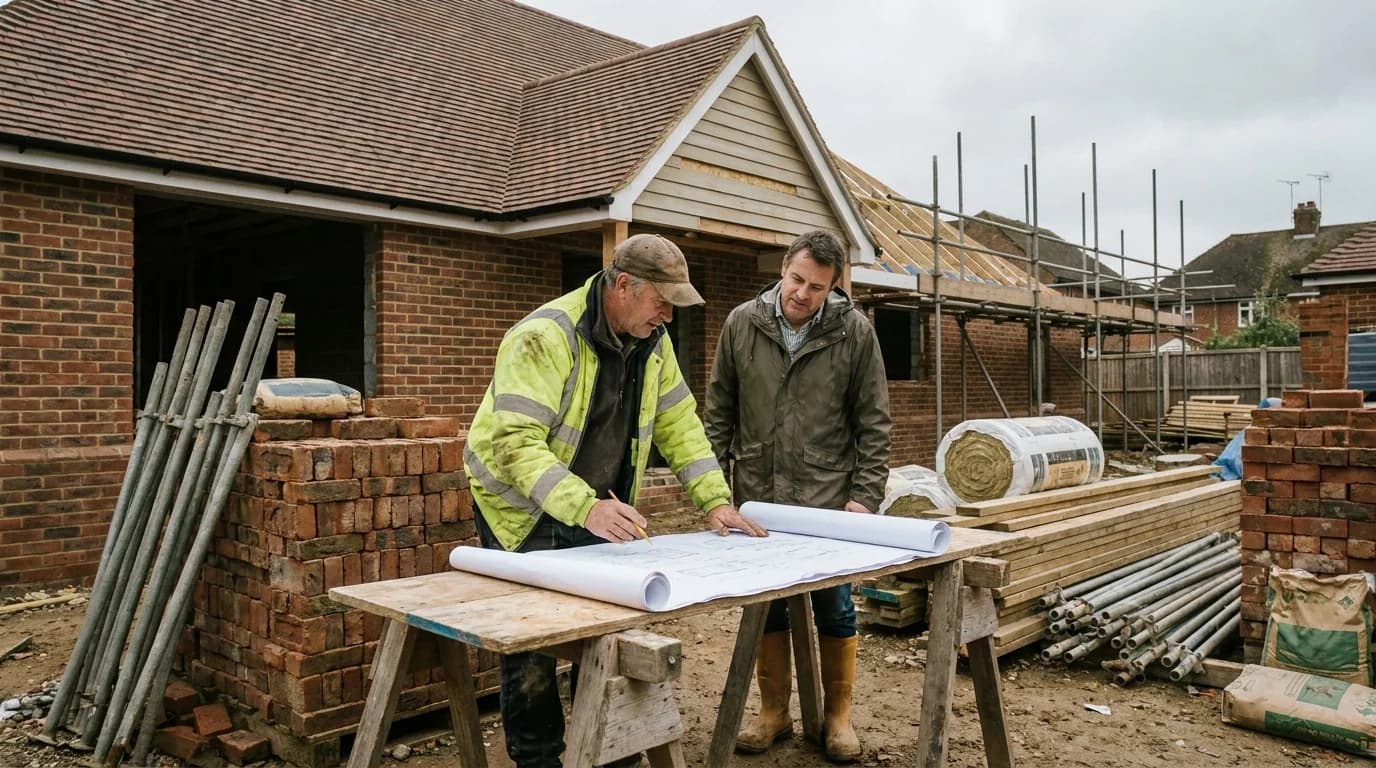
Why the cheapest builder quote often costs you more
A cheap quote is tempting, but it often hides missing items, lower specifications and future extras. Here is why the lowest price rarely means the best value.
- Category
- Budgeting
- Author
- Star Hawk Builders Merchant
- Date
- 14 March 2024
- Read time
- 6 min
Budgeting · Star Hawk Builders Merchant
A cheap quote is tempting, but it often hides missing items, lower specifications and future extras. Here is why the lowest price rarely means the best value.
6 min read · Published 14 March 2024
When three builders quote for the same job and one is dramatically cheaper, most homeowners feel a surge of hope. Maybe this builder is more efficient. Maybe the others are overcharging. Maybe you have found a bargain.
More often, the cheap quote is a warning sign. It is not that good builders never offer competitive prices, but a price that sits far below the others usually means something has been left out, underestimated or disguised. By the time the true cost appears, you are already committed — and the cheap quote has become the most expensive one.
What a cheap quote really means
A builder's price reflects three things: the cost of materials, the cost of labour and the builder's margin. If the total is significantly lower than other quotes for the same scope, at least one of those numbers is unrealistic.
Common reasons for a low quote include:
- Missing items. The builder has not included everything you asked for. Foundations, drainage, making good, decoration or waste removal may be absent.
- Lower specifications. The quote assumes basic materials when you expected mid-range or better. Cheaper blocks, thinner insulation, lower-grade timber.
- Unrealistic labour. The builder has underestimated how long the work will take. When the job overruns, they either cut corners or ask for more money.
- Exclusions buried in small print. Items marked "allowance" or "provisional sum" can inflate the final bill dramatically.
- No VAT. Some quotes exclude VAT to look cheaper. For a £40,000 project, that is an £8,000 surprise.
- Future variations. The builder plans to recover profit through change orders once work has started.
The psychology of the cheap quote
Homeowners naturally focus on the bottom line. A builder who quotes low knows this. They are buying the job, not pricing it honestly. Their goal is to get a foot in the door, then rely on the fact that once work has started, most homeowners will pay extra to avoid the disruption of stopping and finding someone else.
This is why the cheapest quote often leads to:
- Mid-project price increases.
- Arguments about what was included.
- Rushed or incomplete work.
- Materials being swapped for cheaper alternatives.
- The builder disappearing before finishing.
How to spot a quote that is too good to be true
1. It is more than 15–20% below the others
If one quote is £32,000 and the others are £45,000 and £48,000, the low quote needs explaining. Ask the builder to walk through every line item and explain why their price is lower.
2. The quote is vague
A single paragraph or a few bullet points is not a quote. It is an estimate. A proper quote lists the work, the materials, the labour, the waste removal, the VAT and the payment schedule.
3. Everything is "included"
"Materials and labour included" sounds reassuring, but it hides what those materials actually are. Two builders can both say "materials included" while one uses £8,000 of materials and the other uses £15,000.
4. Heavy use of provisional sums
Provisional sums are not dishonest, but too many of them mean the final price is unknown. If a quote has provisional sums for foundations, drainage, electrics and finishes, the "cheap" quote may not be cheap at all.
5. No site visit
A builder who quotes without seeing the site is guessing. Guesses are often too low because the builder has not accounted for access problems, ground conditions or existing defects.
The real cost of a cheap quote
The financial damage goes beyond the final bill. Cheap quotes create stress, delay and sometimes structural problems.
- Remedial work: Fixing botched jobs can cost 50–100% of the original price.
- Delay: A builder who underpriced the job may prioritise other work to make up the shortfall.
- Stress: Disputes over money sour the relationship and make the project miserable.
- Safety risk: Cutting corners on structural work, electrics or gas can put your family at risk.
The hidden cost of disputes
Disputes do not just cost money; they cost time and emotional energy. Citizens Advice reports that complaints about home improvement work often centre on unfinished jobs, poor quality and unexpected price rises — exactly the risks that come with a cheap quote.
If a disagreement escalates, you may need to pay for independent surveys, legal letters or even court action. Those costs quickly wipe out any saving from choosing the lowest bidder.
When a lower quote is genuine
Not every cheap quote is a trap. A lower quote can be legitimate if:
- The builder has lower overheads (small team, no showroom, local area).
- They have a gap in the diary and want to keep their team busy.
- They are pricing the same scope but with a simpler specification you have agreed.
- They have a trade relationship that gives them better material prices.
The difference is transparency. A genuine builder will explain why their quote is lower and show you exactly what is included.
How to question a low quote without causing offence
A professional builder will not be offended by sensible questions. Ask:
- "Can you walk me through why this quote is lower than the others?"
- "Which materials are included, and what grade are they?"
- "Are there any provisional sums or allowances that could increase?"
- "Is VAT included in the total?"
- "What happens if the job takes longer than expected?"
If the answers are vague or defensive, that tells you everything you need to know.
The impact on your home's value
A botched job does not just cost money to fix; it can reduce the value of your home. Poorly installed windows, inadequate insulation or visible cracks in brickwork will show up on a buyer's survey. You may have to discount the sale price or pay for remedial work before marketing the property.
By contrast, a fairly priced job done properly adds value and gives you paperwork — warranties, building control certificates and invoices — that future buyers will appreciate.
How to protect yourself
- Get at least three itemised quotes. Compare scope, specification and terms, not just price.
- Ask for a materials specification. Know what products are going into your home.
- Check for VAT. Make sure all quotes include or exclude VAT consistently.
- Limit provisional sums. Ask for fixed prices where possible.
- Visit references. Speak to past clients about whether the final price matched the quote.
- Read the contract. A fixed-price contract with a clear scope is your best protection.
The Federation of Master Builders also recommends never paying large deposits upfront and always using a written contract that includes a payment schedule tied to completed work.
The golden rule
If a quote seems too good to be true, it almost always is. The cheapest builder is rarely the best value. A fair price from a trustworthy builder who communicates clearly and finishes on time will cost you less in the long run than the bargain that turns into a nightmare.
To compare material allowances fairly, request an itemised materials quote from Star Hawk Builders Merchant. You can also see real project budgets in our case studies and find your nearest branch.
Frequently asked questions
Why is one builder's quote much lower than the others?
The builder may have left out items, used cheaper materials, underestimated labour, excluded VAT, or planned to add costs later through variations.
Should I always choose the middle quote?
Not automatically. Choose the quote that offers the clearest scope, fair pricing and a builder you trust. The middle quote is often a safer benchmark than the cheapest.
What does 'provisional sum' mean in a quote?
A provisional sum is an estimated allowance for work whose exact cost is not yet known. If the real cost is higher, you pay the difference.
Can a builder increase the price after quoting?
Only if the contract allows it, usually through variations or provisional sums. A fixed-price contract locks the price unless the scope changes.
Need materials for your project?
Send us your material schedule and we'll come back with stock availability, a written quote and a delivery slot, usually within the hour during trade hours.
Related articles
More guides and advice to help your building project run smoothly.
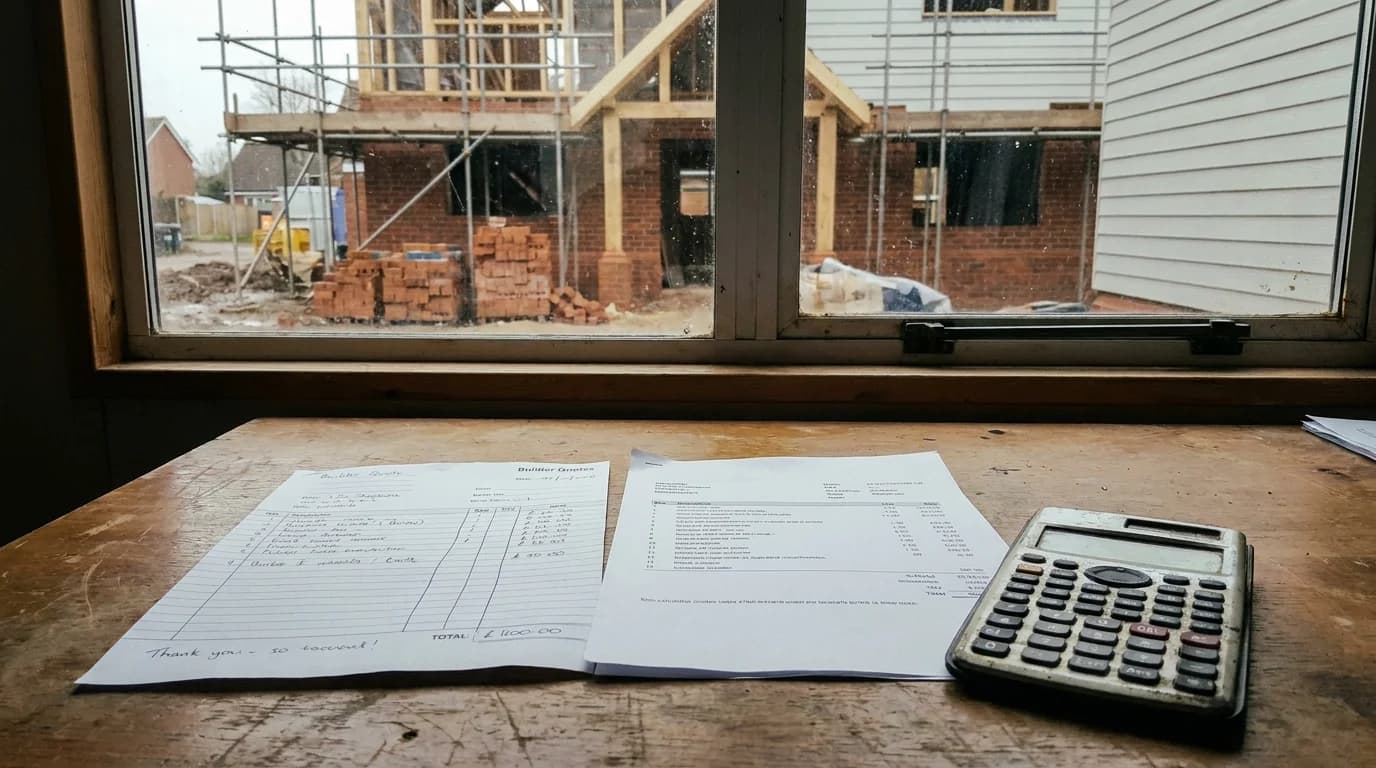
How to compare builder quotes line by line
Comparing builder quotes is not about finding the lowest number. It is about making sure every builder is pricing the same scope, specification and terms.
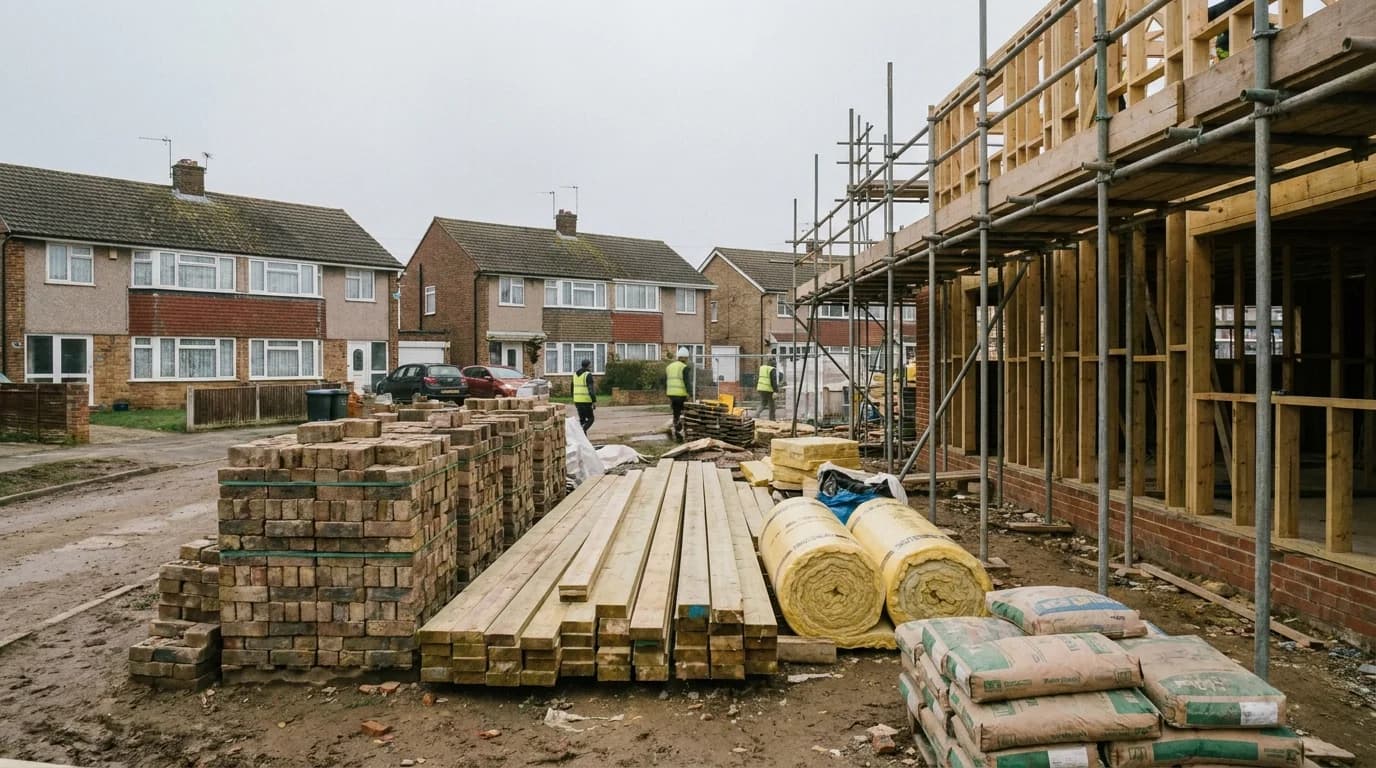
Why material prices matter before your first build
If you do not know what bricks, blocks, cement and timber actually cost, you cannot judge whether a quote is fair. Here is how to research material prices before your first build.