
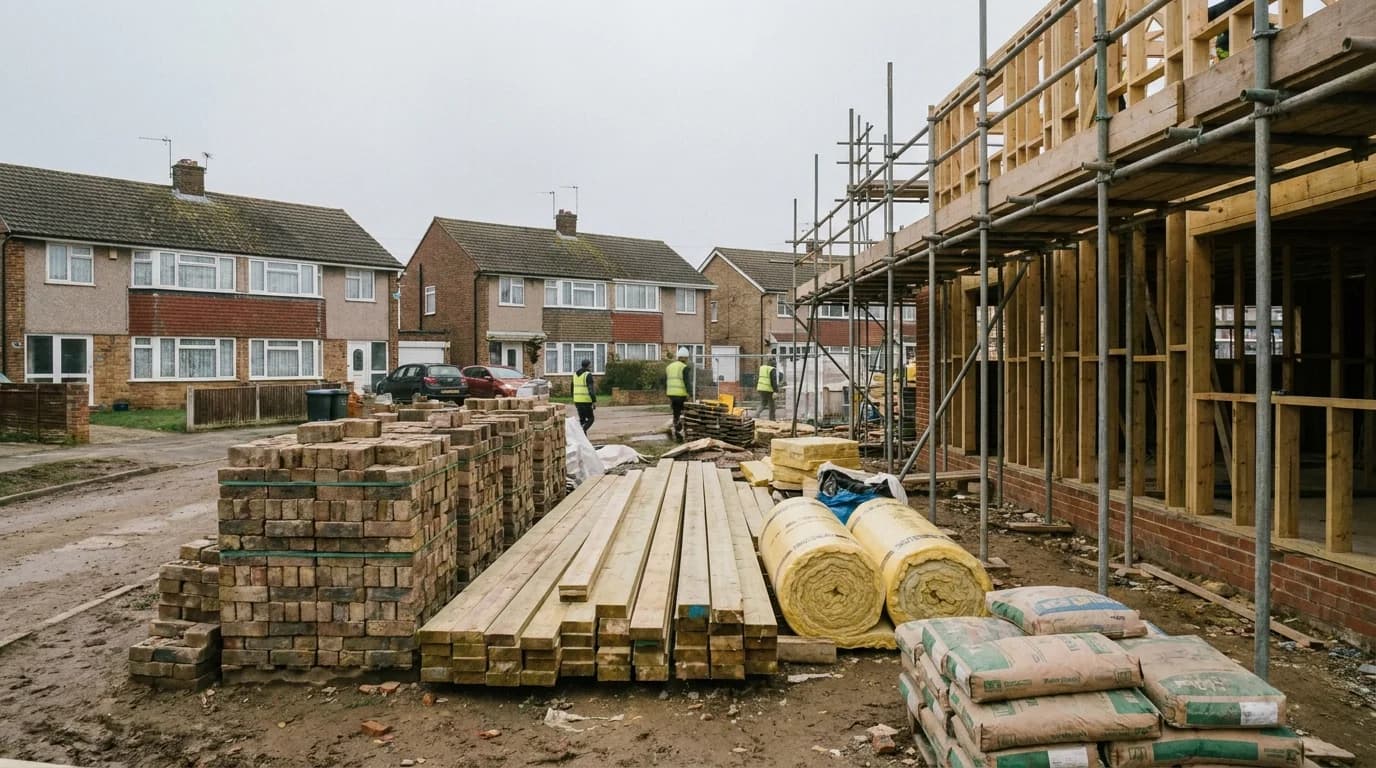
Why material prices matter before your first build
If you do not know what bricks, blocks, cement and timber actually cost, you cannot judge whether a quote is fair. Here is how to research material prices before your first build.
- Category
- Budgeting
- Author
- Star Hawk Builders Merchant
- Date
- 18 April 2024
- Read time
- 6 min
Budgeting · Star Hawk Builders Merchant
If you do not know what bricks, blocks, cement and timber actually cost, you cannot judge whether a quote is fair. Here is how to research material prices before your first build.
6 min read · Published 18 April 2024
The first time you ask a builder for a quote, the numbers can feel arbitrary. One builder says £45,000. Another says £62,000. A third comes in at £38,000 but cannot explain what is included. Without a sense of what the materials actually cost, you are guessing which quote is fair.
That is why the best thing you can do before your first build is research material prices. Not to become a quantity surveyor, but to build a reality check into your budget and your conversations.
Why material prices matter before you get quotes
A builder's quote is made of two things: labour and materials. Labour is harder to benchmark because it depends on skill, speed and location. Materials, on the other hand, are publicly priced. A 100mm concrete block, a 25kg bag of cement and a sheet of plasterboard have a market price.
When you know those prices, three things happen:
- Your budget becomes realistic. You stop guessing and start anchoring your figures to real products.
- You can compare quotes properly. Two builders quoting the same scope should have similar material allowances.
- You spot red flags. A quote with £500 allowance for blocks when you need £2,000 worth is a problem waiting to happen.
Builders who price honestly do not mind a homeowner who understands material costs. It makes the conversation faster and the relationship more professional.
What to price-check before you start
You do not need to cost every nail. Focus on the big-ticket items that drive the bulk of the material bill:
Foundations and groundworks
- Concrete: Ready-mix concrete is priced per cubic metre. A typical strip foundation for a small extension might need 4–8m³.
- Aggregates: MOT Type 1 hardcore, sharp sand and ballast are sold by the tonne. Expect £40–£70 per tonne delivered, depending on quantity and distance.
- Damp-proof membrane: A roll of 1200-gauge DPM costs £30–£60 depending on size.
Structure
- Concrete blocks: 100mm blocks for inner leaf, 140mm for load-bearing walls, 215mm for certain applications. Prices range from £1.50 to £3.50 per block.
- Bricks: Facing bricks vary wildly. Standard wire-cut bricks might be £0.60–£1.20 each, while handmade or reclaimed bricks can be £2–£5 each.
- Cement: A 25kg bag of ordinary Portland cement is usually £5–£8. A typical extension might use 50–100 bags.
- Timber: C16 and C24 carcassing timber, joists, studwork and roofing battens. Prices fluctuate with the market but expect £2–£6 per metre for common sizes.
- Steel lintels and beams: These are specification-critical. A steel RSJ can cost £300–£800+ supply only, plus installation.
- Insulation: 100mm PIR boards are £25–£45 per sheet. Mineral wool slabs are cheaper but take more labour.
Roof and openings
- Roof tiles/slates: Concrete tiles £0.80–£1.50 each; clay tiles £1.20–£3.00; slate £2.00–£5.00+.
- Flat roofing membrane: EPDM or felt systems are priced per square metre.
- Windows and doors: uPVC, aluminium and timber frames have very different price bands. Aluminium bifolds are a major cost driver.
- Plasterboard: Standard 12.5mm plasterboard is £8–£15 per sheet.
Getting ballpark prices for these items gives you a working model of the project cost.
How to research prices without losing your mind
You have three reliable sources:
1. Local builders merchants
Phone or visit two or three merchants in your area and ask for a price list or quote. A good merchant will price the whole material schedule if you give them a list. This is the most accurate method because it includes delivery charges and local availability.
At Star Hawk, we quote material schedules for extensions, loft conversions, renovations and self-builds across the South East. A written quote locks in prices and gives you a document to compare against builder allowances.
2. Trade catalogues and websites
Most national builders merchants publish prices online. Use them as a guide, but remember that retail prices may be higher than trade prices and delivery charges vary.
3. Your builder's quote
Ask every builder to break down material costs separately. If a builder refuses, that is a warning sign. You are not asking for their trade secrets — you are asking to see what products they plan to use and what they cost.
How to use material prices when comparing quotes
Once you have a rough material budget, compare it against each builder's allowance. Here is a simple method:
- List the major materials the project needs.
- Get a merchant quote for supply-only delivery.
- Compare it to each builder's material allowance.
- Ask questions if the gap is more than 10–15%.
For example, if your merchant quote for blocks, bricks, cement and insulation comes to £8,500, and Builder A has allowed £9,200 while Builder B has allowed £13,000, you need to know why. Builder B may be using a higher specification, or they may have inflated the allowance.
Understanding price volatility
Material prices are not fixed. Timber, steel and fuel costs can move with currency, shipping rates and global demand. A quote that looked sensible in January may look very different in June.
For a first build, ask your builder or merchant how long quotes are valid. At Star Hawk, we hold written quote prices for a set period so you can plan. If your project is months away, allow a small buffer for market movement and check whether your builder's contract is fixed-price or cost-plus.
VAT and invoicing
When comparing material allowances, make sure you are comparing like with like on VAT. Some builders quote excluding VAT, especially if they are close to the VAT threshold. For domestic work, HMRC guidance explains when VAT applies and at what rate. If a builder offers a lower "cash price" with no VAT invoice, be cautious — you lose protection and a clear paper trail.
The hidden danger of "materials included"
Some builders quote a single lump sum with "materials included" and no breakdown. This makes comparison impossible and creates two risks:
- The builder uses the cheapest possible materials to protect their margin.
- The allowance is too low, and you get hit with extras halfway through.
Always ask for a materials specification. What grade of block? What strength of concrete? What brand of insulation? A professional builder will have this ready.
Why this protects you from being overcharged
Knowing material prices does not make you an expert overnight, but it changes the power dynamic. You can ask informed questions, push back on vague allowances and refuse to accept "trust me" as a pricing strategy.
It also helps you avoid a common trap: the builder who quotes low to win the job, then inflates the price through variation orders because the original material allowance was never realistic.
The Federation of Master Builders recommends getting at least three written quotes and questioning any material allowance that looks out of line with local merchant prices.
Quick material price checklist for first-time builders
- Get a written merchant quote for the major materials.
- Ask each builder for an itemised material allowance.
- Check the specification grade for blocks, bricks, timber, insulation and steel.
- Compare builder allowances against your merchant quote.
- Add 10–15% contingency for waste, price changes and unforeseen items.
- Agree who is responsible for ordering and paying for materials.
- Confirm delivery dates so materials arrive before they are needed.
Bottom line
Material prices are the most concrete part of a building project. Before you sign a contract or pay a deposit, spend a few hours understanding what the materials cost. It is the single best way to create a realistic budget, compare quotes fairly and avoid being overcharged on your first build.
Start with a written merchant quote. Request a materials quote from Star Hawk Builders Merchant and find your nearest branch for local pricing and delivery.
Frequently asked questions
How much do concrete blocks cost in the UK?
Standard 100mm concrete blocks typically cost £1.50–£2.50 each, while 140mm blocks are £2.00–£3.50. Prices vary by strength grade, quantity and delivery location.
Should material costs be itemised in a builder's quote?
Yes. An itemised quote lets you compare material prices against local merchant rates and spot inflated allowances or missing items.
Why do two builders quote different material prices?
Differences come from specification grade, supplier discounts, delivery charges, waste allowance and mark-up. Always ask what product and quantity the price covers.
Can I save money by buying materials myself?
Sometimes, but trade accounts often beat retail prices. You also lose the builder's warranty if materials fail, and you become responsible for delivery timing and shortages.
Need materials for your project?
Send us your material schedule and we'll come back with stock availability, a written quote and a delivery slot, usually within the hour during trade hours.
Related articles
More guides and advice to help your building project run smoothly.
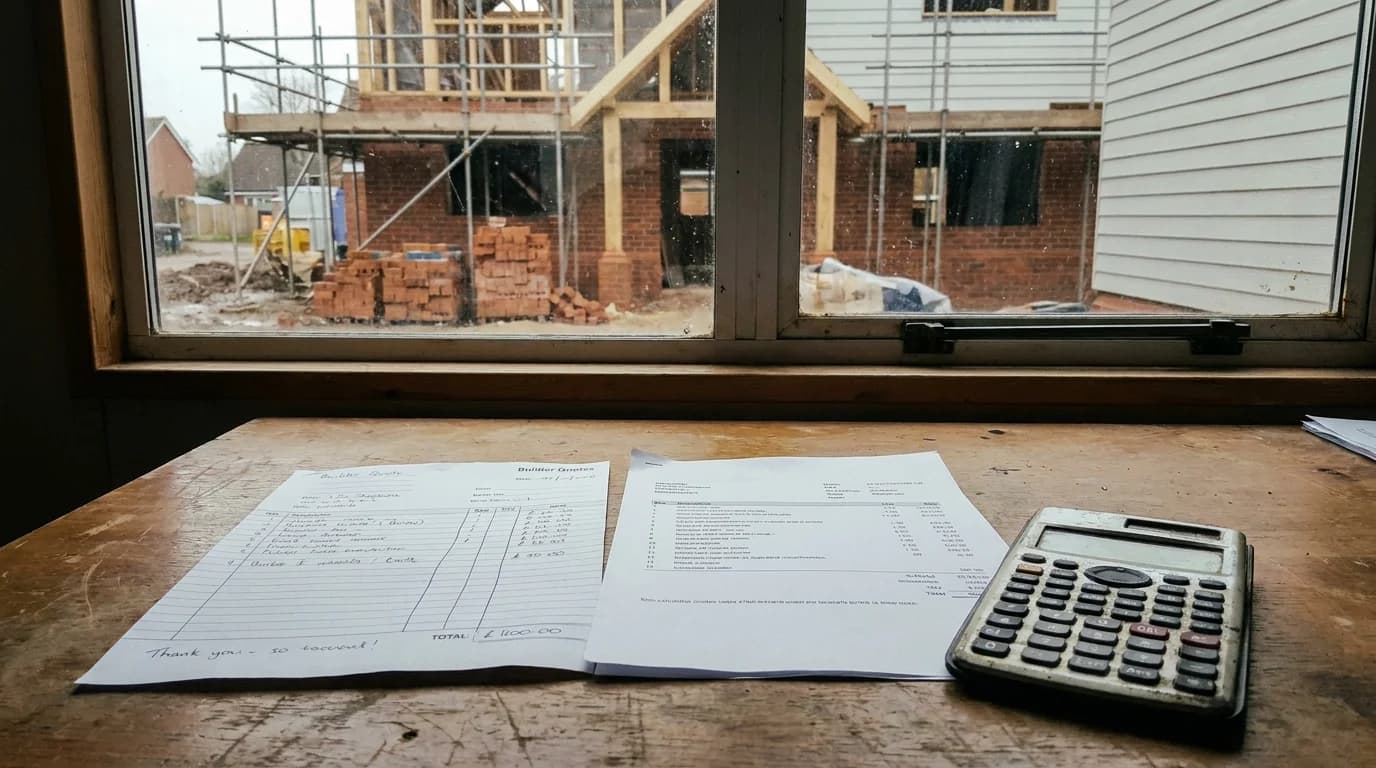
How to compare builder quotes line by line
Comparing builder quotes is not about finding the lowest number. It is about making sure every builder is pricing the same scope, specification and terms.
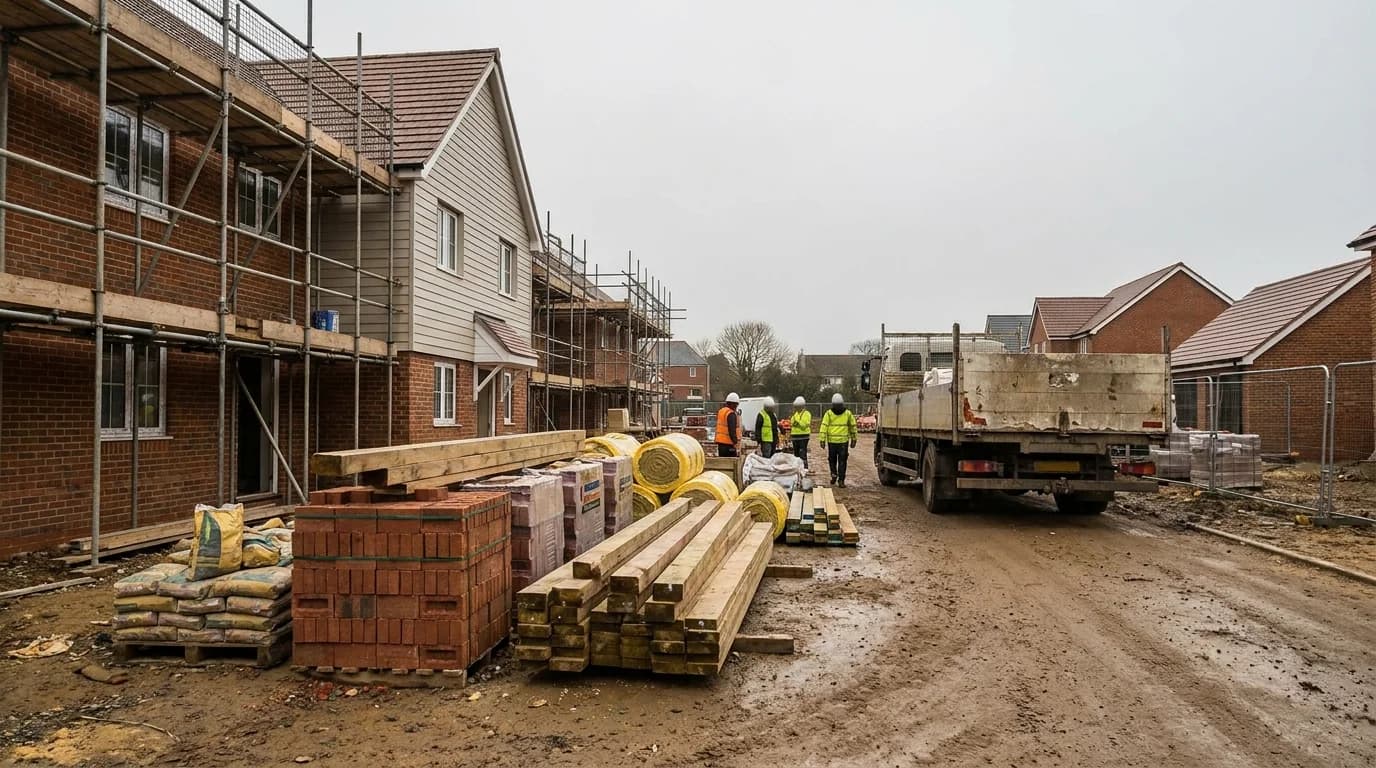
Should you buy materials or let your builder buy them?
Buying materials yourself can feel like a saving, but it can also cost you discounts, warranties and site time. Here is how to decide who should buy what.