
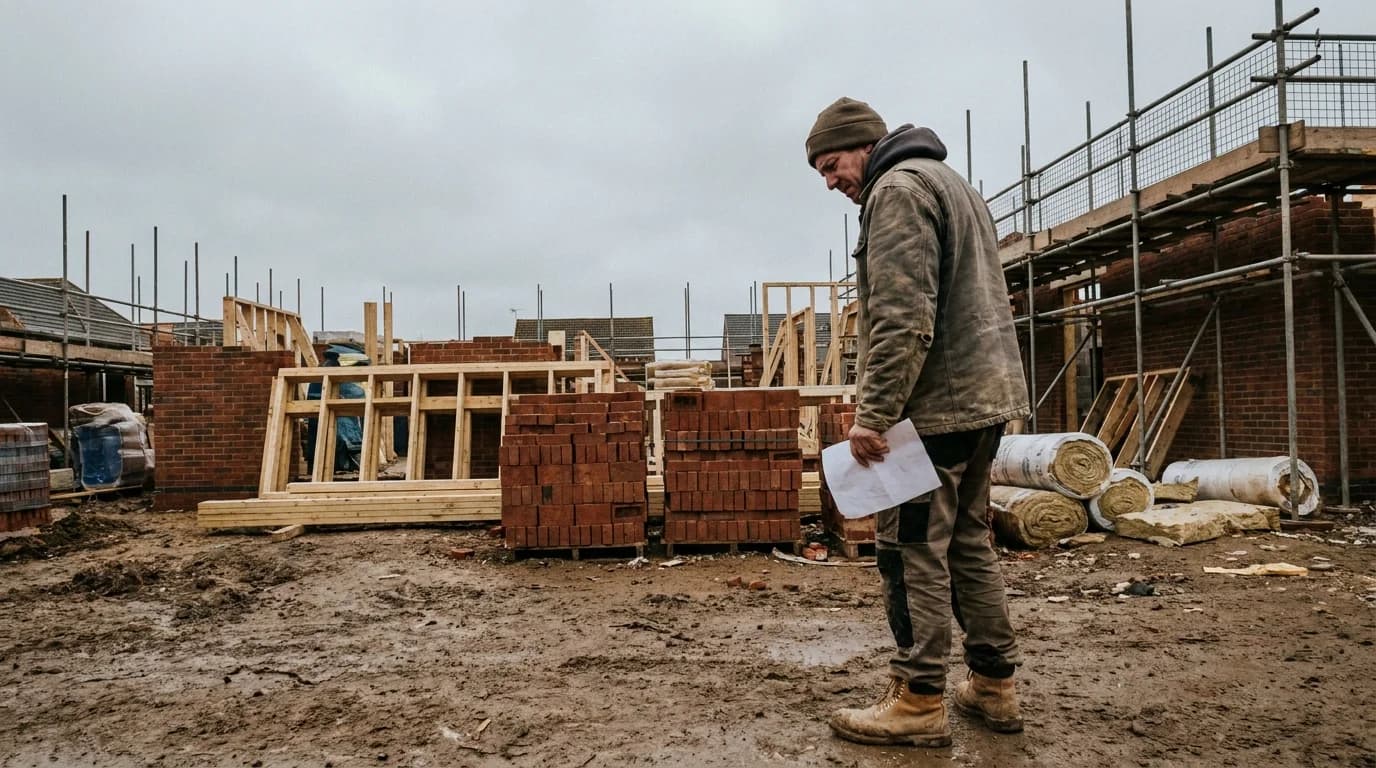
Cowboy builder warning signs: red flags to spot early
Cowboy builders cost UK homeowners millions every year. Here are the clear warning signs to look for before you sign a contract or pay a deposit.
- Category
- Builder selection
- Author
- Star Hawk Builders Merchant
- Date
- 15 August 2024
- Read time
- 6 min
Builder selection · Star Hawk Builders Merchant
Cowboy builders cost UK homeowners millions every year. Here are the clear warning signs to look for before you sign a contract or pay a deposit.
6 min read · Published 15 August 2024
Most cowboy builders are caught only after they have taken money and caused damage. The key to avoiding them is spotting the warning signs before you sign anything. Cowboys rely on urgency, confusion and embarrassment to pressure homeowners into quick decisions.
Here is how to recognise a cowboy builder before it is too late.
They come to you, not the other way around
A builder who knocks on your door uninvited, claims to be working nearby or says they have leftover materials is almost certainly a rogue trader. Professional builders are too busy to canvas for work.
Common opening lines include:
- "We noticed your roof while working next door."
- "We have leftover tarmac from another job."
- "Your gutters look dangerous — we can fix them today."
Politely decline and close the door.
They pressure you to decide quickly
Cowboys create false urgency because they do not want you to research them. Watch for phrases like:
- "This price is only valid until tonight."
- "If you don't book now, I can't start for six months."
- "The damage will get much worse if you wait."
A professional builder will give you time to compare quotes, check references and make an informed decision.
They refuse to put anything in writing
Verbal agreements are worthless if things go wrong. A cowboy builder will avoid written quotes and contracts because vague terms make it easier to add charges later or deny responsibility.
Always insist on:
- A written, itemised quote.
- A contract or terms of business.
- A payment schedule.
- A warranty in writing.
They demand large upfront payments
A small deposit is normal. A demand for full payment upfront, or a large cash deposit, is not. Typical red flags include:
- "I need cash today to buy materials."
- "Pay the full amount now and I'll give you a discount."
- "No receipt needed — it's cheaper this way."
A fair payment schedule ties payments to completed stages of work.
They have no verifiable identity
A legitimate builder has a fixed business address, a landline, an email domain and often a website or social media presence. Be cautious if:
- They only have a mobile number.
- Their email is a generic Gmail or Hotmail address.
- They cannot give you a business address.
- Their van has no company branding.
They cannot provide references or insurance
Ask for two or three recent references and follow them up. A cowboy will:
- Make excuses.
- Provide references that cannot be reached.
- Show photos that may not be their own work.
Also ask for proof of public liability insurance and, if they have staff, employer's liability insurance. Verify these directly with the insurer if possible.
Their quote is vague or unrealistically cheap
A single-line quote such as "extension: £28,000" tells you nothing about what is included. An unrealistically cheap quote may mean the builder has left out items, plans to use poor materials or intends to add extras later.
Compare the quote against at least two others. If the price is far below the market rate, ask why.
They want to start immediately
A builder who can start tomorrow may not be in demand for a reason. Good builders are usually booked several weeks or months ahead. Immediate availability combined with pressure to decide is a warning sign.
They dismiss regulations
A builder who says planning permission or building regulations are "not needed" without checking is dangerous. Every project is different, and rules depend on location, property type and project size.
If a builder is unwilling to discuss approvals, walk away.
How to research a builder online
Before you invite a builder to site, spend ten minutes checking them online:
- Search the company name plus "review" or "complaint."
- Look at Companies House for the date of incorporation and filing history.
- Check whether they appear on recognised trade body websites such as the Federation of Master Builders, NHBC or TrustMark.
- Read reviews critically. A handful of detailed reviews over several years is more trustworthy than dozens of identical five-star ratings posted in one week.
Be wary of builders who use stock photos, have no online presence or whose website was created last month.
The first site visit: what to watch
The site visit is not just for the builder to measure up. It is your chance to assess them:
- Do they arrive on time and drive a sign-written van?
- Do they take detailed notes and photographs?
- Do they ask about access, drainage, trees and existing services?
- Are they respectful of your home and your time?
- Do they offer a realistic timeline, or do they promise everything by next month?
A cowboy will often rush through the visit, avoid technical questions and push for a quick decision. A professional will treat the visit as the start of a working relationship.
Your instincts feel off
If something does not feel right, trust that feeling. Common gut reactions include:
- They are evasive when you ask direct questions.
- They avoid eye contact or seem overly familiar.
- They rush you past the paperwork.
- They become defensive when you mention checks.
Fake reviews and borrowed photos
Cowboy builders sometimes pad their online profile with fake reviews or photos taken from other websites. Be suspicious if:
- Every review was posted within a few days of each other.
- The reviews use similar wording or no detail at all.
- Photos show different locations, van styles or workmanship quality.
- There are no reviews older than a few months.
Ask the builder to show you a current or recent job in person. A genuine trader will usually be proud to do so.
Remember that due diligence protects more than your wallet. Rogue traders often target whole streets or estates, and your refusal to hire them sends a signal that your neighbourhood is not an easy mark. Reporting suspicious behaviour also helps protect other homeowners from the same scam.
Quick cowboy-builder checklist
Before hiring any builder, check:
- They were invited by you, not a cold caller.
- They visited the site before quoting.
- You have a written, itemised quote.
- They provided recent references you have followed up.
- Their insurance is active and adequate.
- They have a fixed business address.
- The payment schedule is staged and fair.
- The contract covers scope, timeline and warranty.
- The price is comparable to other quotes, not suspiciously low.
- They are willing to discuss planning and building regulations.
If you suspect a cowboy
Do not proceed. Tell them you need time to think. Then get a second opinion from another builder or a surveyor. If you believe they are operating illegally, report them to Trading Standards and Action Fraud.
A legitimate builder will never be offended by due diligence. Only cowboys are.
For advice on hiring a reputable builder, read our guide on how to find the right builder. When you are ready to compare material costs for your project, request a quote from Star Hawk Builders Merchant or browse our case studies.
Frequently asked questions
What are the main signs of a cowboy builder?
Pressure tactics, no written quote, cash-only demands, no fixed address, no insurance, refusal to provide references and prices far below the market rate.
Should I trust a builder who knocks on my door?
No. Reputable builders do not cold-call or offer leftover materials from another job. This is a classic rogue trader tactic.
Is a cash-only builder always a cowboy?
Not always, but demanding cash, especially large upfront payments, is a major red flag. It leaves no paper trail and often means no VAT invoice or warranty.
What should I do if I think I have hired a cowboy builder?
Stop work, document everything, seek independent advice from a surveyor, contact Trading Standards and consider legal action.
Need materials for your project?
Send us your material schedule and we'll come back with stock availability, a written quote and a delivery slot, usually within the hour during trade hours.
Related articles
More guides and advice to help your building project run smoothly.
How to avoid cowboy builders: a homeowner checklist
Cowboy builders cost UK homeowners millions every year. Learn the warning signs, the essential checks and the paperwork that protects you before any work begins.
How to find the right builder for your project
Finding the right builder is the difference between a smooth project and a nightmare. Here is a practical vetting process that protects your money, your home and your sanity.