
How to prepare your home before builders arrive
Clearing access routes, protecting floors and agreeing working hours before builders arrive can prevent delays, damage and disputes.
- Category
- Project planning
- Author
- Star Hawk Builders Merchant
- Date
- 12 December 2024
- Read time
- 7 min
Project planning · Star Hawk Builders Merchant
Clearing access routes, protecting floors and agreeing working hours before builders arrive can prevent delays, damage and disputes.
7 min read · Published 12 December 2024
The week before builders arrive is one of the busiest parts of any home improvement project. Most homeowners focus on the finished room, but the days leading up to the first digger or scaffold lorry matter just as much. A little preparation protects your belongings, keeps the build on schedule and reduces the stress of living on a building site.
Whether your project is a single-storey extension, a loft conversion or a full renovation, the same principles apply. Prepare the route in, protect what stays, move what can move and agree how everyone will behave once work starts. If you are still choosing your contractor, read our guide on how to find the right builder and the questions to ask before hiring before you sign.
Why preparation matters
Builders need more than goodwill. They need space, access, power, water and a safe place to work. If they arrive to find the drive blocked, the garden full of furniture and no clear entry route, the first day is wasted before it begins.
Good preparation also protects you. Dust, vibration and foot traffic will find their way into every corner of your home if you let them. Floors get scratched, ornaments get knocked and stress levels rise when you cannot find a clean place to sit at the end of the day.
Spending a weekend preparing will typically save several days of delay and a lot of cleaning later on.
Agree the working arrangements first
Before anyone lifts a hammer, agree the practical details with your builder:
- Working hours. Normal site hours are 8am to 5pm on weekdays, with shorter hours on Saturday and none on Sunday. If you need different hours, agree them in writing.
- Access. Which door will the builders use? Do they need a key, a keypad code or will you let them in?
- Parking. Where will vans park? Will deliveries use your drive or the road?
- Toilet facilities. Most builders bring a portaloo for larger jobs, but for smaller projects they may use your downstairs cloakroom. Agree this upfront.
- Power and water. Where can they fill buckets and charge tools? Extension leads trailing through the house are a trip hazard.
- Rubbish. Where will the skip go? How will waste leave the site without trailing mud through the house?
Put the answers in an email or add them to your contract. A written record prevents arguments later.
Clear the route from the front door to the work area
Builders will make dozens of trips in and out every day, carrying timber, tools, plasterboard and bags of cement. Make that journey as easy and safe as possible.
- Move bikes, bins, plant pots and garden furniture away from the front path.
- Trim back bushes or branches that narrow the walkway.
- Remove rugs, mats and loose carpets along the internal route.
- If possible, designate a single entrance for tradespeople and keep other doors closed.
If access is awkward — narrow alleyways, steps, low ceilings — tell your builder before the quote stage. Surprises on day one lead to delays and extras.
Protect your floors, doors and furniture
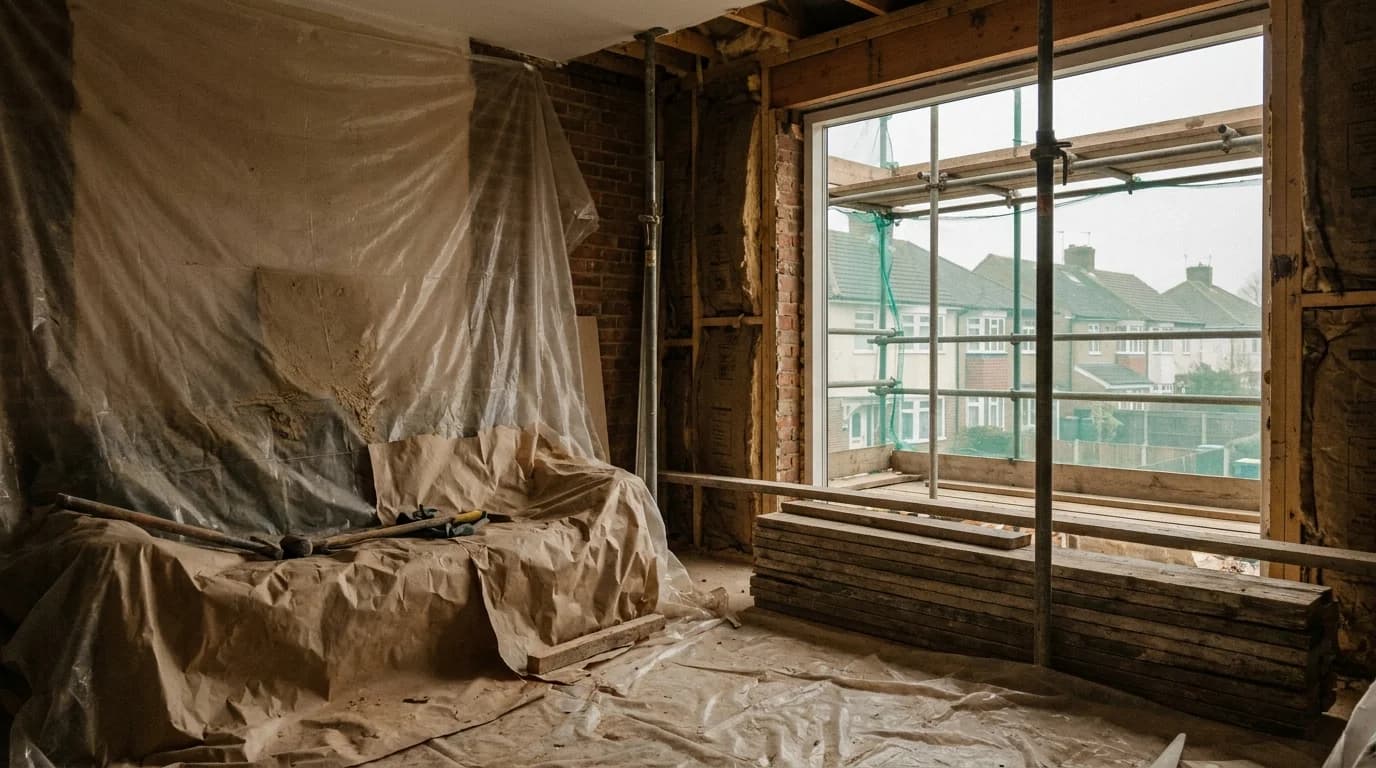
Dust is the enemy. It gets under doors, into wardrobes and through the smallest gap. Start with the areas closest to the work zone and work outwards.
- Hard floors: Cover with breathable floor protection, hardboard sheets or thick dust sheets. Tape down the edges so they do not slide.
- Carpets: Use specialist carpet protection film or at least doubled dust sheets. Avoid plastic sheeting on carpets for long periods because it can trap moisture.
- Doors and frames: Fit dust sheets over doorways or use Zipwall-style barriers to seal off the work area.
- Furniture: Move everything you can out of the work zone and the route through the house. For items that must stay, cover with dust sheets.
- Curtains and soft furnishings: Take these down or cover them. Plaster dust can permanently stain fabrics.
Do not rely on the builder to protect your home as carefully as you would. Their insurance may cover accidents, but it will not cover the hassle of cleaning dust from every surface.
Move or store valuable and fragile items
Vibration from demolition and heavy foot traffic can knock things over. Pack away anything fragile, valuable or sentimental:
- Pictures, mirrors and wall-mounted TVs.
- Ornaments, glassware and collectibles.
- Electronics and small appliances.
- Important documents, jewellery and passports.
For major projects, consider renting a storage unit or asking a friend or family member to look after boxes. The cost is usually small compared with the value of what you are protecting.
Prepare the outside space
Builders need somewhere to store materials, park vans and set up cutting stations. Preparing the garden and driveway makes their work easier and reduces wear on your lawn and borders.
- Move cars off the drive if deliveries are expected.
- Mark or protect drains, manhole covers and inspection chambers.
- Cover or move garden furniture, barbecues and bikes.
- Tell neighbours about likely disruption, especially for skips, scaffolding and early starts.
- If trees, sheds or fences are in the way, agree who moves them.
If you have a narrow driveway or limited front garden, talk to your builder about a materials delivery schedule. Staggering deliveries keeps the site manageable and avoids blocking the road.
Plan for living on site
If you are staying in the house during the build, life will be noisy and dusty. Set up a temporary kitchen, living area or bedroom well away from the work zone.
- Keep one room clean and dust-free as a refuge.
- Set up a temporary kitchen with a microwave, kettle, mini-fridge and washing-up bowl.
- Store clean clothes in sealed boxes or wardrobes away from the work area.
- Plan meals that do not need the oven or hob if the kitchen is out of action.
- If you work from home, consider working elsewhere on the noisiest days.
For large renovations, some families move out for part of the project. The cost of a short let or staying with family can be worth it for your sanity and safety.
Notify your insurer and check your builder's cover
Let your home insurer know about the planned work. Some policies need to be adjusted during building work, especially for extensions, structural alterations or projects over a certain value.
Check that your builder has adequate insurance. At a minimum they should hold:
- Public liability insurance, usually £1 million or more.
- Employer's liability insurance if they have staff.
- Contractor's all-risk insurance for larger projects.
You can read more about your rights and protections from Citizens Advice and report rogue traders to Trading Standards if things go wrong.
Make a pre-build checklist
Use this checklist the week before work starts:
- Working hours, access and parking agreed in writing.
- Route from front door to work area cleared and protected.
- Floors, doors and furniture in the path covered or moved.
- Fragile and valuable items packed away or stored off site.
- Garden and driveway prepared for deliveries and storage.
- Temporary living space set up away from the work zone.
- Insurer notified and builder's insurance checked.
- Neighbours informed about likely disruption.
- Skip and materials delivery schedule confirmed.
- Emergency contact numbers exchanged with the builder.
What to do on the first day
Be on site when the builder arrives. Walk through the house together, confirm access routes and point out anything you are especially worried about. Take photos of the existing condition of floors, walls, doors and the garden. These photos are invaluable if there is a dispute about damage later.
Ask the site manager how they will keep dust and disruption under control. A professional builder will already have a plan. If they seem surprised by the question, that is a warning sign.
Final thoughts
Preparing your home before builders arrive is not about being a perfect host. It is about protecting your property, keeping the project on track and making the build as smooth as possible for everyone involved.
The builders you choose matter just as much as the preparation. If you are still at the selection stage, request a quote from Star Hawk Builders Merchant for your materials, browse our case studies to see the projects we supply, or find your nearest branch for local advice and delivery.
Frequently asked questions
How much space do builders need inside the house?
Ideally a clear path from the front door to the work area, plus a secure area for tools and materials.
Should I move furniture out of the house?
Move furniture away from the work area. For larger projects, renting a storage unit or using a garage protects items from dust and damage.
Who pays for damage caused during the build?
Your builder's insurance should cover accidental damage caused by their work. Check their public liability insurance before work starts.
How can I reduce dust during building work?
Seal doorways with dust sheets or plastic sheeting, cover floors, switch off central heating and hoover sealed areas daily.
Need materials for your project?
Send us your material schedule and we'll come back with stock availability, a written quote and a delivery slot, usually within the hour during trade hours.
Related articles
More guides and advice to help your building project run smoothly.
First-time homeowner's guide to building works
Planning your first building project can feel overwhelming. This guide breaks down budgeting, scheduling, choosing materials and working with builders so you can move forward with confidence.
15 questions to ask before hiring a builder
The right questions reveal whether a builder is organised, honest and a good fit for your project. Here are fifteen to ask before you sign on the dotted line.
How to find the right builder for your project
Finding the right builder is the difference between a smooth project and a nightmare. Here is a practical vetting process that protects your money, your home and your sanity.