

When and how to pay your builder
Paying your builder the right way protects your money and keeps the project moving. Here is how to structure deposits, staged payments and final balances.
- Category
- Contracts & payments
- Author
- Star Hawk Builders Merchant
- Date
- 14 November 2024
- Read time
- 5 min
Contracts & payments · Star Hawk Builders Merchant
Paying your builder the right way protects your money and keeps the project moving. Here is how to structure deposits, staged payments and final balances.
5 min read · Published 14 November 2024
Money is one of the biggest sources of dispute between homeowners and builders. Citizens Advice reports that payment disputes are among the most common complaints about home improvement work. Pay too much too soon and you lose leverage. Pay too little too late and the builder may slow down or walk off site. A fair payment schedule protects both sides and keeps the project on track.
If you are pricing materials for your project, request a trade quote from Star Hawk Builders Merchant. You can also find your nearest branch on our locations page.
Why payment structure matters
A good payment schedule:
- Gives the builder cash flow to buy materials and pay labour.
- Ties your payments to visible progress.
- Leaves you with enough held back to ensure snagging is completed.
- Creates a clear paper trail in case of dispute.
How much deposit is fair?
A deposit is normal, but it should be modest. For most domestic projects:
- 10–15% is typical for smaller jobs.
- Up to 25% may be reasonable for larger projects where the builder needs to order expensive materials early.
Never pay the full project cost upfront. If a builder demands full payment before starting, find another builder.
Staged payments tied to milestones
The safest approach is to pay in stages as work is completed. A typical schedule for an extension might look like this:
| Stage | Payment | Cumulative |
| Deposit on signing | 10–15% | 10–15% |
| Foundations complete | 15–20% | 25–35% |
| Walls/roof structure complete | 20–25% | 50–60% |
| Weathertight and first fix | 15–20% | 70–80% |
| Plastering and second fix | 10–15% | 85–90% |
| Final payment after snagging | 10–15% | 100% |
The exact stages depend on the project. The key point is that each payment is linked to a milestone you can see and verify.
What is a retention?
A retention is a portion of the final payment held back until the builder has completed any snagging items. It is usually 5–10% of the contract value.
For example, if the final invoice is £10,000, you might pay £9,000 on completion and keep £1,000 until the snagging list is cleared.
This gives the builder a strong incentive to return and fix minor defects.
How to pay
Always pay by bank transfer. This creates a clear record of:
- Who was paid.
- How much was paid.
- When it was paid.
- What it was for.
Cash payments are risky because:
- There is no proof of payment.
- They may be used to avoid VAT.
- You have less protection if something goes wrong.
If a builder insists on cash, consider it a red flag.
What to include on every payment
When you make a payment, include a reference that links it to the project and stage. For example:
- "Extension deposit"
- "Foundations stage payment"
- "Final balance less retention"
Keep copies of invoices, payment confirmations and any correspondence about variations.
What if the builder asks for more money?
If the builder asks for extra money during the project, your response should depend on the reason:
- Agreed variation: If you asked for extra work, you should pay a fair price for it. Get the change in writing before work proceeds.
- Unforeseen problem: If hidden issues arise, ask for evidence and a breakdown of the extra cost.
- Cash flow issue: This is not your problem. A builder who priced the job correctly should manage their own cash flow.
Never feel pressured to pay ahead of the agreed schedule.
What if the builder stops work?
If the builder down tools without explanation:
- Check the contract for notice periods and dispute procedures.
- Write formally asking why work has stopped and giving a deadline to resume.
- Do not release further payments until work restarts.
- Document everything in case you need legal advice.
If the builder has disappeared entirely, contact Citizens Advice and your insurer. You may also need to report the matter to Trading Standards if you believe fraud is involved.
What if you are unhappy with the work?
If work is incomplete or substandard, you have the right to withhold payment until it is put right. However:
- Follow the dispute procedure in your contract.
- Communicate in writing.
- Be specific about what needs fixing.
- Consider independent advice from a surveyor if the dispute is serious.
Withholding payment without explanation damages the relationship and can lead to legal action.
Milestone sign-off and paperwork
Before releasing each staged payment, walk the site with the builder and agree that the milestone is complete. Take photos and ask for any inspection certificates needed for building control. A five-minute sign-off conversation now can prevent hours of argument later.
Late payments and your rights
Just as you should not pay early, you should not pay unreasonably late. Once a milestone is properly completed, pay promptly. Delays damage the relationship and can give the builder an excuse to slow down.
If you genuinely dispute a stage, put your concerns in writing and withhold only the disputed amount, not the whole payment.
Paying subcontractors and suppliers
In some arrangements, a main contractor may ask you to pay their plumber, electrician or merchant directly. Be careful. If you pay subcontractors separately, you may lose the protection of your contract with the main builder and create confusion about who is responsible for defects.
Unless you have a clear written agreement, make all payments to the main contractor and let them manage their own supply chain.
Escrow and third-party holding accounts
For very high-value projects, some homeowners use an escrow arrangement or project bank account. A third party holds the funds and releases them when agreed milestones are met. This adds a layer of security for both sides, though it also adds administrative cost.
Escrow is not necessary for most domestic extensions, but it is worth considering if the project value is large or if you and the builder want extra reassurance.
Final payment checklist
For more detail on your rights, read the Citizens Advice guide to home improvements. Before paying the final balance, check:
- All work matches the agreed scope.
- Snagging items have been completed or a retention is held.
- You have building regulations sign-off if required.
- You have warranties and guarantees in writing.
- The site has been cleared and left tidy.
- You have all invoices and receipts.
The right balance
Paying a builder is not about suspicion. It is about clarity. A fair payment schedule shows the builder you are serious, gives them the cash flow to do good work, and protects you if things go wrong.
Agree the schedule in writing before work starts, stick to it, and keep records of every payment.
When you are ready to order materials, request a trade quote from Star Hawk Builders Merchant and find your nearest branch. For examples of projects we have supplied, see our case studies.
Frequently asked questions
How much deposit should I pay a builder?
A deposit of 10–25% is typical for domestic building work. Never pay the full amount upfront.
Should I pay a builder in cash?
Cash leaves no proof of payment and can indicate tax evasion. Use bank transfer for a clear record.
What is a retention in a building contract?
A retention is a percentage of the final payment held back until snagging is completed, usually 5–10%.
Can I withhold final payment until snagging is done?
Yes. The final payment should only be released once all agreed work, including snagging, is finished to your satisfaction.
Need materials for your project?
Send us your material schedule and we'll come back with stock availability, a written quote and a delivery slot, usually within the hour during trade hours.
Related articles
More guides and advice to help your building project run smoothly.
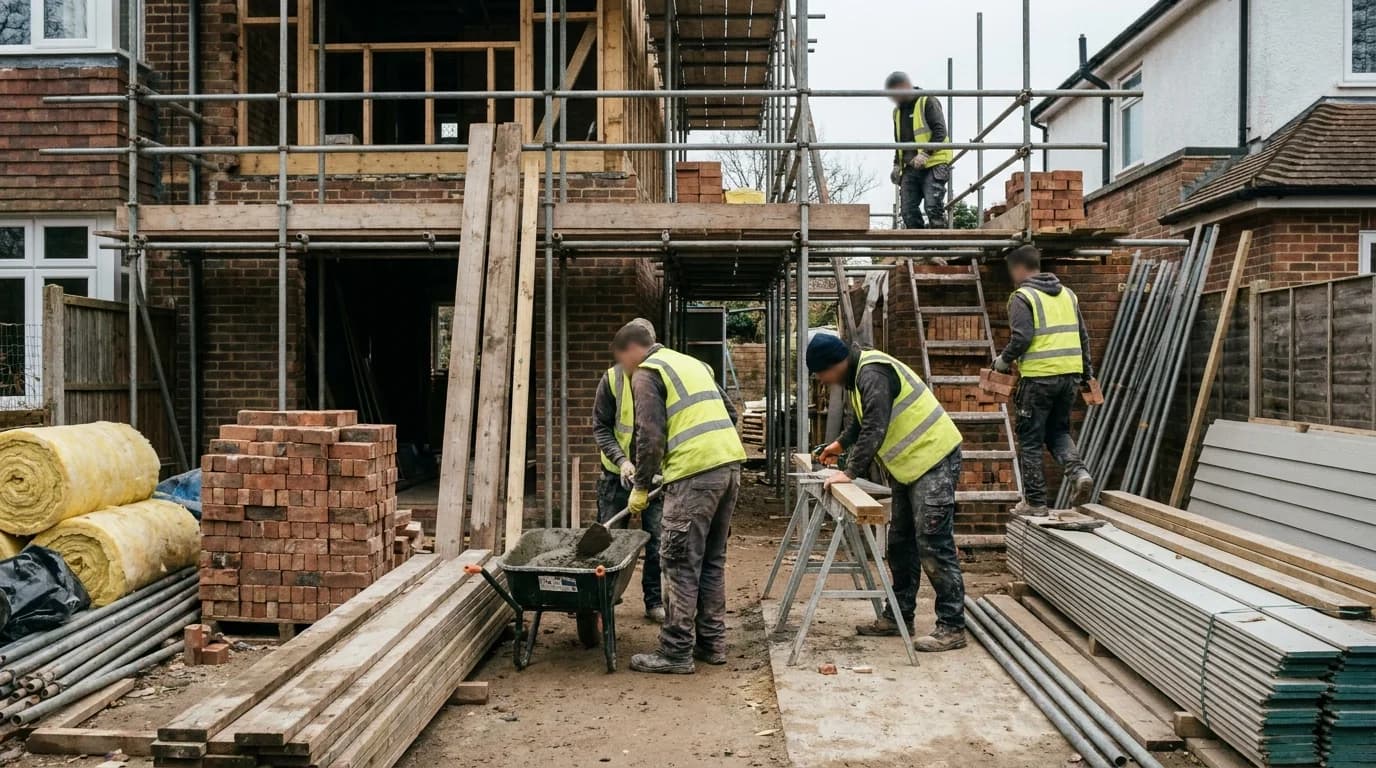
How to find the right builder for your project
Finding the right builder is the difference between a smooth project and a nightmare. Here is a practical vetting process that protects your money, your home and your sanity.
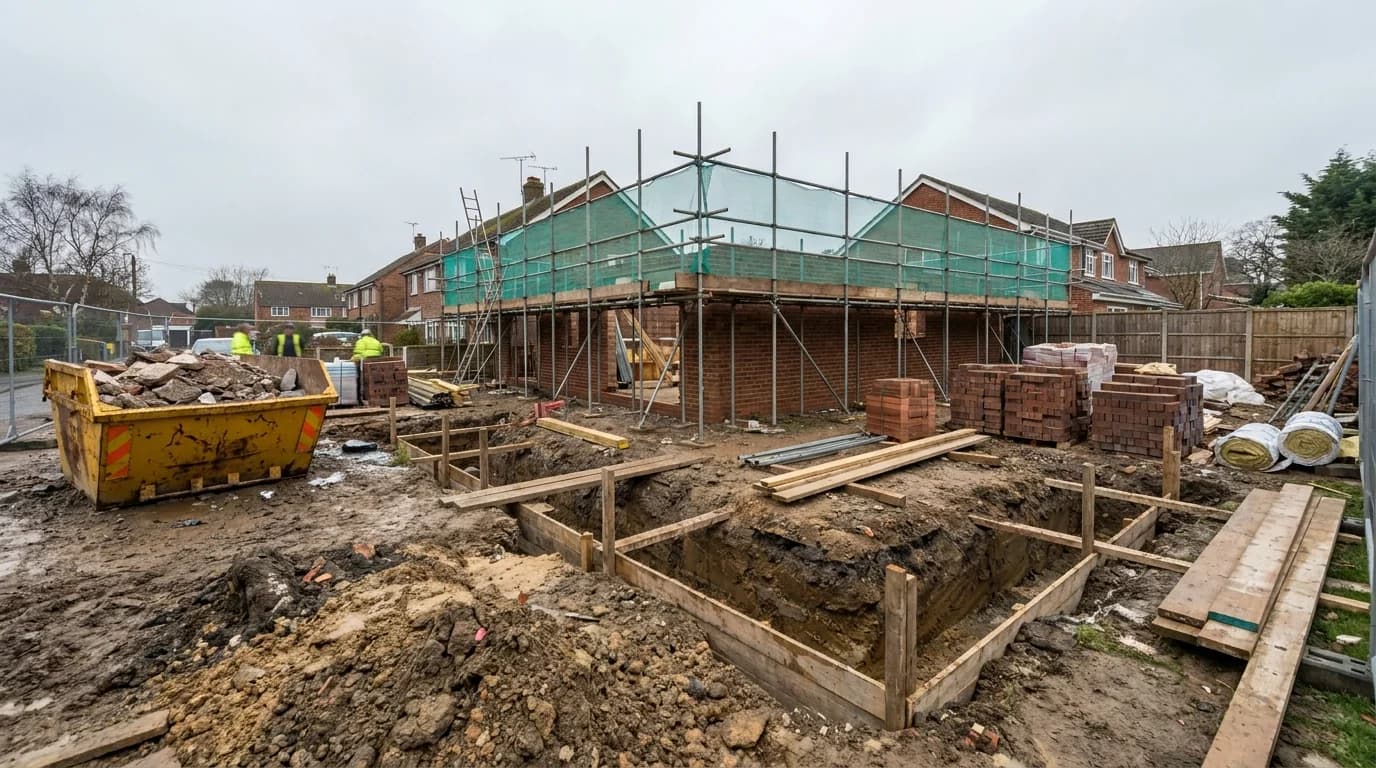
Hidden costs that blow your extension budget
The builder's quote is only part of the cost. Planning fees, building regulations, skips, scaffolding and contingencies can add thousands. Here is what to budget for.