
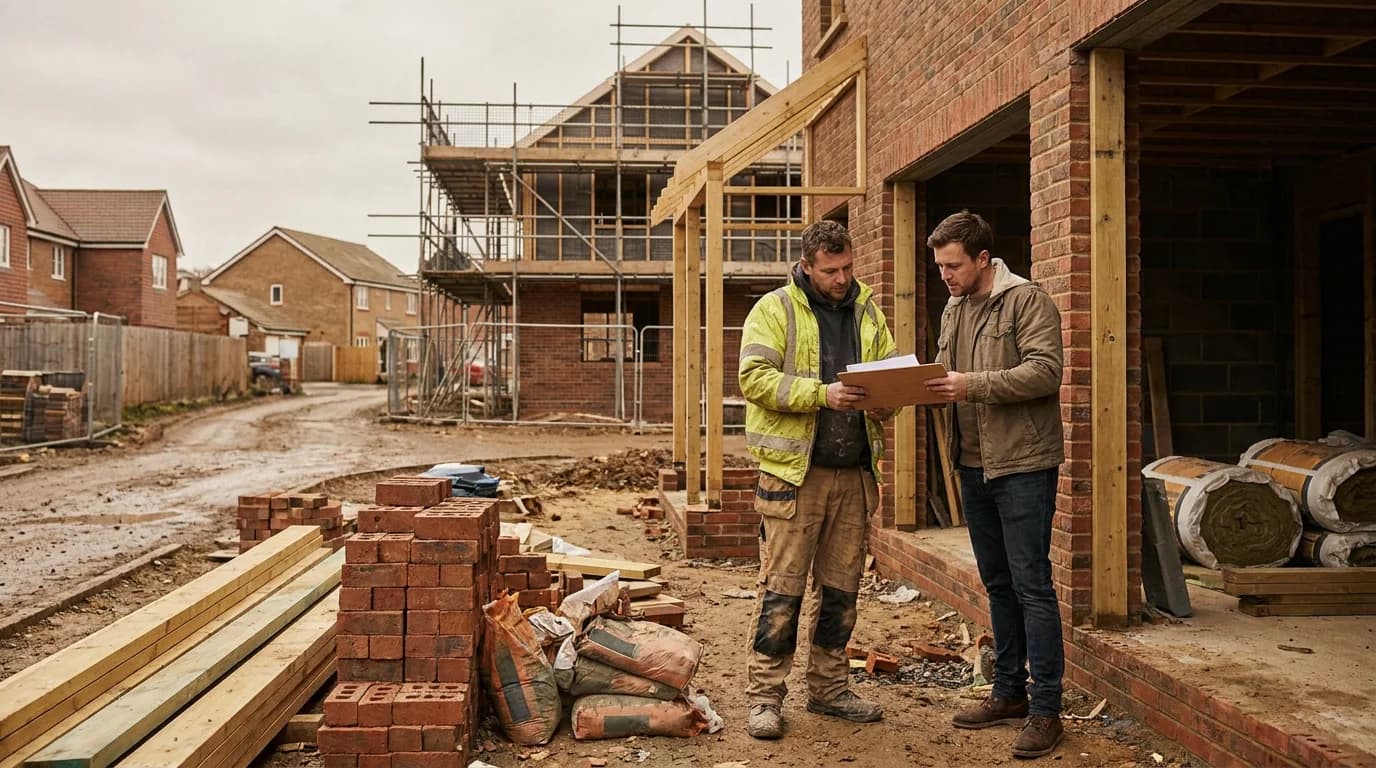
How to check a builder's insurance and qualifications
Checking a builder's insurance and qualifications before you hire protects you from cowboy builders, unsafe work and costly disputes.
- Category
- Builder selection
- Author
- Star Hawk Builders Merchant
- Date
- 13 November 2025
- Read time
- 6 min
Builder selection · Star Hawk Builders Merchant
Checking a builder's insurance and qualifications before you hire protects you from cowboy builders, unsafe work and costly disputes.
6 min read · Published 13 November 2025
Hiring a builder is one of the biggest financial decisions a homeowner makes. Price and availability matter, but nothing matters more than knowing the person you hire is competent, insured and honest. A few simple checks at the start can save you from cowboy builders, unsafe work and expensive disputes later.
This guide explains what insurance and qualifications to look for, how to verify them and what to do if something does not add up.
Why insurance matters
Building work involves risk. Heavy materials, power tools, excavations, heights and structural alterations can all cause injury or damage. If something goes wrong and your builder is not properly insured, you could be left paying the bill.
Insurance is also a sign of professionalism. A builder who takes the trouble to arrange proper cover is more likely to take the rest of their business seriously.
Public liability insurance
Public liability insurance covers claims if the builder causes injury to someone other than their own employees, or damage to your property or a neighbour's property. It is the minimum cover any builder should have.
Typical cover limits range from £1 million to £5 million. For larger projects or work near third-party property, higher limits are sensible. Ask to see the certificate and check the expiry date.
Employers' liability insurance
If the builder has employees, labourers or apprentices, employers' liability insurance is a legal requirement in almost all cases. It covers claims from staff injured while working for the builder.
Ask whether anyone working on your project is employed by the builder or subcontracted. Subcontractors should have their own insurance, and you should ask for proof.
Contractors all-risk insurance
Contractors all-risk insurance covers the works themselves while they are under construction. This can include damage from fire, storm, theft of materials and accidental damage.
For major renovations or extensions, make sure the contract or builder's insurance covers the works in progress. If your own home insurance excludes building work, this cover becomes even more important.
Professional indemnity insurance
If your builder is providing design services, structural advice or drawings, professional indemnity insurance protects you if their design is faulty. This is particularly relevant for design-and-build contracts where the builder takes on the role of designer as well as contractor.
Warranty and guarantee insurance
Some builders offer insurance-backed warranties through providers such as NHBC or similar schemes. These warranties can cover defects that appear after completion and may be transferable if you sell the property.
Check what the warranty covers, how long it lasts and whether there are any exclusions. An insurance-backed warranty is more valuable than a builder's verbal promise to come back and fix things.
How to verify insurance
Do not just take a builder's word for it. Follow these steps:
- Ask for a current certificate of insurance.
- Check the policyholder name matches the builder or company you are contracting with.
- Check the cover limits and expiry dates.
- Confirm the type of cover, not just the existence of a policy.
- If in doubt, contact the insurer or broker to confirm the policy is valid.
A genuine builder will not be offended by these checks. If they are reluctant, treat it as a warning sign.
Qualifications to look for
Insurance protects you financially. Qualifications protect you technically. The right qualifications show that the builder has been trained and assessed.
Trade-specific qualifications
- Bricklayers may hold NVQ Level 2 or 3 in Trowel Occupations.
- Carpenters and joiners may hold NVQ Level 2 or 3 in Wood Occupations.
- Plasterers, roofers and painters often hold relevant NVQs or apprenticeships.
- Plumbers may be qualified to NVQ Level 2 or 3 and registered with a competent person scheme.
- Electricians should be registered with a scheme such as NICEIC or NAPIT.
- Gas engineers must be on the Gas Safe Register by law.
Always ask for certificates and check registration numbers online where possible.
CSCS cards
The Construction Skills Certification Scheme card shows that a worker has the appropriate training and qualifications for their job, and has passed a health and safety test. While not a legal requirement on all sites, it is a useful indicator of competence.
You can check CSCS cards on the official CSCS website. Be aware that some cards are labourer-only, so make sure the card matches the role the person will be doing.
Trade body membership
Membership of a recognised trade body is a strong sign of credibility. Look for membership of:
- Federation of Master Builders
- TrustMark
- NICEIC for electrical work
- Gas Safe Register for gas work
- NHBC for new homes and warranties
Trade bodies often require members to meet standards, have insurance and agree to a code of conduct. Some also offer dispute resolution services if things go wrong.
Checking company details
If you are dealing with a limited company, check the details on Companies House. Look at:
- How long the company has been trading.
- Whether accounts are up to date.
- Whether the company has been dissolved or struck off.
- The registered address and company officers.
A company with a short history or a history of dissolved companies may warrant extra caution.
References and past work
Ask for references from recent jobs similar to yours. When you contact referees, ask:
- Did the builder finish on time?
- Did the price stay close to the quote?
- Was the site left tidy?
- Were there any defects and how were they handled?
- Would they use the builder again?
If possible, visit a completed project. Seeing the quality of finish with your own eyes is one of the best checks you can do.
Online reviews and complaints
Reviews can be helpful, but they should not be the only check. Look at a range of sources and read the detail, not just the star rating. A few bad reviews among many good ones may be normal. A pattern of complaints about the same issue is more concerning.
If you want extra confidence, use review platforms such as Checkatrade or Which? Trusted Traders. These sites verify traders and publish detailed feedback.
Red flags that should make you walk away
- Refusal to provide proof of insurance.
- No qualifications, CSCS cards or trade body membership.
- Pressure to sign quickly or pay a large deposit in cash.
- No written quote or contract.
- Quotes that are far cheaper than others without explanation.
- No fixed address or use of only a mobile number.
- Poor communication or evasive answers.
Our guide on how to spot a cowboy builder covers these warning signs in more detail. If you have already hired someone and suspect fraud, report it to Action Fraud.
Keep records
Once you have checked insurance and qualifications, keep copies of everything. Store:
- Insurance certificates.
- Qualification certificates.
- Trade body membership confirmations.
- Gas Safe and electrical registration numbers.
- References and correspondence.
These records will be useful if you need to make a claim, sell your home or prove compliance with building regulations.
Final thoughts
Checking a builder's insurance and qualifications takes a little time, but it is one of the best investments you can make in your project. A professional builder will welcome your diligence. A cowboy builder will not.
If you are looking for materials for your project in the South East, request a quote from Star Hawk Builders Merchant, find your nearest branch or read our case studies to see the quality of projects we supply.
Frequently asked questions
What insurance should a builder have?
At minimum, public liability insurance. Larger firms should also have employers' liability, contractors all-risk and professional indemnity insurance.
How do I check a builder is qualified?
Ask for certificates, check trade body membership, verify registration for gas and electrical work, and look at past work and references.
Is a CSCS card enough to prove a builder is qualified?
A CSCS card shows health and safety awareness and often trade competence, but it is not the only check. Look for NVQs, apprenticeships and trade body accreditation too.
Can I check a builder's insurance is real?
Yes. Ask for a certificate of insurance and check the policy dates and cover limits directly with the insurer or broker if you are unsure.
What if a builder refuses to show insurance or qualifications?
Walk away. A reputable builder will be happy to provide proof. Refusal is a major red flag.
Need materials for your project?
Send us your material schedule and we'll come back with stock availability, a written quote and a delivery slot, usually within the hour during trade hours.
Related articles
More guides and advice to help your building project run smoothly.
How to find the right builder for your project
Finding the right builder is the difference between a smooth project and a nightmare. Here is a practical vetting process that protects your money, your home and your sanity.
15 questions to ask before hiring a builder
The right questions reveal whether a builder is organised, honest and a good fit for your project. Here are fifteen to ask before you sign on the dotted line.
How to compare builder quotes line by line
Comparing builder quotes is not about finding the lowest number. It is about making sure every builder is pricing the same scope, specification and terms.
Cowboy builder warning signs: red flags to spot early
Cowboy builders cost UK homeowners millions every year. Here are the clear warning signs to look for before you sign a contract or pay a deposit.
How to avoid cowboy builders: a homeowner checklist
Cowboy builders cost UK homeowners millions every year. Learn the warning signs, the essential checks and the paperwork that protects you before any work begins.
What should be in a building contract
A written building contract protects both you and your builder. This guide explains the essential clauses every homeowner should look for before signing.