
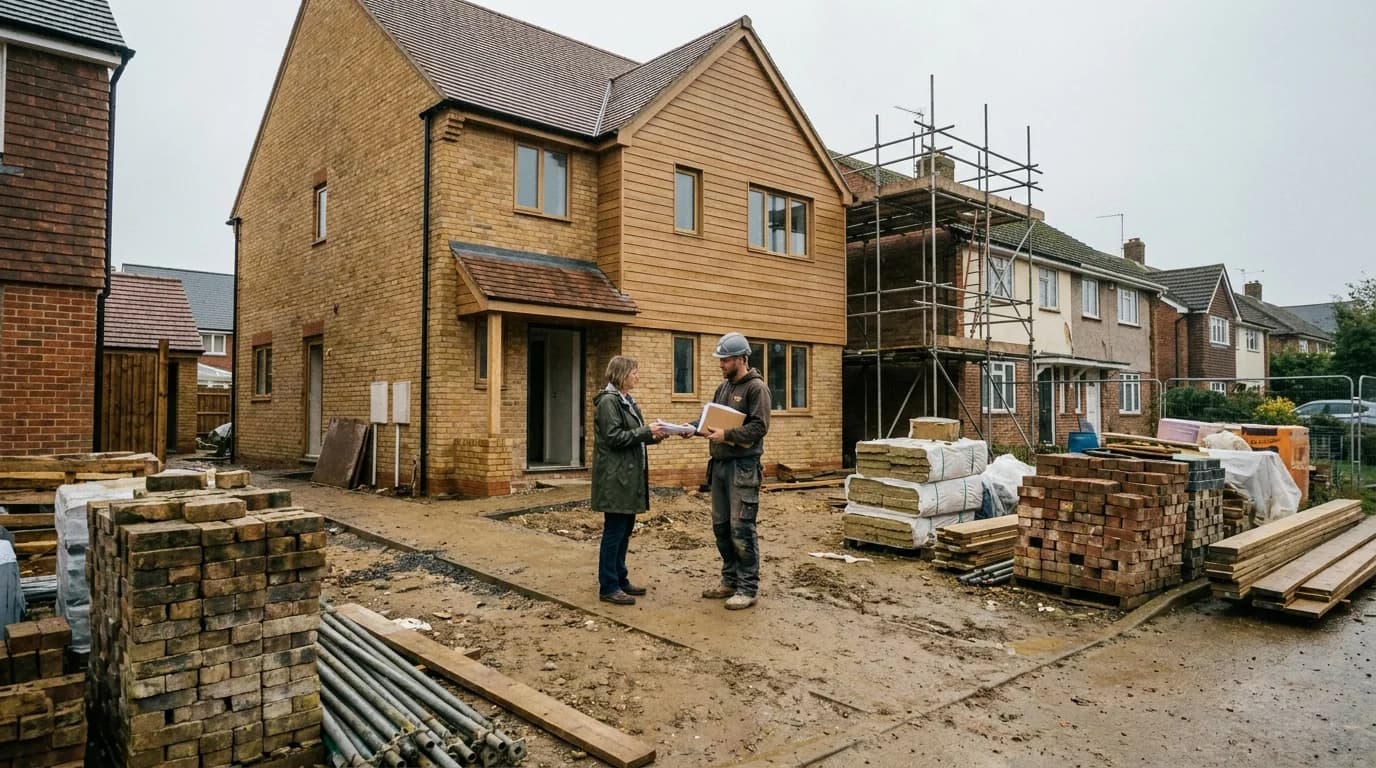
What warranty should a builder give?
Builder warranties protect you if defects appear after completion. Understand what to expect, what to ask for and which warranties really matter.
- Category
- Contracts & payments
- Author
- Star Hawk Builders Merchant
- Date
- 15 October 2026
- Read time
- 6 min
Contracts & payments · Star Hawk Builders Merchant
Builder warranties protect you if defects appear after completion. Understand what to expect, what to ask for and which warranties really matter.
6 min read · Published 15 October 2026
Warranties are easy to overlook at the start of a building project. Everyone is focused on price, design and start dates. But the warranty is what protects you once the scaffolding comes down and the builder moves on. Without it, you may have little recourse if cracks appear, leaks develop or systems fail.
This guide explains the different types of warranty you should expect, what they cover and how to make sure you receive the paperwork. For advice on contracts, read our guide to what to include in a building contract.
The builder's own warranty
Most reputable builders offer their own warranty on workmanship, typically lasting 6–12 months from practical completion. This covers defects that arise because the work was not carried out properly.
A builder's warranty is useful, but it has limits. If the builder goes out of business, the warranty may be worthless. It also usually only covers workmanship, not materials or structural design.
Before work starts, ask the builder to confirm their warranty period in writing. It should be included in the contract.
Insurance-backed warranties
An insurance-backed warranty is provided by a third-party insurer rather than the builder. These warranties are common for new builds, major extensions and structural warranties. They typically last 10 years.
The advantage is that the warranty remains valid even if the builder ceases trading. Providers include NHBC and similar warranty providers.
Insurance-backed warranties usually cover major structural defects and sometimes weatherproofing and other elements. They come with conditions, so read the policy carefully.
What a typical warranty covers
Coverage varies, but a good warranty should cover:
- Defects in workmanship.
- Structural defects.
- Weatherproofing failures, such as roof leaks.
- Non-compliance with building regulations at the time of completion.
It usually does not cover:
- General wear and tear.
- Damage caused by the homeowner.
- Maintenance items.
- Pre-existing defects.
- Cosmetic issues that do not affect function.
Always read the exclusions. Some warranties only cover major structural elements, while others include a wider range of defects.
Manufacturer warranties
Many products used in building come with their own manufacturer warranties. These can last much longer than the builder's warranty and are not dependent on the builder staying in business.
Common manufacturer warranties include:
- Windows and doors: 10–20 years.
- Roof tiles and slates: 20–50 years or more.
- Boilers: 5–10 years.
- Insulation and membranes: 10–30 years depending on the product.
- Kitchen appliances: 2–5 years.
Keep all manufacturer certificates and registration documents safe. You may need them to make a claim.
Warranties for different types of work
New builds
New homes should come with a structural warranty, often provided through NHBC or an equivalent provider. This typically provides 10 years of cover.
Extensions and renovations
Smaller projects may not include an insurance-backed warranty. In these cases, rely on the builder's own warranty, manufacturer warranties and your contract.
Loft conversions
Loft conversions involve structural work and should come with a builder's warranty. Some structural warranty providers also cover loft conversions.
Kitchens and bathrooms
Fitted kitchens and bathrooms should be covered by the installer's workmanship warranty and manufacturer warranties on appliances, sanitaryware and taps.
What to ask before work starts
Before signing a contract, ask the builder:
- What warranty do you offer on workmanship?
- Is an insurance-backed warranty available?
- What does the warranty cover and exclude?
- Are manufacturer warranties included?
- Will you provide written warranty documents on completion?
- What is the process for making a claim?
A professional builder will answer these questions clearly. Evasiveness is a red flag.
The defects period
Most contracts include a defects period, often 6–12 months after practical completion. During this time, the builder must return to fix defects that appear due to poor workmanship.
Some contracts hold back a retention, typically 3–5% of the contract sum, until the end of the defects period. This gives the builder an incentive to return and gives you leverage if they do not.
How warranties differ from insurance
It is easy to confuse warranties with insurance, but they are different. Insurance usually covers accidental damage, theft or events such as fire. A warranty covers defects that were present at completion or arise because of poor workmanship or materials.
You still need buildings insurance during and after the project. A warranty is not a replacement for it.
Do you need a warranty for every project?
Not every project needs an insurance-backed warranty. For small jobs such as a new bathroom, a builder's own warranty and manufacturer guarantees are usually enough.
For major work such as extensions, loft conversions and new builds, an insurance-backed warranty adds valuable protection. It is especially important if the builder is a small company or if you plan to sell within ten years.
Some mortgage lenders require a structural warranty for new builds before they will lend. Check with your lender if you are financing a new home.
Transferring warranties when you sell
A valuable warranty should be transferable to the next owner. This is one reason insurance-backed warranties appeal to buyers. If you have manufacturer warranties, make sure they can also be transferred or that the paperwork is clear enough for the buyer's solicitor.
Keep all warranty documents, certificates and correspondence in a safe place. When you sell, provide copies to your solicitor and the buyer.
Recording condition at handover
A smooth warranty claim starts with good records at handover. Before the builder leaves, take dated photographs of the completed work, especially hidden areas such as insulation, membranes and pipework. Keep a copy of the final invoice, the contract, building control completion certificates and any test certificates.
If a defect appears later, these records help establish whether the problem existed at completion or developed afterwards. They also make it easier for a surveyor or warranty provider to assess the claim.
Snagging and handover
Before making the final payment, carry out a thorough snagging inspection. List every defect, however small, and agree a date for the builder to put them right. Do not sign off practical completion until you are satisfied.
Our guide on when and how to pay your builder explains why the final payment should only be made after snagging is complete.
What to do if the builder will not honour the warranty
If a defect appears and the builder refuses to fix it, follow these steps:
- Write to the builder describing the defect and requesting a repair under warranty.
- Keep records of all correspondence, photographs and reports.
- Check your contract for the dispute resolution procedure.
- Contact the warranty provider if you have an insurance-backed warranty.
- Seek independent advice from a surveyor if the defect is serious.
- Consider mediation, adjudication or court if the builder still refuses.
For consumer advice, Citizens Advice can help. For serious concerns about a trader, contact Trading Standards.
Final thoughts
A warranty is only as good as the paperwork behind it. Ask for written confirmation of all warranties, keep certificates safe and understand what is covered. The best builders stand by their work and make the warranty process straightforward.
For materials and project support across the South East, request a quote from Star Hawk Builders Merchant, find your nearest branch or browse our case studies to see the kind of projects we help deliver.
Frequently asked questions
How long should a builder's warranty last?
Most builders offer 6–12 months for defects in workmanship. Insurance-backed warranties can last 10 years but usually apply to new builds and major conversions.
What is an insurance-backed warranty?
It is a warranty provided by a third-party insurer that covers defects even if the original builder stops trading.
Does a builder's warranty cover materials?
The builder's warranty usually covers workmanship. Materials are covered by manufacturer warranties, which may last much longer.
What should I do if a defect appears after the warranty ends?
Check whether the defect relates to a product covered by a manufacturer warranty. Otherwise you may need to pay for repairs yourself or claim on your home insurance.
Need materials for your project?
Send us your material schedule and we'll come back with stock availability, a written quote and a delivery slot, usually within the hour during trade hours.
Related articles
More guides and advice to help your building project run smoothly.
What should be in a building contract
A written building contract protects both you and your builder. This guide explains the essential clauses every homeowner should look for before signing.
How to check a builder's insurance and qualifications
Checking a builder's insurance and qualifications before you hire protects you from cowboy builders, unsafe work and costly disputes.
Can I withhold payment if the work is poor?
Withholding payment is sometimes justified, but doing it the wrong way can weaken your position. Here is how to protect yourself legally and practically.

When and how to pay your builder
Paying your builder the right way protects your money and keeps the project moving. Here is how to structure deposits, staged payments and final balances.
How to find the right builder for your project
Finding the right builder is the difference between a smooth project and a nightmare. Here is a practical vetting process that protects your money, your home and your sanity.