
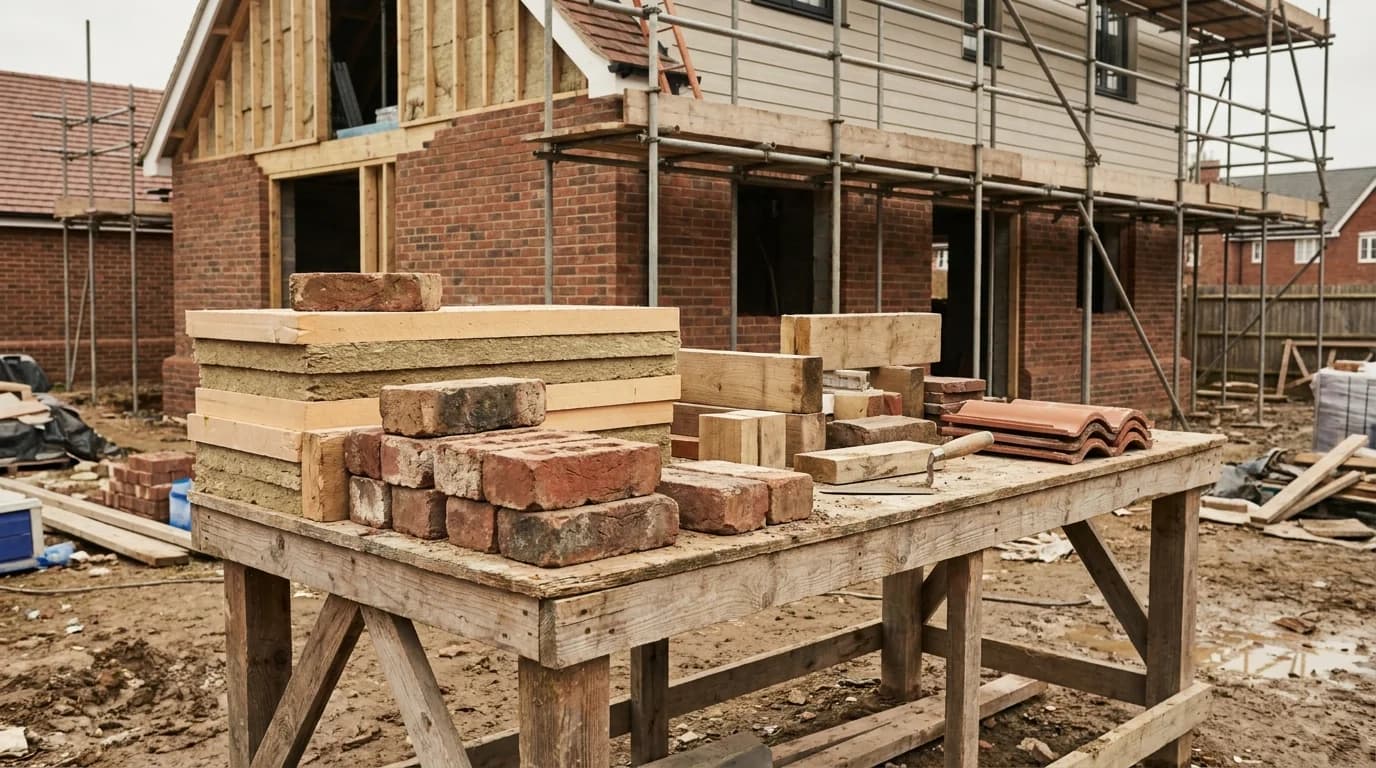
Choosing building materials: quality vs price
The cheapest materials are rarely the best value. Learn when to invest in quality, where to save money and how to avoid specification mistakes on your build.
- Category
- Materials & sourcing
- Author
- Star Hawk Builders Merchant
- Date
- 20 March 2025
- Read time
- 6 min
Materials & sourcing · Star Hawk Builders Merchant
The cheapest materials are rarely the best value. Learn when to invest in quality, where to save money and how to avoid specification mistakes on your build.
6 min read · Published 20 March 2025
Every building project involves a tension between cost and quality. Homeowners naturally want to keep spending under control, but choosing the cheapest option for every material is one of the fastest ways to create problems later. Leaks, cold spots, structural movement and premature failure are expensive to put right.
The trick is knowing where quality matters most and where a cheaper product will do the same job. This guide explains how to make those decisions for a typical UK extension, renovation or self-build.
Why the cheapest quote is not always the cheapest project
A builder can lower a quote by using thinner insulation, lower-grade timber, cheaper fixings or unbranded membranes. The finished project may look the same on day one, but the difference shows up over time:
- Cold bridging and higher energy bills.
- Roof leaks or condensation problems.
- Cracking movement in walls.
- Rot or decay in poorly treated timber.
- Failed fixings and squeaky floors.
Spending a little more on the right materials upfront usually saves money, disruption and regret.
Where to prioritise quality
Some parts of a building are hard or impossible to upgrade later. These are the areas where quality should win over price.
Foundations and groundworks
You cannot see foundations after the build, but everything rests on them. Use the correct concrete mix, reinforcement and damp-proof membrane for your soil conditions. Skimping here risks settlement cracks and damp that are disruptive and costly to repair.
Always confirm that concrete and reinforcement meet the specification in your structural engineer's calculations. Any substitution should be agreed in writing.
Structural timber
Carcassing timber should meet the correct strength grade for the span and load. C16 is common for general studwork and joists. C24 is stronger and better for longer spans or heavier loads. Buying lower-grade timber to save money can cause deflection, bounce and fixing problems.
Timber should also be properly seasoned and stored. Wet or twisted timber will shrink, warp and split after installation.
Structural steel
Steel beams, lintels and fixings must be specified by a structural engineer. Using undersized steel or the wrong bolts is dangerous and will fail building control. You can read more about structural safety standards on the NHBC website.
Damp-proofing and weatherproofing
A good damp-proof course, cavity trays, breathable membranes and quality flashing are essential. A single failure here can cause damp patches, mould and timber decay that cost thousands to repair.
Insulation
Insulation affects comfort, energy bills and compliance. Cheaper insulation may have a lower thermal conductivity, meaning you need more thickness to hit the same U-value. Poor installation creates cold bridges. Pay attention to the product's lambda value and how easily it fits the cavity or frame.
For most extensions, insulation must meet the standards set out in building regulations approval. Your builder or merchant will know which products comply for your application.
Roofing
The roof protects everything beneath it. Quality tiles, slates, battens, membrane and fascia boards last decades. Cheap roofing felt or poor-quality tiles can fail early and let water in.
Windows and doors
Better glazing, frames and seals reduce heat loss, noise and maintenance. A cheap window may need replacing in ten years. A quality window can last thirty. Look for energy ratings, guarantees and proper installation details.
Where you can sensibly save money
Not every material needs to be top of the range. There are places where a mid-range product performs just as well as a premium one.
Decorative finishes
Paint, wallpaper, tiles and floor coverings are easy to upgrade later. A mid-range tile from a reputable brand is usually fine. You do not need handmade tiles unless the look is essential to the design.
Internal doors and ironmongery
Standard internal doors are functional and affordable. Save the budget for external doors, where security and weatherproofing matter more.
Standard fixings and site consumables
Nails, screws, wall plugs and adhesives should be good quality, but you rarely need the most expensive brand. Buy from a reputable merchant and avoid unbranded bulk packs of unknown origin.
Standard plasterboard
For most internal walls and ceilings, standard 12.5mm plasterboard is perfectly adequate. Upgrade to moisture-resistant, fire-resistant or acoustic boards only where the location demands it.
How to compare materials fairly
When choosing between two products, look beyond the price per unit. Consider:
- Specification. Does it meet the relevant British Standard or building regulation requirement?
- Coverage. A cheaper product may cover less area, so the total cost can be higher.
- Durability. How long is it expected to last?
- Warranty. Does the manufacturer offer a meaningful guarantee?
- Compatibility. Will it work with the other materials in the build?
- Availability. A bargain product that is out of stock for six weeks can delay the project.
Ask your builder or merchant for a side-by-side comparison. A good supplier will explain the difference honestly.
The hidden cost of poor specification
Using the wrong material can be more expensive than using a better one. Examples include:
- Cheap mortar that crumbles and needs repointing.
- Lightweight blocks that cannot support the load above them.
- Non-breathable membranes that trap moisture in old walls.
- Incompatible adhesives that fail under heat or damp.
Your builder and merchant are your best defence against these mistakes. If a price looks unusually low, ask what product is being quoted and why.
Value engineering without cutting corners
Value engineering means getting the same result for less money, not getting a worse result for less money. Ways to do this include:
- Simplifying the design to reduce waste and labour.
- Choosing locally available materials to cut delivery costs.
- Buying in bulk where storage allows.
- Reusing existing materials where appropriate, such as bricks or roof tiles.
- Timing orders to take advantage of trade promotions.
For help with material choices and pricing, request a quote from Star Hawk Builders Merchant. Our branches across the South East can also advise on local availability.
Should you let your builder choose materials?
For structural and trade materials, usually yes. A good builder knows which products perform well, which are readily available and which ones their team is used to working with. They also take responsibility if those materials fail.
For decorative items, you may prefer to choose yourself. Just make sure you confirm specifications, delivery dates and compatibility with your builder. For more on this, see our guide to whether you should buy materials or let your builder.
The role of certification and standards
Look for materials that carry relevant certification:
- CE or UKCA marking on structural products.
- British Standards such as BS EN 771 for bricks or BS 4978 for timber.
- BBA certificates for membranes, insulation and systems.
- FSC or PEFC certification for sustainably sourced timber.
These marks mean the product has been tested and meets minimum standards. Unbranded or uncertified materials are a gamble.
Reputable trade bodies such as the Federation of Master Builders expect their members to use appropriate, compliant materials. Choosing a builder who belongs to a recognised scheme is another layer of protection.
Final thoughts
Choosing building materials is not about finding the cheapest price or the most premium brand. It is about matching the right product to the right job. Invest in the parts of the building that are hard to change and protect the structure from weather, damp and movement. Save on the decorative items that can be updated later.
If you are planning a project and want honest advice on material quality and value, contact Star Hawk Builders Merchant. You can find your nearest branch or browse our case studies to see the materials we supply in action.
Frequently asked questions
Should I always buy the most expensive building materials?
No. The right material depends on the application. Invest in items that affect structure, weatherproofing and long-term durability. Save on decorative items where quality is less critical.
What is the difference between builder-grade and retail-grade materials?
Builder-grade materials are usually tested to British Standards and bought in bulk. Retail-grade products may look similar but can have lower performance ratings or shorter lifespans.
Can I save money by buying cheaper insulation?
Cheaper insulation often has a lower thermal performance, which means you need a thicker layer to meet building regulations. It can also be harder to install cleanly.
What building materials should never be skimped on?
Foundations, structural timber, steel, damp-proofing, roofing membranes, insulation and fixings. Cutting corners here causes expensive problems later.
Need materials for your project?
Send us your material schedule and we'll come back with stock availability, a written quote and a delivery slot, usually within the hour during trade hours.
Related articles
More guides and advice to help your building project run smoothly.
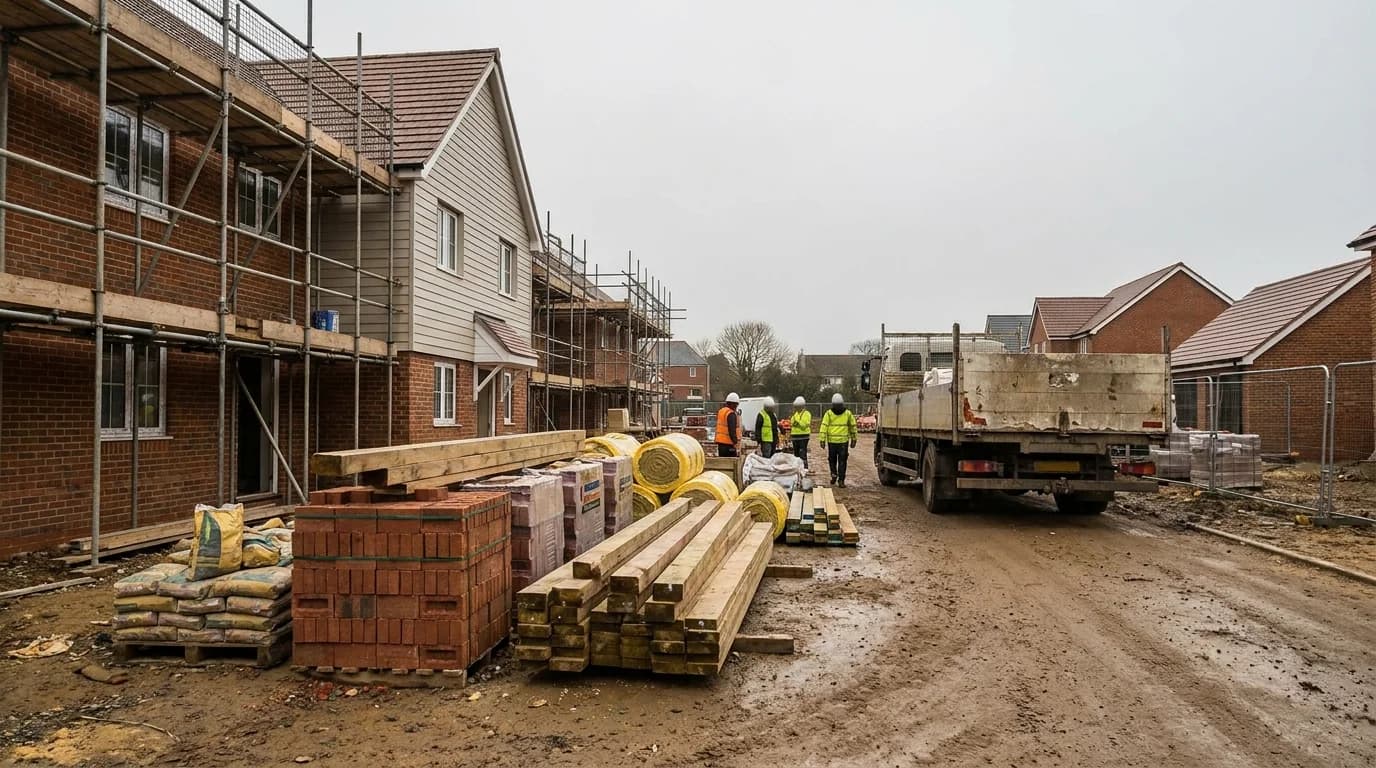
Should you buy materials or let your builder buy them?
Buying materials yourself can feel like a saving, but it can also cost you discounts, warranties and site time. Here is how to decide who should buy what.
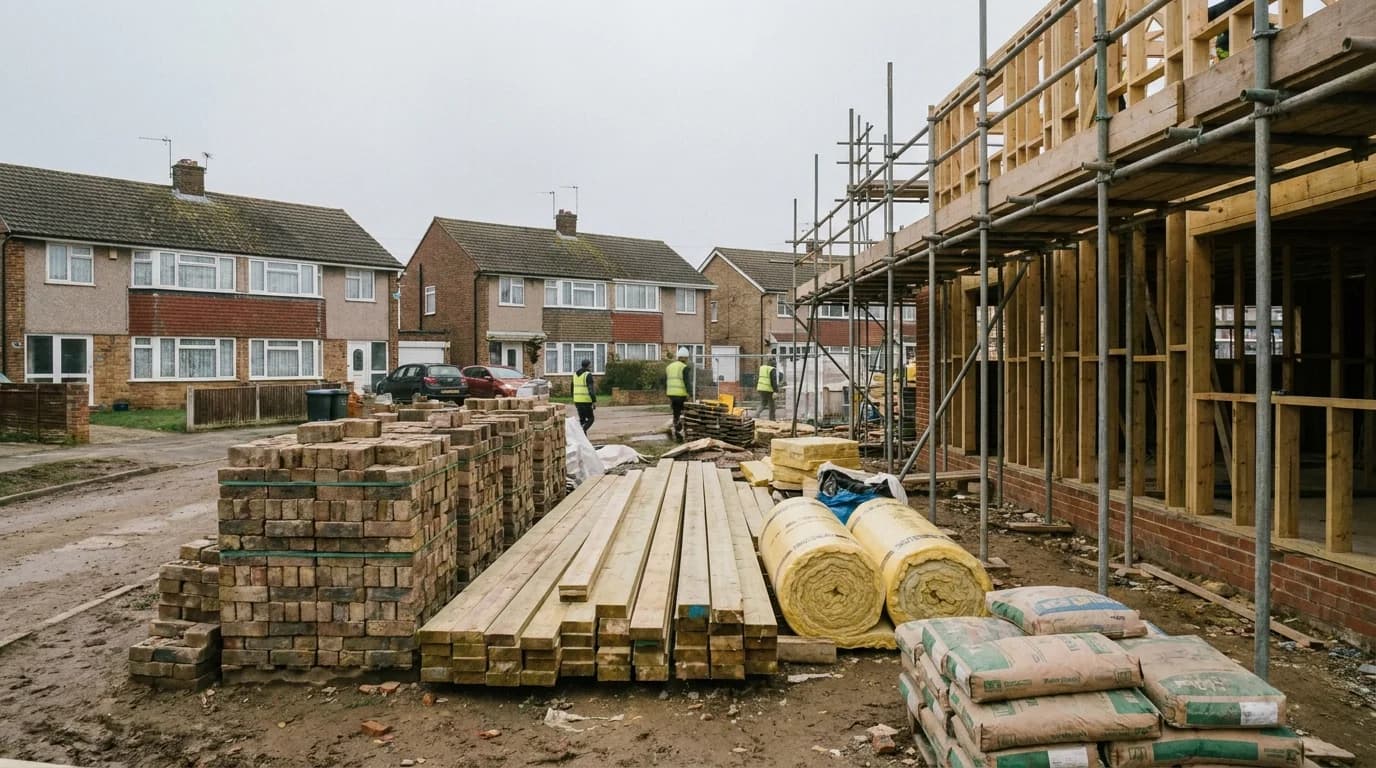
Why material prices matter before your first build
If you do not know what bricks, blocks, cement and timber actually cost, you cannot judge whether a quote is fair. Here is how to research material prices before your first build.
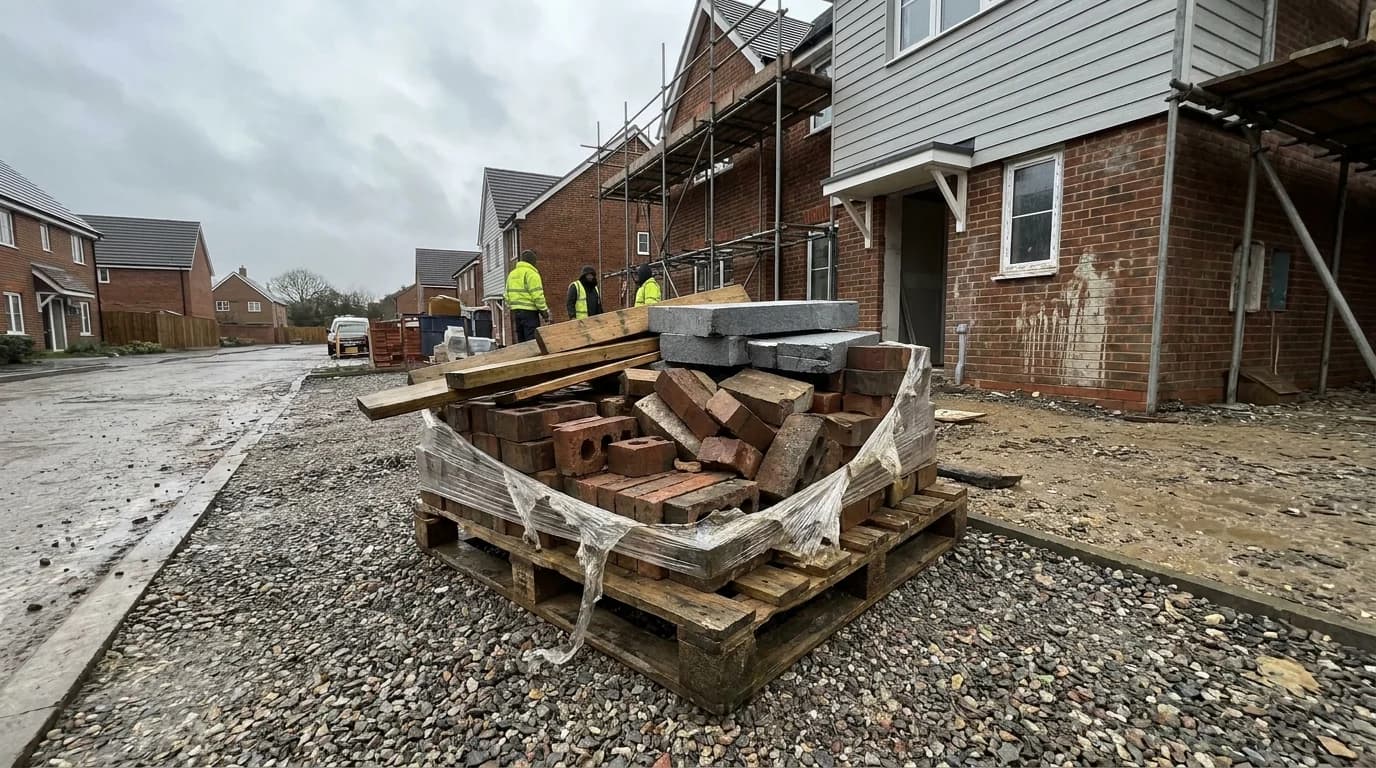
Why buying building materials online can backfire
Online material prices look tempting, but hidden costs, wrong specifications and difficult returns can make them more expensive than a local merchant.
How much does a home extension really cost?
Build costs are only part of the story. This guide breaks down realistic extension prices, hidden fees and how to budget for a project that does not run out of money.