
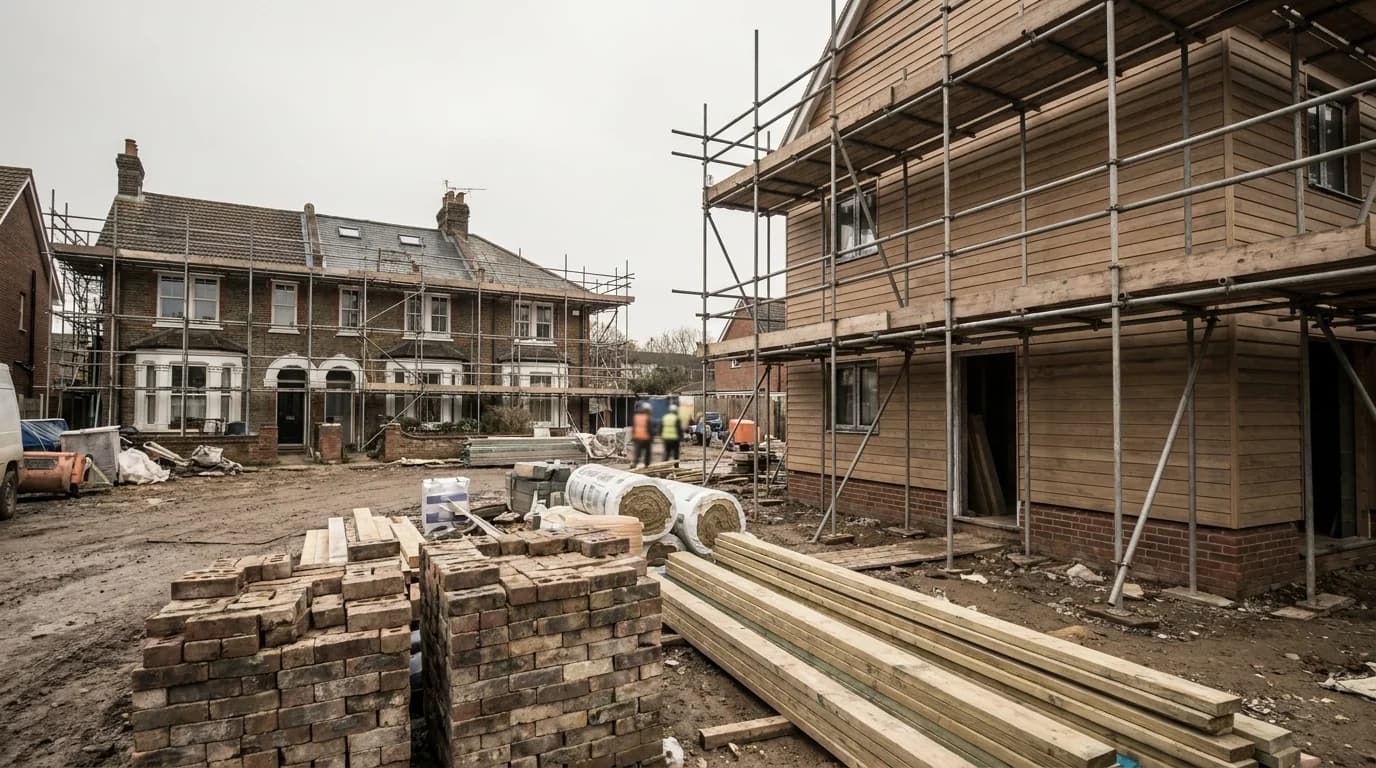
New build vs renovation: which is better value?
Building new gives you control, while renovating can save money and preserve character. Here is how to compare the two routes.
- Category
- Project planning
- Author
- Star Hawk Builders Merchant
- Date
- 11 December 2025
- Read time
- 6 min
Project planning · Star Hawk Builders Merchant
Building new gives you control, while renovating can save money and preserve character. Here is how to compare the two routes.
6 min read · Published 11 December 2025
Deciding whether to build new or renovate an existing property is one of the biggest choices a homeowner can make. Both routes can deliver a beautiful home, but they differ sharply in cost, risk, timescale and emotional effort. The right answer depends on your budget, your existing property, your location and what you want from the finished building.
This guide compares new build and renovation projects in plain English. It looks at the real costs, the risks that catch people out and the practical questions that help you choose. If you are weighing up options, request a quote from Star Hawk Builders Merchant or visit your nearest branch to talk through material costs.
What counts as a new build versus a renovation?
A new build means constructing a dwelling from scratch on a plot of land. That could mean demolishing an existing house and replacing it, or building on a vacant site. You design the layout, choose the specification and start with a blank canvas.
A renovation means improving, extending or converting an existing building. That could be anything from a kitchen refurbishment to a full structural overhaul with extensions and loft conversions. You work within the constraints of the existing structure.
Both are major projects. Both need planning, builders and materials. The difference is how much you inherit and how much you control.
Cost comparison: new build vs renovation
The headline figures can be misleading because the two routes include different things.
A new build typically costs £1,800–£3,000 per square metre for a standard specification, excluding land and professional fees. In expensive areas or with high-end finishes, that figure can rise substantially. You also have to buy the land, obtain planning permission, pay for connection to services and finance the project until completion.
A renovation is usually cheaper per square metre because the foundations, walls and roof already exist. A light refurbishment might cost £500–£1,000 per square metre. A major renovation involving structural work, extensions and full refitting can easily reach £1,500–£2,500 per square metre.
However, renovations carry a hidden risk: the unknown. Opening up an old property often reveals damp, rot, defective wiring, asbestos, unstable walls or inadequate foundations. These problems are not the builder's fault, but they still need fixing. A £50,000 budget can become £75,000 once the walls are opened.
New builds have fewer surprises because you know what is in the ground before you start. The risk sits more in land purchase, planning and market timing.
Timescale: which is quicker?
Neither route is fast, but renovations often finish sooner if the scope is limited.
A typical renovation takes 6–18 months from design to completion. A kitchen or bathroom refresh might take weeks. A full house renovation with extensions can take well over a year.
A new build usually takes 12–24 months. Design and planning can take 6–12 months alone. Construction of a modest house is often 9–12 months once groundwork begins. Larger or more complex designs take longer.
If time is critical, a renovation may be the faster route. If you want control over every detail and can wait, a new build gives you more freedom.
Design flexibility
New builds win on flexibility. You choose the orientation, layout, room sizes, ceiling heights, window positions and energy performance from the start. You are not constrained by an existing staircase, chimney breast or load-bearing wall.
Renovations are more restrictive. You have to work around existing structures, boundaries and access. That said, clever design can transform an older property. Period features, mature gardens and established neighbourhoods are hard to replicate with a new build.
If character matters to you, renovation is usually the better fit. If modern efficiency and open-plan living are priorities, a new build is often easier.
Energy efficiency and running costs
New builds are generally more energy efficient. Modern insulation, airtightness standards, high-performance windows and efficient heating systems can be designed in from day one. Meeting current building regulations already gives you a better-performing home than most older stock.
Renovations can also achieve excellent energy efficiency, but it costs more to upgrade existing fabric. Replacing single glazing, insulating solid walls, upgrading boilers and adding renewables all add to the budget. Our guide to choosing building materials for quality and price explains how material choices affect performance.
Over the long term, a well-built new home usually has lower running costs. A renovated home can come close, but rarely at the same price point.
Risk and disruption
Renovation projects are often more disruptive to live through. If you stay in the property, you may be without a kitchen, bathroom or heating for weeks. Dust, noise and tradespeople become part of daily life.
New builds are less disruptive if you are living elsewhere, but they carry their own stress. Land purchase, planning delays, finance and weather all affect the programme. You also have to sell or rent somewhere to live during construction.
Both routes benefit from a good builder, a clear contract and realistic expectations. For advice on finding one, read our guide to how to find the right builder.
Long-term value
A well-designed new build on a good plot can hold its value well and may command a premium. Buyers like modern layouts, low running costs and the reassurance of a warranty.
Renovations in desirable areas can also add significant value, especially when they add space or update tired properties. The best returns usually come from improving the worst house on a good street, not from overdeveloping an already expensive home.
Location often matters more than the route you choose. A mediocre new build in a weak location may struggle, while a thoughtful renovation in a popular area can thrive.
Planning and regulations
New builds almost always need full planning permission. That means detailed drawings, design and access statements, and engagement with the local planning authority. The process takes time and can be unpredictable.
Renovations may fall within permitted development rights, especially for rear extensions, loft conversions and internal alterations. Larger changes still need planning permission. For an overview, see GOV.UK guidance on permitted development rights for householders and the Planning Portal.
Both routes need building regulations approval. You can read more on GOV.UK building regulations approval.
Financing the two routes
Lenders treat new builds and renovations differently. A new build usually needs a self-build mortgage, which releases funds in stages as the build progresses. Renovations can often be funded through a standard mortgage advance, remortgage or personal loan.
Whichever route you choose, lenders will want to see detailed costings, a realistic programme and evidence that the work adds value. Have your finance in place before you commit.
Which is better value?
There is no universal answer. Renovation is usually better value when:
- The existing structure is fundamentally sound.
- You love the location and the property has character.
- The work needed is mainly cosmetic or moderate.
- You can live with some uncertainty in the budget.
A new build is usually better value when:
- The existing property is in poor condition or poorly laid out.
- Land is available at a sensible price.
- You want modern efficiency and low running costs.
- You want full control over design and specification.
For many homeowners, the best answer is a hybrid: a substantial renovation with a well-planned extension. That adds space and updates performance without the cost of starting from scratch.
Final thoughts
Choosing between a new build and a renovation means weighing certainty against flexibility, cost against character, and speed against control. The cheapest option on paper is not always the best value once risk, disruption and running costs are included.
Take time to compare both routes honestly. Get professional advice, visit finished projects and build a full budget before you decide. For materials support across the South East, request a quote from Star Hawk Builders Merchant, find your nearest branch or browse our case studies to see the kind of projects we help deliver.
Frequently asked questions
Is it cheaper to renovate or build new?
Renovation is usually cheaper per square metre, but unexpected defects can close the gap. New builds have predictable costs but higher upfront land and planning expenses.
Which adds more value: a new build or a renovation?
Both can add value if done well. Renovations in established areas often benefit from existing demand, while new builds can command a premium where land is scarce.
Is a new build more energy efficient than a renovation?
New builds are generally easier to make highly efficient from the outset. Renovations can still reach high standards, but upgrading old fabric adds cost.
How long does each route take?
A renovation may take 6–18 months depending on scale. A new build usually takes 12–24 months including design, planning and construction.
Need materials for your project?
Send us your material schedule and we'll come back with stock availability, a written quote and a delivery slot, usually within the hour during trade hours.
Related articles
More guides and advice to help your building project run smoothly.
How much does a home extension really cost?
Build costs are only part of the story. This guide breaks down realistic extension prices, hidden fees and how to budget for a project that does not run out of money.
How to find the right builder for your project
Finding the right builder is the difference between a smooth project and a nightmare. Here is a practical vetting process that protects your money, your home and your sanity.
Hidden costs that blow your extension budget
The builder's quote is only part of the cost. Planning fees, building regulations, skips, scaffolding and contingencies can add thousands. Here is what to budget for.
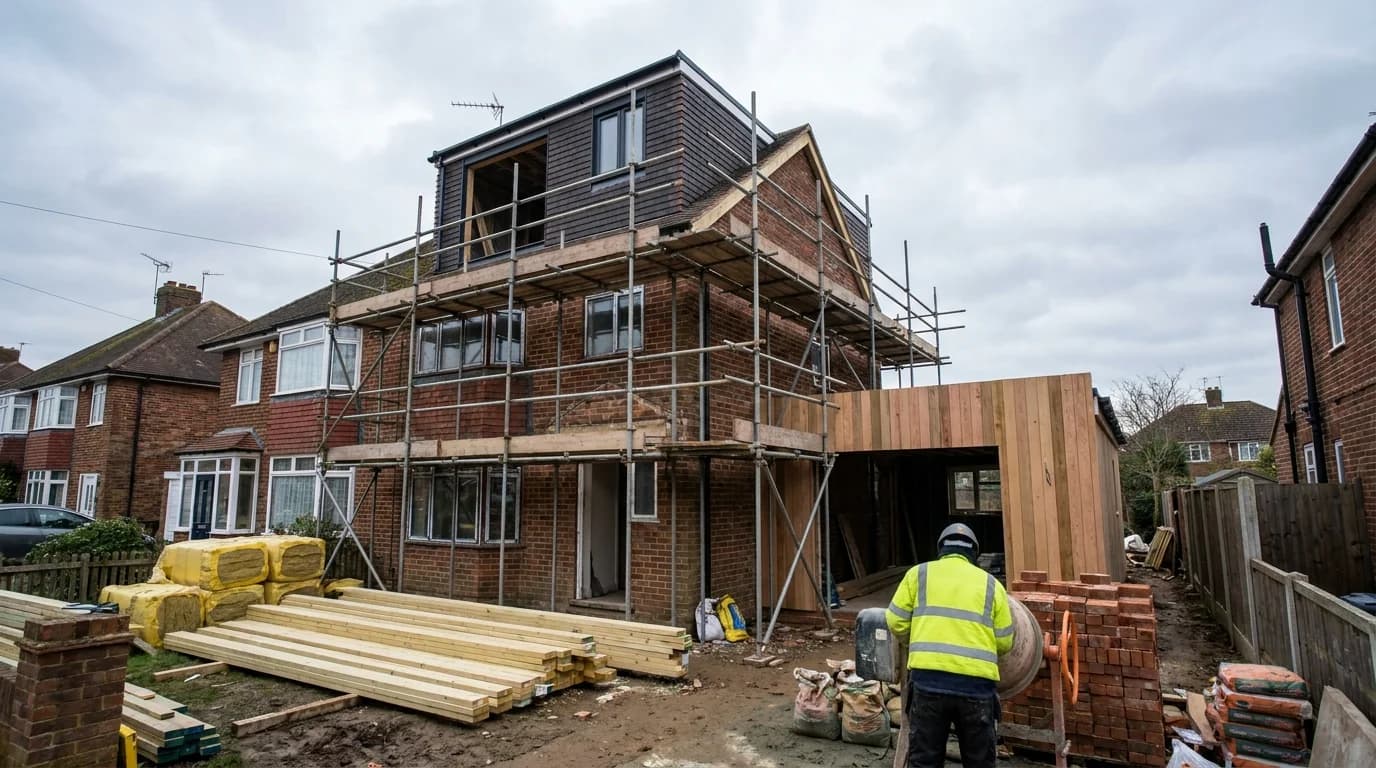
Extension vs loft conversion: which adds more value?
Extensions and loft conversions both add space and value, but they suit different homes and budgets. Here is how to choose the right option for your property.
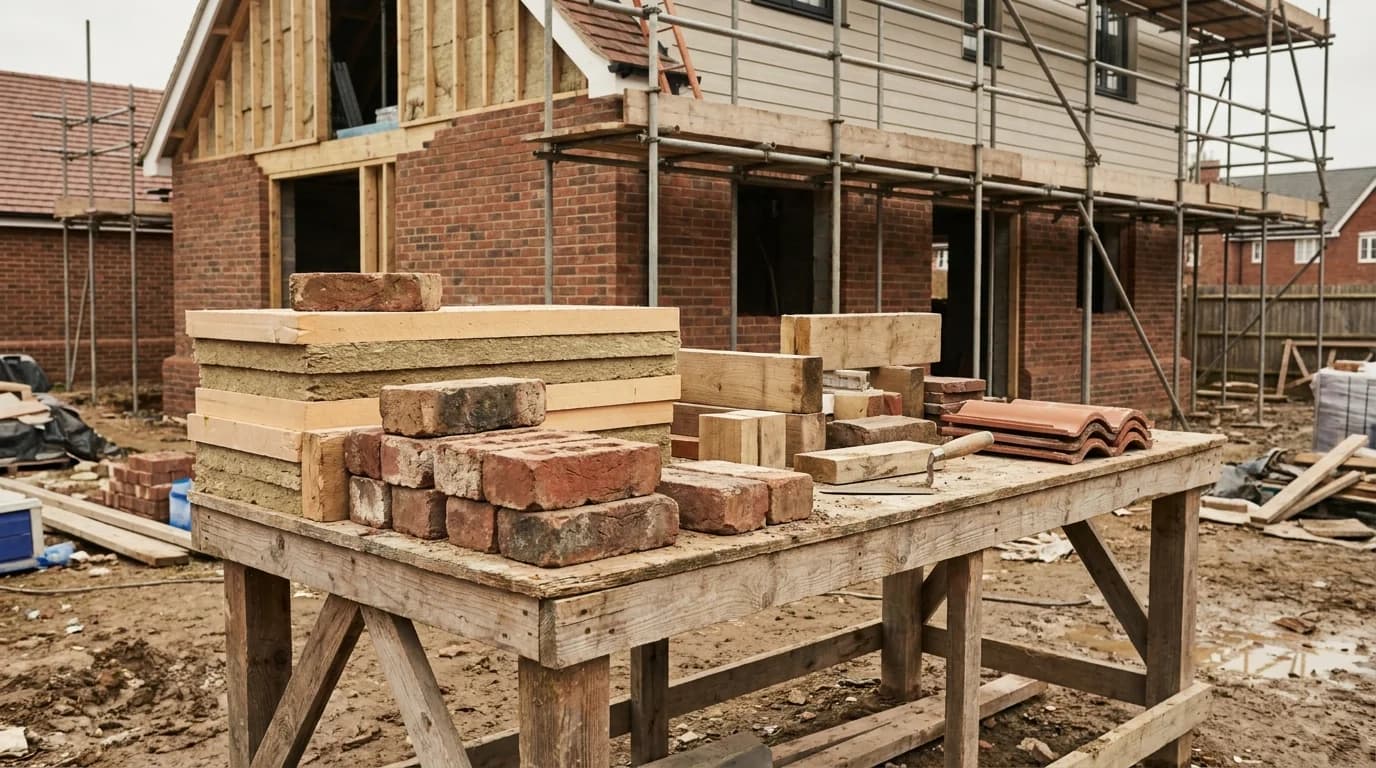
Choosing building materials: quality vs price
The cheapest materials are rarely the best value. Learn when to invest in quality, where to save money and how to avoid specification mistakes on your build.