
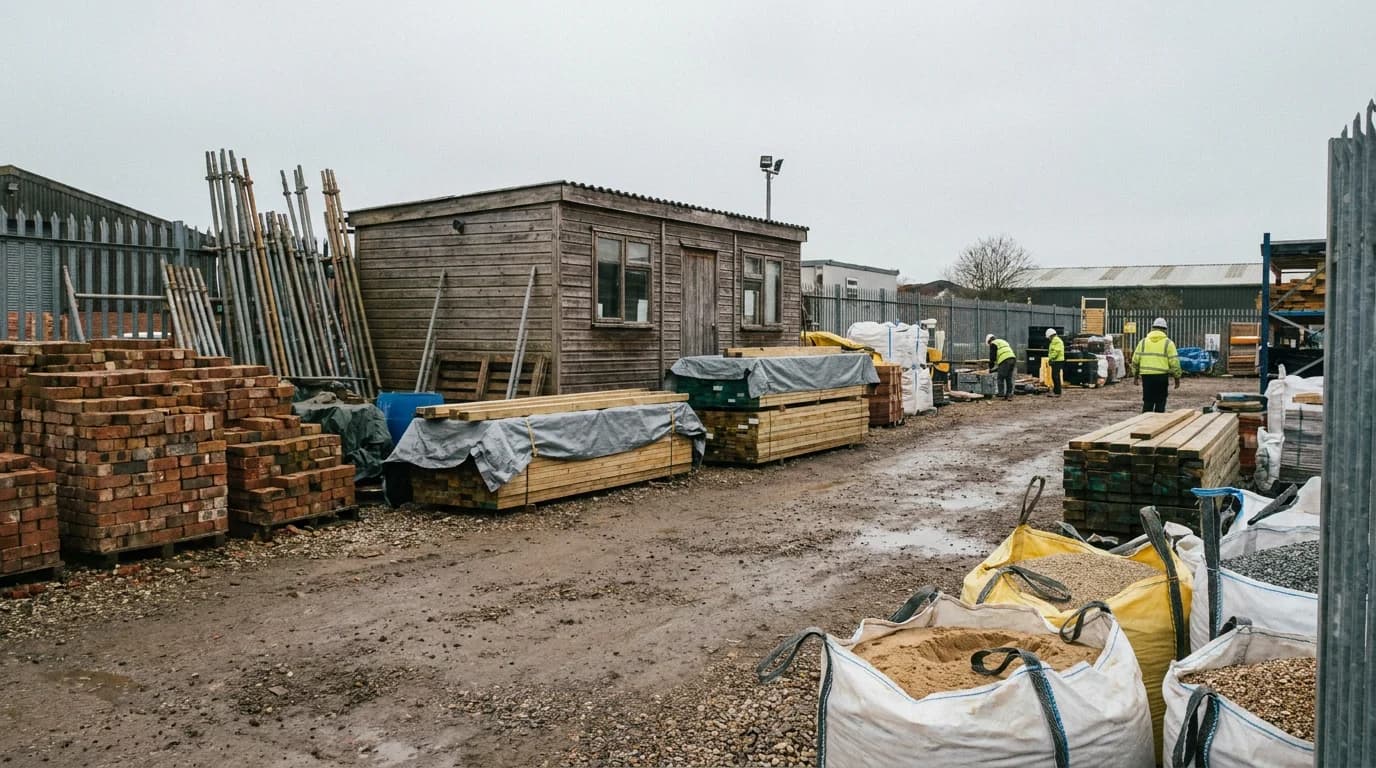
Why a local builders merchant beats a big DIY chain
DIY chains are convenient for small jobs, but a local builders merchant usually offers better trade pricing, specialist stock and expert advice for serious projects.
- Category
- Materials & sourcing
- Author
- Star Hawk Builders Merchant
- Date
- 14 August 2025
- Read time
- 6 min
Materials & sourcing · Star Hawk Builders Merchant
DIY chains are convenient for small jobs, but a local builders merchant usually offers better trade pricing, specialist stock and expert advice for serious projects.
6 min read · Published 14 August 2025
When you need building materials, the obvious choice is often the nearest big DIY chain. The car parks are large, the stores are bright and the shelves are packed. But for anything more serious than a shelf or a fence panel, a local builders merchant is usually the better option.
This article compares the two on the factors that really matter for homeowners and builders: price, stock, delivery, product knowledge and support. It also explains when a DIY chain is good enough and when it pays to use a trade-focused supplier.
The price myth
Many people assume DIY chains are cheaper because they advertise heavily and sell to the public. That can be true for small, packaged items such as screws, paint and light fittings. It is rarely true for bulk building materials.
Builders merchants make their money from regular trade customers who buy large quantities and come back week after week. Their pricing reflects that volume. A bag of cement, a pallet of bricks or a cubic metre of aggregate will almost always cost less at a merchant, especially if you have a trade account.
DIY chains also tend to stock consumer-grade versions of products. The insulation, timber or plasterboard you see on the shelf may not be the same specification a professional would use. Cheaper products can fail to meet building regulations or wear out faster, costing more in the long run. Our guide on choosing building materials: quality vs price explores this in more detail.
Trade accounts and bulk pricing
If you are managing a project, ask your builders merchant about a trade account or project pricing. Benefits can include:
- Discounted rates for larger orders.
- Credit terms that help with cash flow.
- Dedicated account manager.
- Faster quotes and order processing.
- Priority on popular stock lines.
Even as a homeowner, you can often access project pricing if you are buying a significant quantity. DIY chains rarely offer the same flexibility.
Product knowledge that saves money
One of the biggest differences between a merchant and a DIY chain is the staff. A good builders merchant employs people who have worked on site and understand construction. They can tell you:
- Which timber grade you actually need for a floor joist.
- Whether a particular insulation board meets Part L.
- What mortar mix is right for your bricks.
- Which drainage fittings connect together.
That advice can prevent expensive mistakes. Buying the wrong item from a DIY chain and returning it costs time and fuel. Installing the wrong item and having to rip it out costs far more.
Stock availability and specialist products
Builders merchants carry the products tradespeople use every day. That means larger quantities, trade packs and specialist lines you will not find in a DIY chain. If you need:
- Engineering bricks or dense concrete blocks.
- Specific lintels or steel beams.
- Damp-proof membranes and cavity trays.
- Specialist adhesives, sealants or renders.
- Bulk aggregates or ready-mixed mortar.
A merchant is usually the only practical choice. DIY chains keep a limited range of the most common products. If your project is anything beyond basic, you will end up at the merchant anyway.
Delivery direct to site
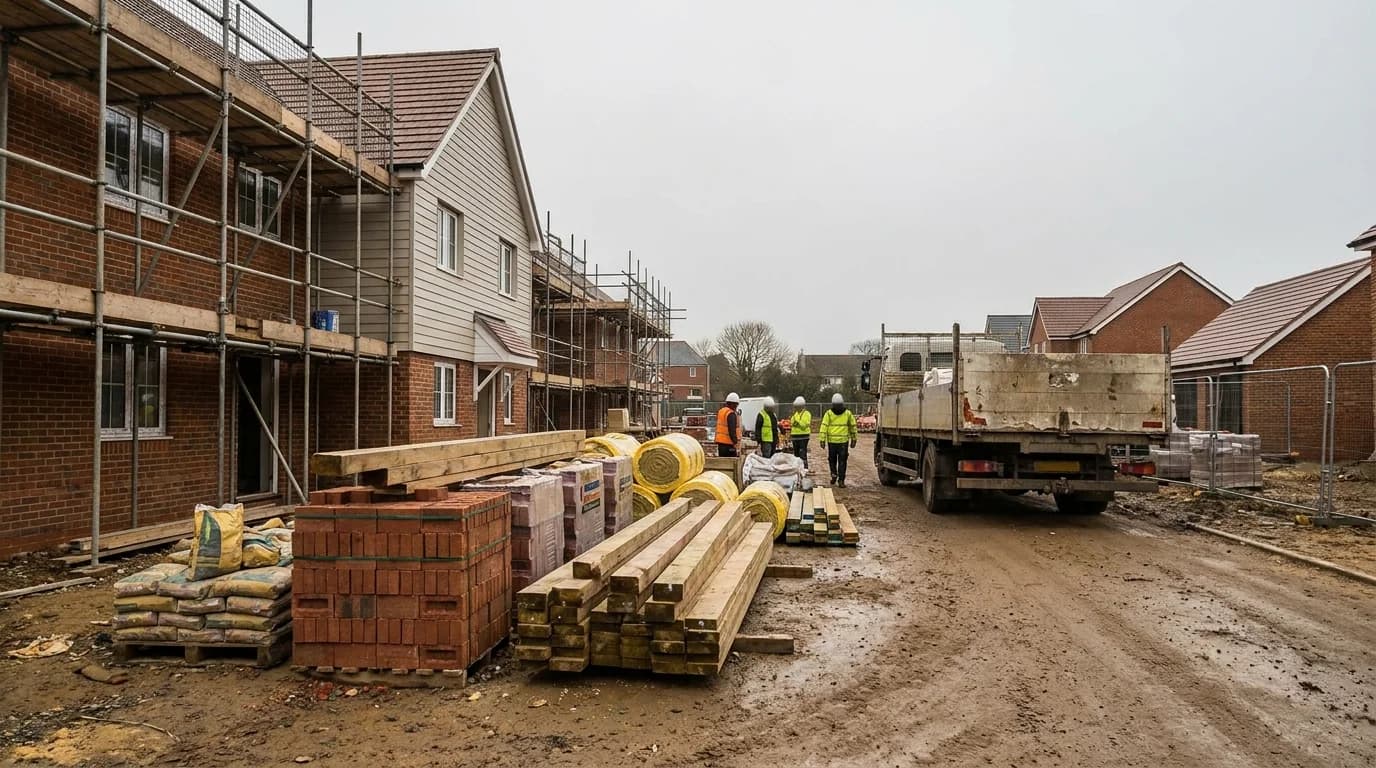
DIY chains are designed for customers who put things in a car. Builders merchants are designed for customers who need tonnage delivered to site.
Merchant delivery services include:
- Timed deliveries so materials arrive when the builder is ready.
- Crane offload for heavy items such as lintels, beams and bags of gravel.
- Bulk drops for sand, ballast and topsoil.
- Consolidated deliveries that bring everything in one go, reducing transport costs.
For a busy site, delivery matters as much as price. Materials that arrive on time keep the builder working. Materials that do not can bring the whole project to a halt.
Returns and problem solving
Mistakes happen. A builder orders the wrong fitting, a homeowner changes their mind, or a delivery arrives damaged. How a supplier handles those moments says a lot about their value.
Builders merchants usually understand that returns are part of the job. They know builders work to tight programmes and cannot afford to wait a week for a replacement. Many will swap items quickly or credit your account.
DIY chains can be more rigid. Their returns policies are written for consumers, not construction projects, and staff may not have the authority or knowledge to solve trade problems quickly.
Supporting the local economy
Using a local merchant also keeps money in your area. Local merchants employ local drivers, warehouse staff and sales teams. They sponsor local trades, support community projects and understand the local building market.
That local knowledge can be useful. A merchant that supplies a lot of projects in your postcode knows what products work in local soil conditions, what the local planners expect and which builders are reliable. That kind of insight is hard to find in a national chain.
When a DIY chain makes sense
DIY chains are not useless. They are a good choice when:
- You need a single, small item and want it today.
- You are doing a small weekend job such as hanging a shelf or painting a room.
- You need consumer-friendly displays and clear pricing.
- You want to browse fittings, lighting or décor.
The mistake is using a DIY chain as your main supplier for a large building project. Convenience shopping and project procurement are different tasks.
The hidden cost of multiple trips
One cost homeowners rarely add up is the time and fuel spent driving back and forth to a DIY chain. A forgotten fitting, a slightly wrong colour or an underestimated quantity can mean another hour in the car, another queue and another parking charge.
A builders merchant reduces these trips because staff help you order correctly the first time and consolidate everything into one delivery. When you value your own time, that convenience can make the merchant cheaper even before the unit price is considered.
Avoiding online pitfalls
Some homeowners also turn to online marketplaces for cheap materials. That can work for standard items, but it carries risks. Delivery times can be long, product descriptions can be misleading and returns can be expensive. Our article on why online building materials can fail you explains what to watch out for.
How to choose a reliable merchant
Not all merchants are equal. When choosing a supplier, check:
- Stock range. Do they carry the products you need?
- Delivery options. Can they deliver when and where you need it?
- Credit terms. Are they available if you need them?
- Returns policy. Is it fair and practical?
- Reviews and reputation. Ask local builders for recommendations or check review sites such as Checkatrade.
- Company details. You can verify the business on Companies House.
For major projects, it is also worth checking that your builder is reputable. Use bodies such as FMB or TrustMark to find vetted tradespeople.
Final thoughts
For small DIY jobs, a big chain is fine. For extensions, renovations and any project where time, specification and budget matter, a local builders merchant is usually the smarter choice. You get better prices, better advice, better delivery and better support when things go wrong.
If you are planning a project in the South East, request a quote from Star Hawk Builders Merchant, find your nearest branch or browse our case studies to see the materials and service we provide.
Frequently asked questions
Is a builders merchant cheaper than a DIY chain?
For trade quantities and regular materials, builders merchants are usually cheaper. DIY chains can be competitive on small, packaged items but rarely match bulk trade prices.
Do builders merchants sell to the public?
Most builders merchants welcome both trade and retail customers. Some offer extra discounts or credit accounts to trade customers.
Can a builders merchant deliver to site?
Yes, most merchants offer timed deliveries, hiab crane offload and bulk drops direct to site, which DIY chains rarely match.
What materials should I buy from a builders merchant?
Heavy, bulky or specialist items such as bricks, blocks, timber, aggregates, insulation, drainage and roofing are usually better sourced from a merchant.
Why does product knowledge matter?
The right product specification can save money, avoid delays and prevent callbacks. Merchant staff typically understand construction standards and site conditions better than general retail staff.
Need materials for your project?
Send us your material schedule and we'll come back with stock availability, a written quote and a delivery slot, usually within the hour during trade hours.
Related articles
More guides and advice to help your building project run smoothly.
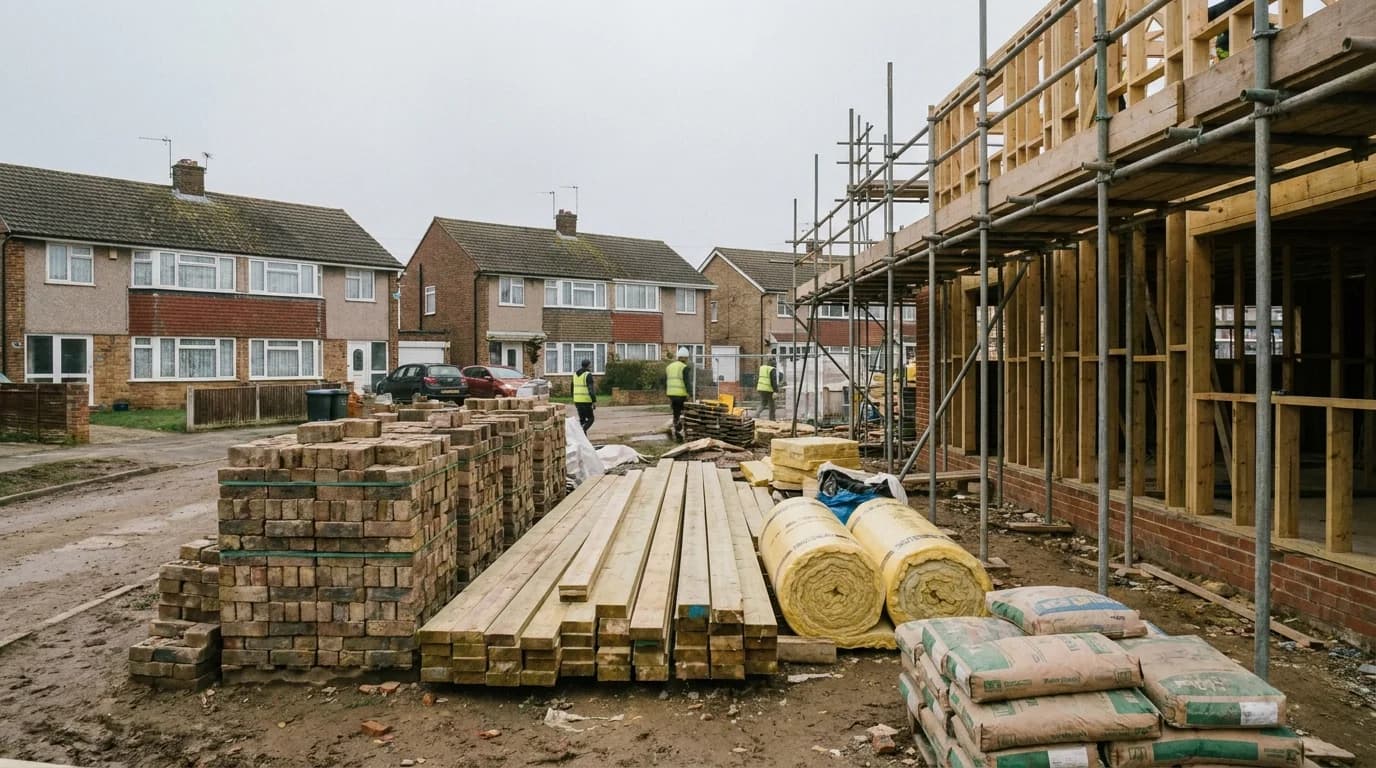
Why material prices matter before your first build
If you do not know what bricks, blocks, cement and timber actually cost, you cannot judge whether a quote is fair. Here is how to research material prices before your first build.
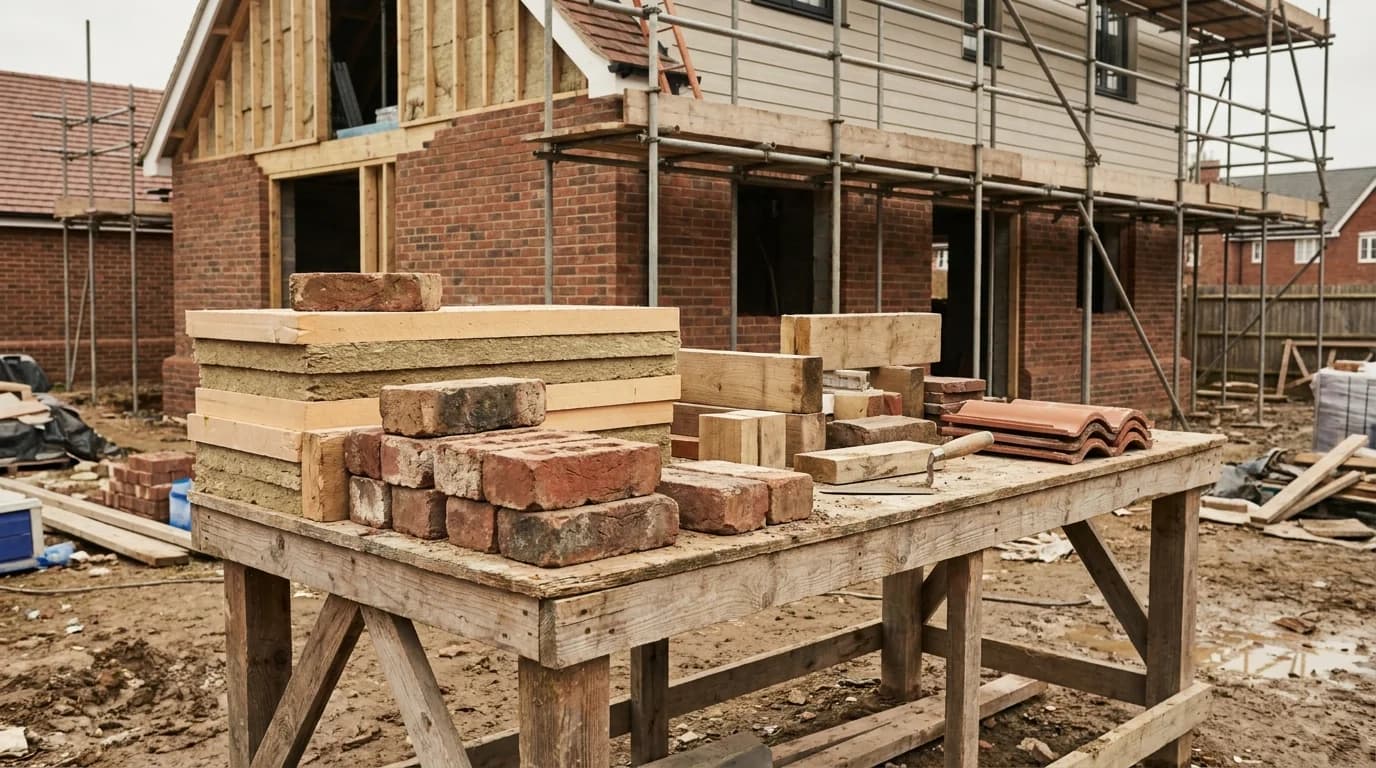
Choosing building materials: quality vs price
The cheapest materials are rarely the best value. Learn when to invest in quality, where to save money and how to avoid specification mistakes on your build.
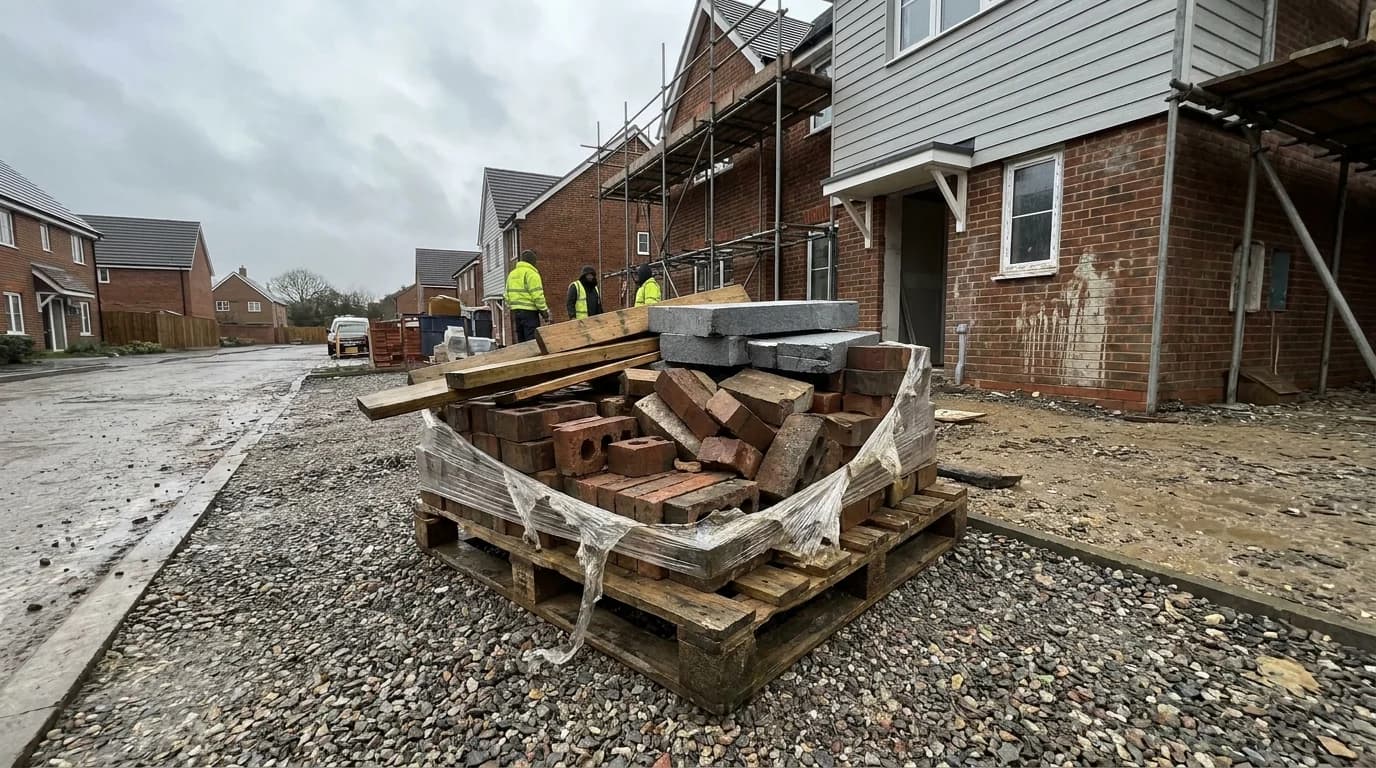
Why buying building materials online can backfire
Online material prices look tempting, but hidden costs, wrong specifications and difficult returns can make them more expensive than a local merchant.
Should you buy materials or let your builder buy them?
Buying materials yourself can feel like a saving, but it can also cost you discounts, warranties and site time. Here is how to decide who should buy what.
What should be in a building contract
A written building contract protects both you and your builder. This guide explains the essential clauses every homeowner should look for before signing.
How to check a builder's insurance and qualifications
Checking a builder's insurance and qualifications before you hire protects you from cowboy builders, unsafe work and costly disputes.