
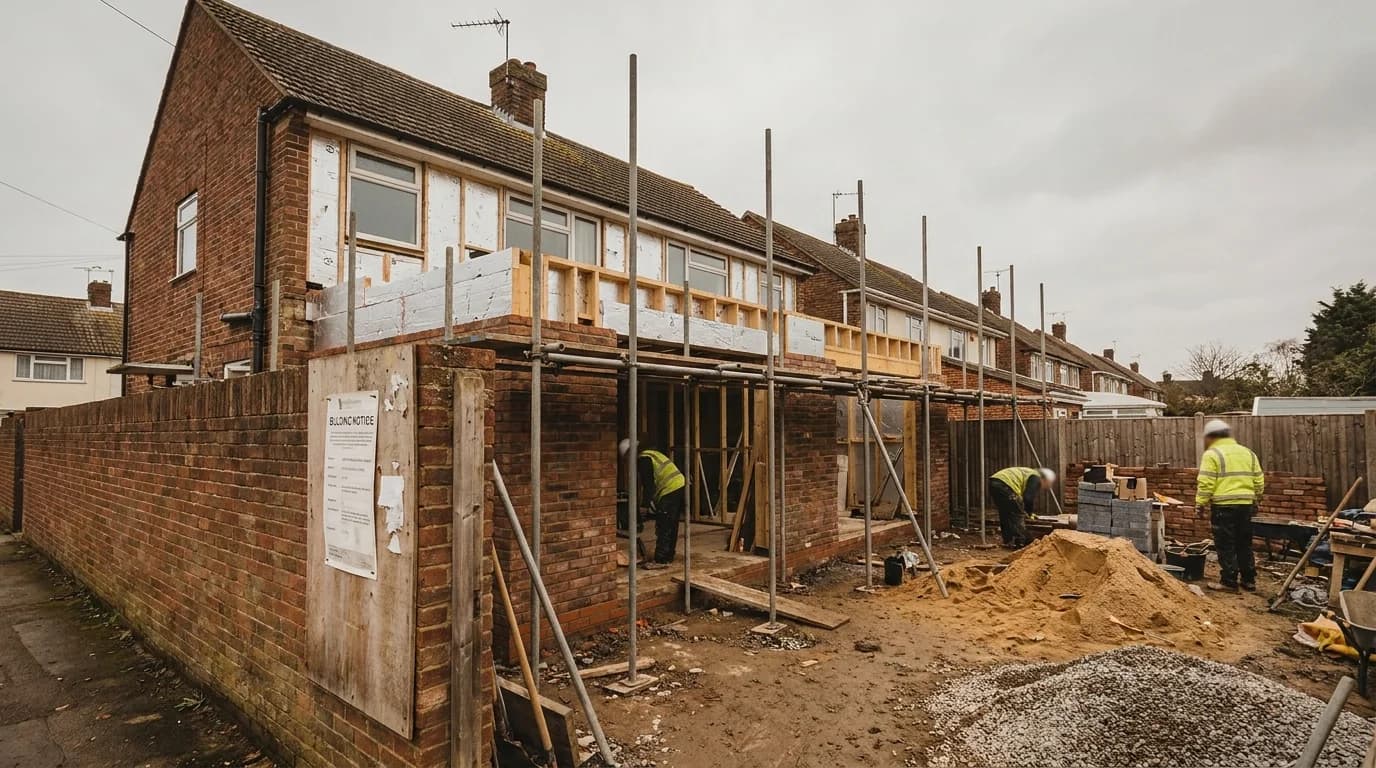
Party wall agreements explained for homeowners
If your project affects a shared wall or excavates near a neighbour's foundations, the Party Wall etc. Act 1996 may require you to serve formal notice before work starts.
- Category
- Planning & regs
- Author
- Star Hawk Builders Merchant
- Date
- 19 June 2025
- Read time
- 7 min
Planning & regs · Star Hawk Builders Merchant
If your project affects a shared wall or excavates near a neighbour's foundations, the Party Wall etc. Act 1996 may require you to serve formal notice before work starts.
7 min read · Published 19 June 2025
If you are planning an extension, loft conversion or any work near a shared boundary, one question often catches homeowners by surprise: do I need a party wall agreement? The answer is not always obvious, but getting it wrong can stop a project in its tracks.
This guide explains the Party Wall etc. Act 1996 in plain English. It covers when the Act applies, how to serve notice, what happens if a neighbour dissents and how much the process is likely to cost. For official guidance, read the GOV.UK party wall explanatory booklet.
What is the Party Wall etc. Act 1996?
The Party Wall etc. Act 1996 is a piece of law that gives rights and protections to owners of buildings that share a wall or boundary with a neighbour. Despite the name, it is not limited to walls. It also covers excavations near neighbouring buildings and work to boundary structures such as garden walls and fences.
The Act exists to make sure building work is carried out safely and without unnecessary damage to an adjoining owner's property. It also sets out a clear process for resolving disputes if neighbours cannot agree.
The Act applies in England and Wales. Separate rules apply in Scotland and Northern Ireland, so always check the local process if your property is outside England and Wales.
When do you need a party wall agreement?
You need a party wall agreement, or at least to serve a formal notice, when your work falls into one of these categories:
- Work on an existing party wall. This includes cutting into it, raising it, thickening it, demolishing and rebuilding it, or under-pinning it.
- New building astride a boundary line. If a new wall is built so that it crosses the boundary between two properties, the Act applies.
- Excavation near a neighbouring building. You must give notice if you plan to excavate, or construct foundations, within three metres of an adjoining owner's building and deeper than its foundations. There is also a six-metre rule for deeper excavations.
Common examples include rear extensions that use the existing party wall, side returns, basement excavations and loft conversions that require steel beams to be inserted into a party wall.
The fact that your project does not need planning permission does not mean you can skip party wall procedures. Many homeowners are caught out because permitted development rights and party wall rights are completely separate. You can read more about the difference in our post on planning permission vs permitted development.
The three types of party wall notice
There are three formal notices under the Act. Each one covers a different type of work.
Party Structure Notice
This is used for work directly affecting a party wall or party structure. Examples include inserting beams, raising the height of the wall, or cutting in for a damp-proof course. You must give at least two months' notice before the work begins.
Notice of Adjacent Excavation
This is used when you plan to excavate or construct foundations within three metres, and deeper than the foundations of an adjoining building. You must give at least one month's notice.
Line of Junction Notice
This is used when you plan to build a new wall up to or astride the boundary line. You must give at least one month's notice.
A single project can require more than one type of notice. For example, a side-return extension may need a Party Structure Notice for the shared wall and an Adjacent Excavation Notice for the new foundations.
How to serve notice
Notice must be served in writing. The simplest way is to use a standard party wall notice form. Many surveyors and the Planning Portal provide templates.
Your notice should include:
- Your name and address.
- The address of the building where work will take place.
- A clear description of the proposed work.
- The date you intend to start.
- A statement that the notice is served under the Party Wall etc. Act 1996.
You should also include drawings showing the work, especially if excavations or structural alterations are involved.
The notice should be served on the adjoining owner at least two months before work on a party wall, or one month for excavation or line of junction work. If you are serving notice on a leaseholder or a company, check the correct legal name and address.
Consent, dissent and the 14-day rule
Once notice is served, the adjoining owner has 14 days to respond. They can:
- Consent in writing. Work can proceed as described, but you should still carry it out carefully and repair any damage.
- Dissent. This does not block the work, but it triggers the appointment of surveyors to agree a party wall award.
- Fail to respond. If no response is received within 14 days, the Act treats this as a dissent.
A dissent is not a personal rejection. It simply means the two parties need a formal framework for managing the work and protecting both properties.
What is a party wall award?
A party wall award is a legally binding document prepared by one or more surveyors. It sets out:
- The work that will be carried out.
- The timescales and working hours.
- Access arrangements.
- Any protective measures, such as boarding up windows or monitoring cracks.
- Who pays for the work and the surveyors' fees.
- A schedule of condition for the adjoining property, recording its state before work begins.
The schedule of condition is particularly important. It protects both parties by creating a record of any pre-existing cracks, damp patches or defects. If damage occurs during the work, it is much easier to decide who is responsible.
Who pays the surveyor's fees?
In almost all cases, the building owner who is carrying out the work pays the reasonable fees of all appointed surveyors. The surveyors decide what is reasonable if the parties cannot agree.
This is one reason why it pays to maintain good relations with your neighbour. If you both agree to use a single agreed surveyor, you may save money compared with each party appointing their own.
How long does the process take?
You should factor party wall procedures into your project timeline from the beginning. A typical timeline looks like this:
- Serve notice at least two months before work starts.
- Wait 14 days for a response.
- If there is dissent, appoint surveyors and negotiate the award. This can take two to six weeks, or longer if there are complications.
- Allow time for a schedule of condition survey before any work begins.
For a complex project, start the party wall process as soon as your drawings are ready. Delays here can delay your whole build, especially if you are trying to hit a summer completion date. Our guide on how to handle building delays explains how to manage these knock-on effects.
Common mistakes homeowners make
- Assuming permitted development covers everything. Permitted development rules only deal with planning. Party wall procedures are separate and mandatory where they apply.
- Relying on a verbal agreement with the neighbour. Friendly neighbours can become less friendly when dust, vibration and boundary disputes arise. Written notice and a proper award protect everyone.
- Delaying notice until the builder is on site. Surveyors need time to inspect, draft an award and produce a schedule of condition. Last-minute notice almost always causes delay.
- Using the wrong notice. Serving the wrong type of notice is invalid and means starting again. Take advice from a party wall surveyor if you are unsure.
- Ignoring excavation rules. Even a modest rear extension can require excavation notices if the new foundations are deeper than the neighbour's.
Party walls and building regulations
Party wall work almost always overlaps with building regulations. Any structural alteration, steel beam insertion or foundation work will need building control approval. You can read our building regulations checklist for a step-by-step guide.
Your builder will also need the right materials at the right time. If you are planning an extension in the South East, request a quote from Star Hawk Builders Merchant or find your nearest branch.
Final thoughts
Party wall agreements are not just legal paperwork. They are a practical framework for protecting your property, your neighbour's property and your project timeline. Serve notice early, use the right type of notice and be prepared to appoint a surveyor if your neighbour dissents.
For more advice on extensions, budgets and finding the right builder, visit our case studies or browse the rest of our advice blog.
Frequently asked questions
Do I need a party wall agreement for a rear extension?
You need one if the work affects a wall shared with a neighbour, crosses a boundary line, or involves excavation within three metres of an adjoining owner's building.
How much notice must I give my neighbour?
For most building work on a party wall, you must give at least two months' written notice. Excavation and boundary wall notices usually require one month.
What happens if my neighbour dissents?
If a neighbour does not consent within 14 days, both parties normally appoint surveyors to agree a party wall award that sets out the work and any protection needed.
Who pays for a party wall surveyor?
The building owner carrying out the work usually pays all reasonable surveyors' fees, although the costs can be negotiated or determined by the surveyors.
Can I start work without a party wall agreement?
Starting work without the correct notice or award can lead to legal action, injunctions and delays. It is not worth the risk.
Need materials for your project?
Send us your material schedule and we'll come back with stock availability, a written quote and a delivery slot, usually within the hour during trade hours.
Related articles
More guides and advice to help your building project run smoothly.
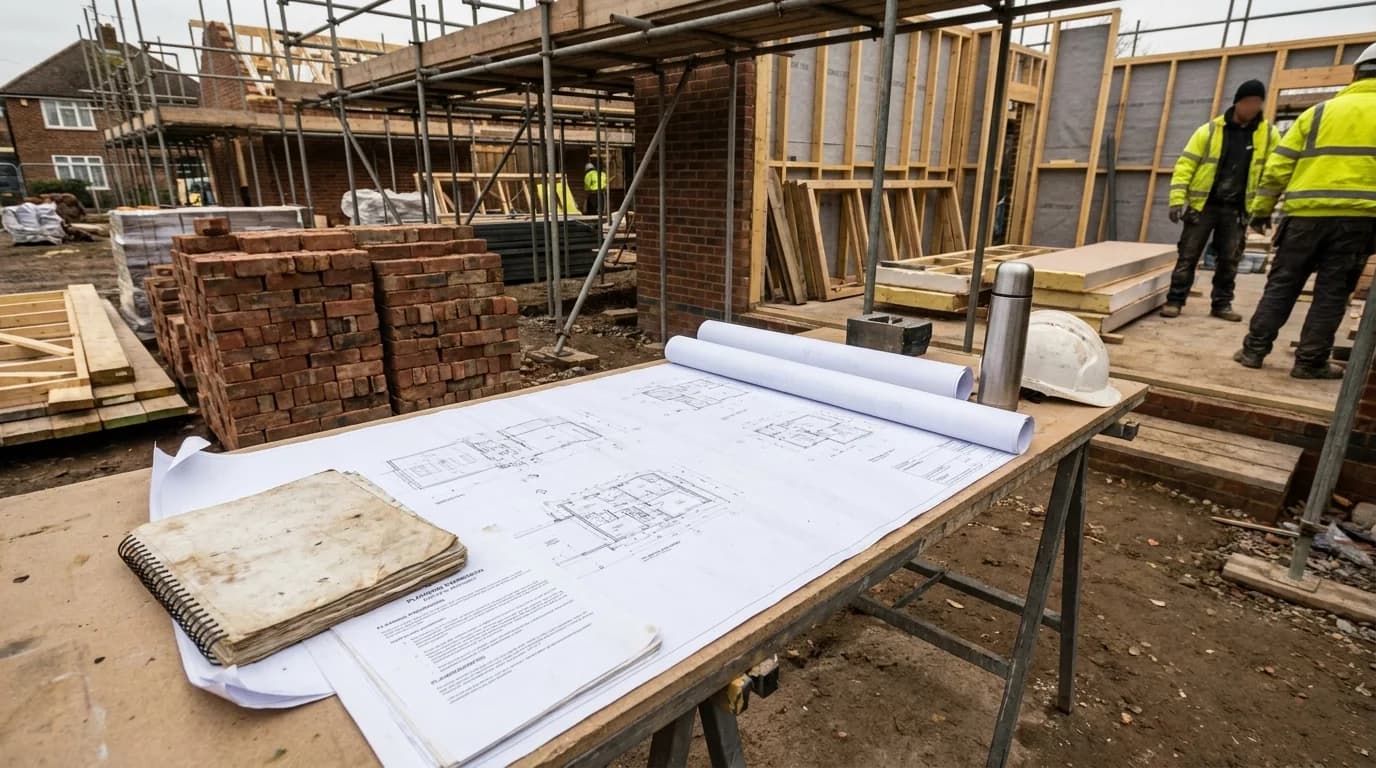
Planning permission vs permitted development: UK guide
Many home extensions can be built without full planning permission. Here is how permitted development works, what the limits are and when you still need approval.
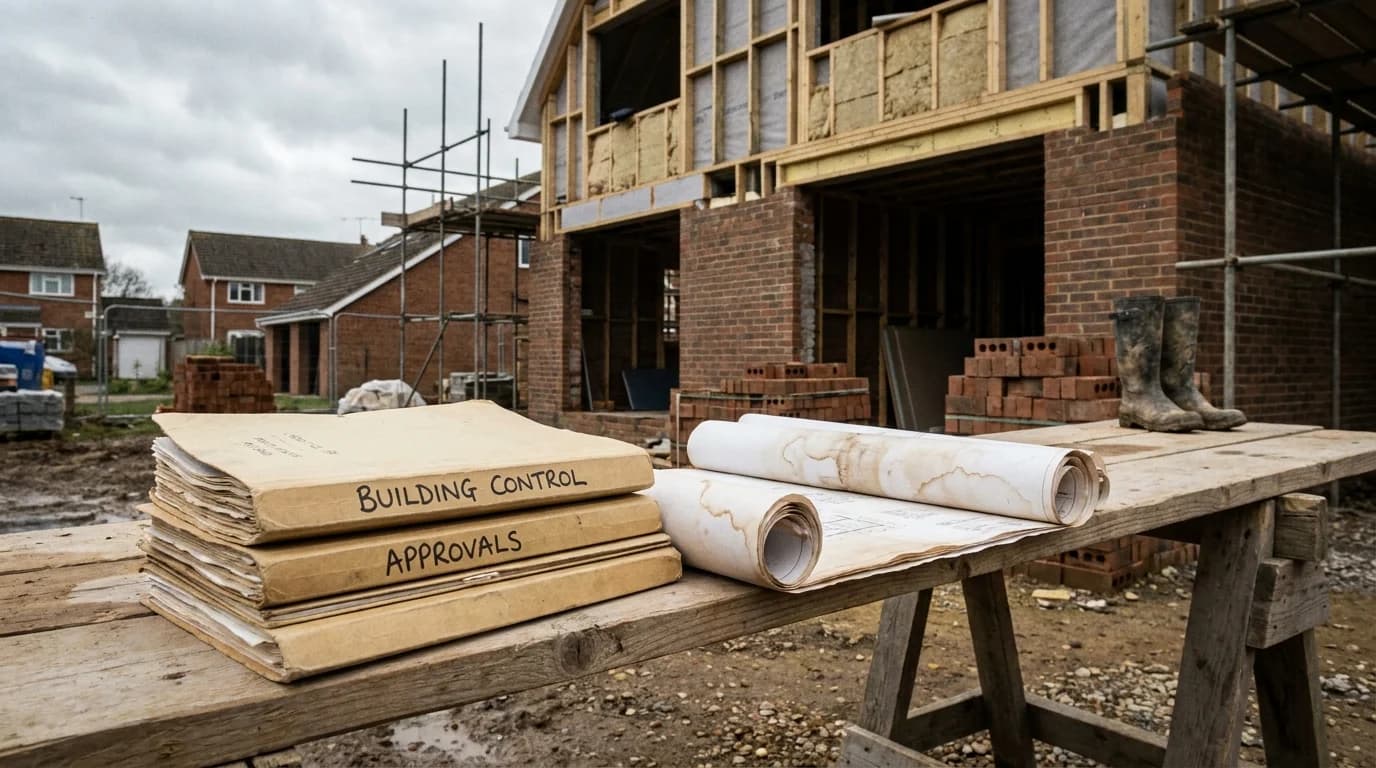
Building regulations: a homeowner checklist
Building regulations are separate from planning permission and apply to most structural work. This checklist explains what homeowners need to know before work starts.
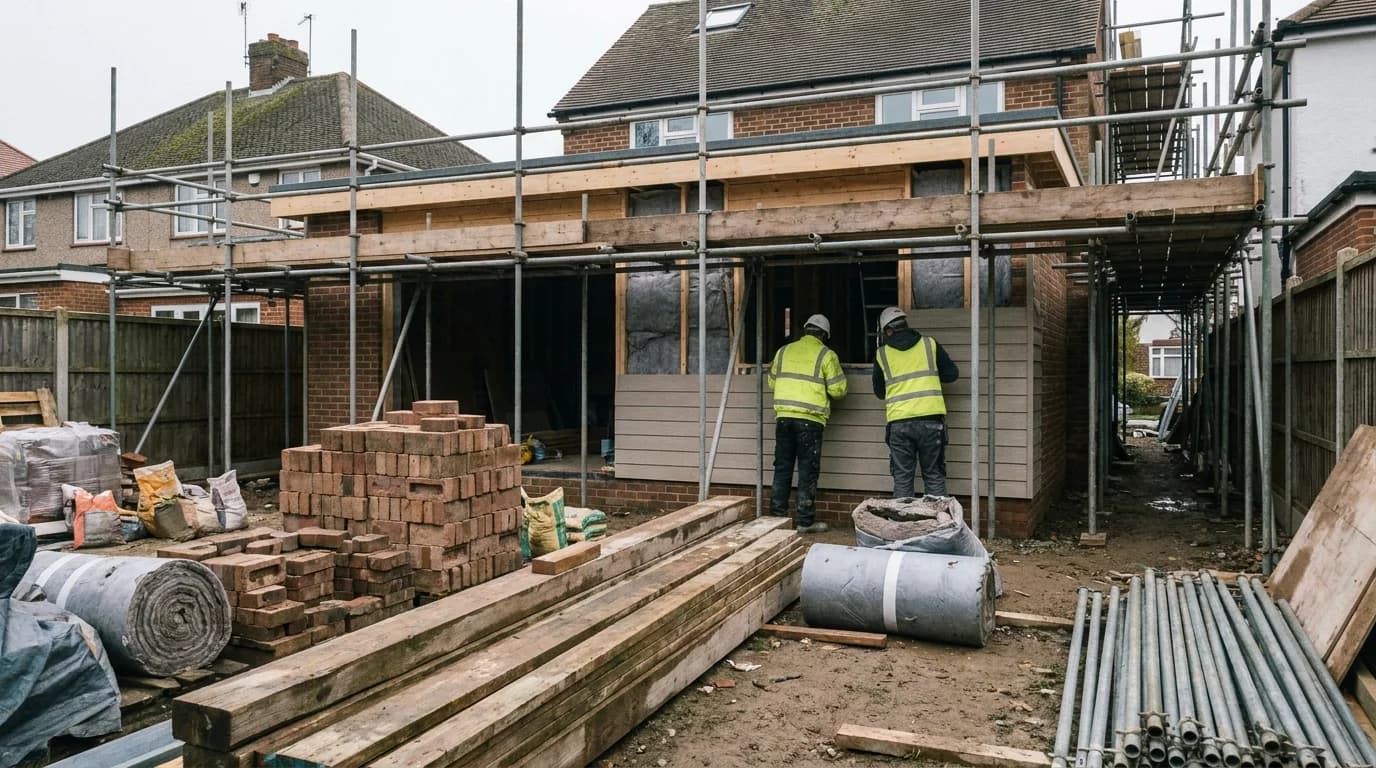
How much does a home extension really cost?
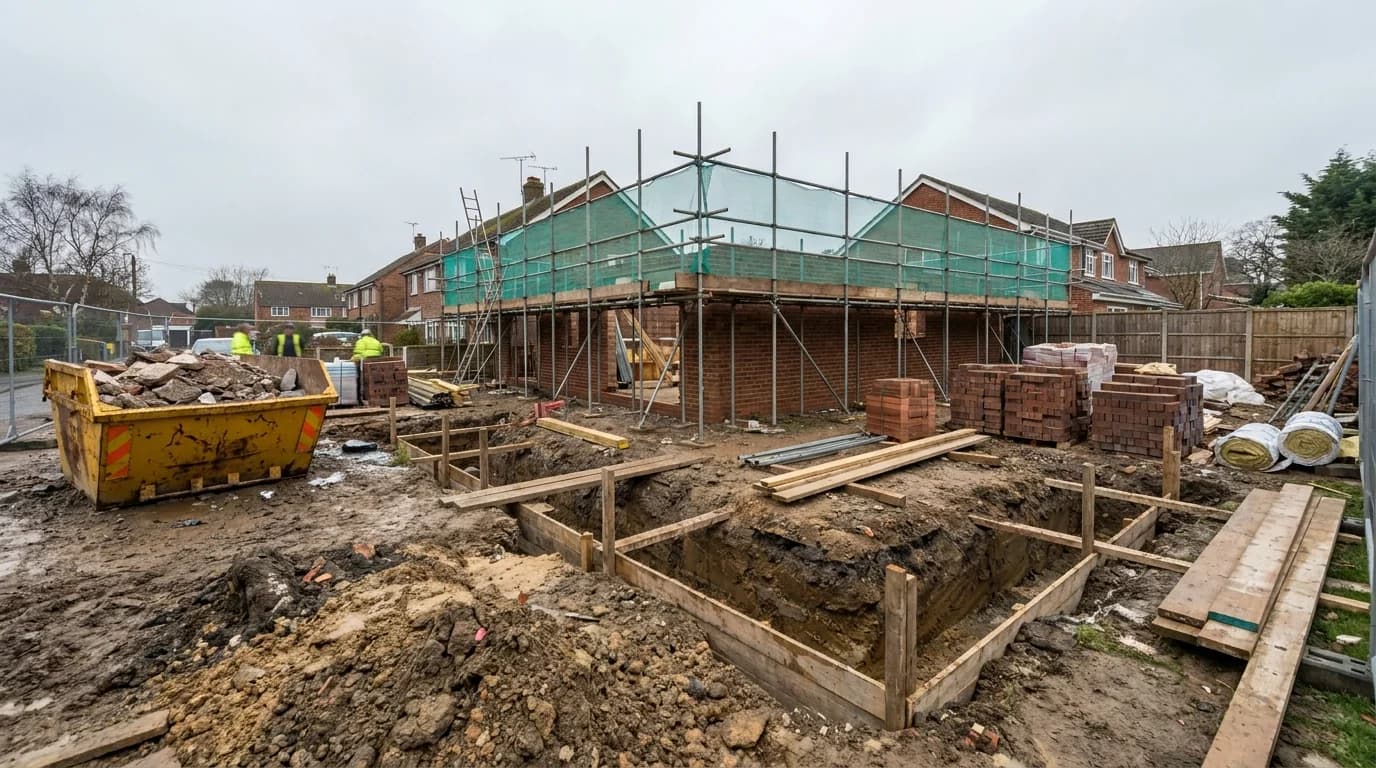
Build costs are only part of the story. This guide breaks down realistic extension prices, hidden fees and how to budget for a project that does not run out of money.
Hidden costs that blow your extension budget
The builder's quote is only part of the cost. Planning fees, building regulations, skips, scaffolding and contingencies can add thousands. Here is what to budget for.
15 questions to ask before hiring a builder
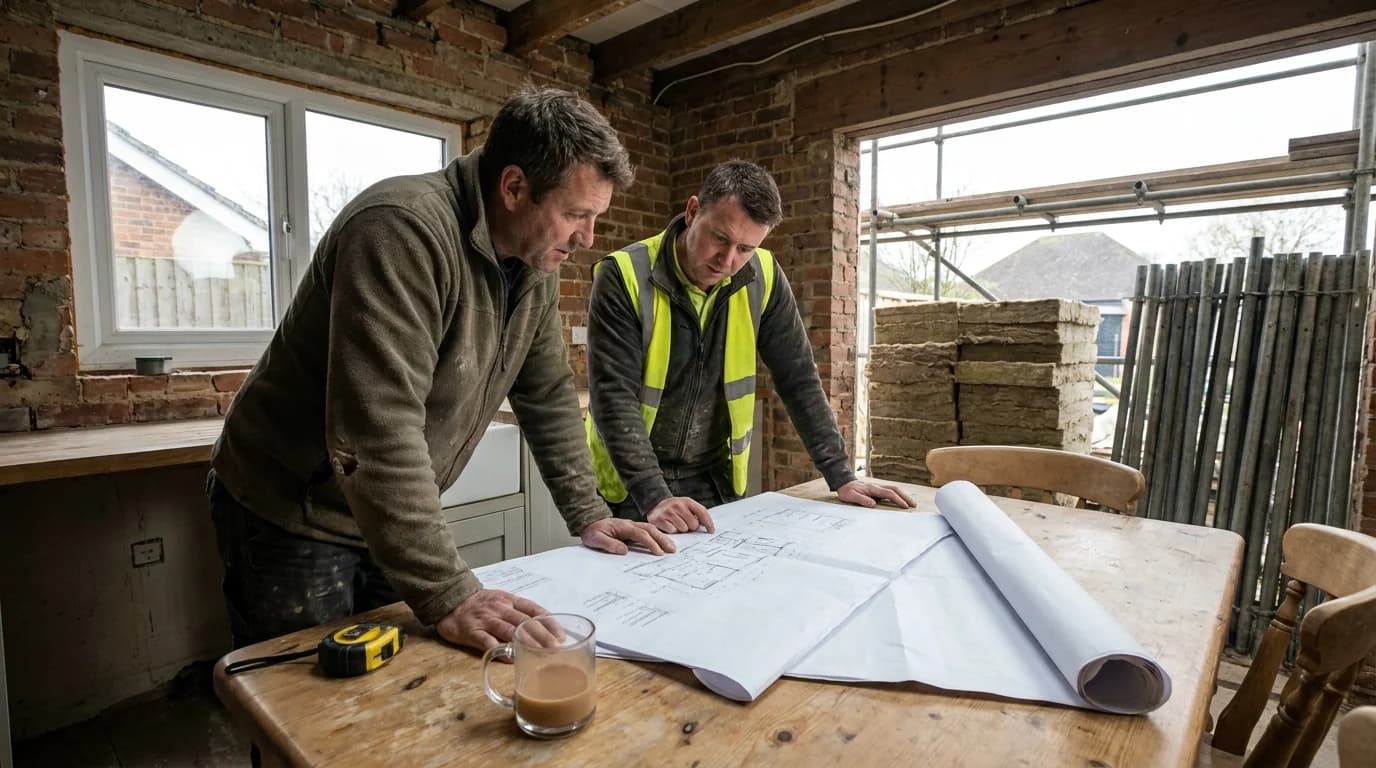
The right questions reveal whether a builder is organised, honest and a good fit for your project. Here are fifteen to ask before you sign on the dotted line.

How to handle building delays without losing money
Building delays are common, but they do not have to wreck your budget. A clear contract, good communication and a written record are your best protection.