
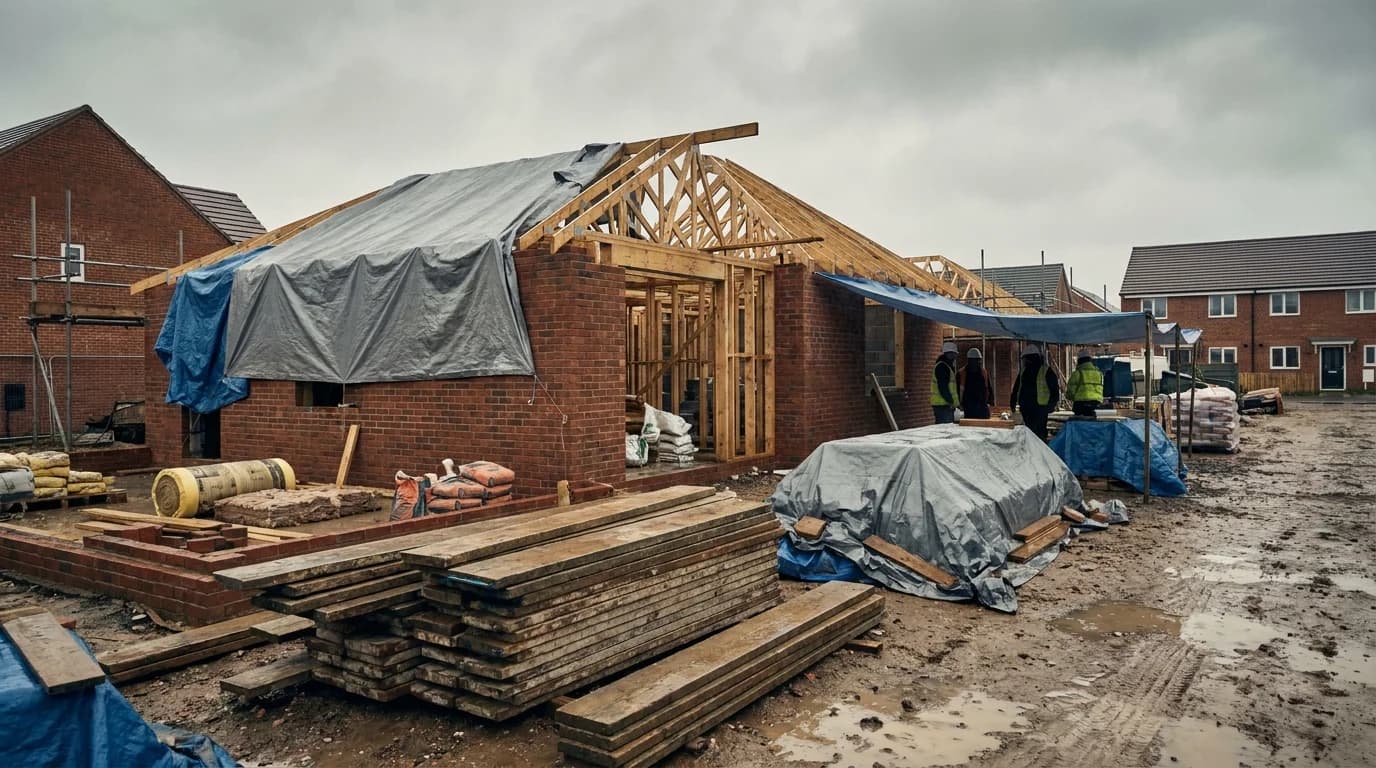
How to handle building delays without losing money
Building delays are common, but they do not have to wreck your budget. A clear contract, good communication and a written record are your best protection.
- Category
- Project planning
- Author
- Star Hawk Builders Merchant
- Date
- 17 July 2025
- Read time
- 6 min
Project planning · Star Hawk Builders Merchant
Building delays are common, but they do not have to wreck your budget. A clear contract, good communication and a written record are your best protection.
6 min read · Published 17 July 2025
Almost every building project takes longer than the homeowner hopes. Weather turns, materials go out of stock, sub-contractors are double-booked and unexpected problems appear once walls are opened up. The question is not whether your project will face delays, but how you handle them without losing money.
This guide sets out a practical approach to managing delays. It covers how to protect yourself in the contract, how to communicate with your builder and what to do if the schedule slips badly.
Why building delays happen
Understanding the cause of a delay matters because it determines who should carry the cost. Common reasons include:
- Weather. Rain, snow, frost and high winds can stop external work. Most contracts treat severe weather as a legitimate reason for an extension of time.
- Material shortages. Lead times for windows, steel beams, roofing tiles and insulation can stretch from days to weeks, especially during busy periods.
- Trade availability. Good plumbers, electricians and plasterers are often booked weeks ahead. If one trade is delayed, the whole chain can slip.
- Design changes. A last-minute change to the layout, finishes or specification usually means rework and waiting for new materials.
- Approvals and inspections. Building control, party wall agreements and planning conditions can all cause hold-ups if they are not arranged early.
- Unforeseen site conditions. Bad ground, hidden drains, asbestos or rotten timbers may only appear once work starts.
Some of these are within the builder's control. Others are not. A good contract draws a clear line between the two.
Build delay protection into your contract
The most important step happens before work starts. Your building contract should include clear terms about time, milestones and what happens if they are missed.
Agree a realistic programme
A programme is more useful than a single completion date. It should set out:
- Start date.
- Key stages, such as foundations, steelwork, first fix and second fix.
- Completion date.
- Any items that depend on you, such as choosing finishes or granting access.
Make sure the programme is attached to the contract and signed by both parties. You can read more about contract essentials in our guide on what should be in a building contract.
Include an extension of time clause
An extension of time clause allows the builder to claim extra time for delays caused by events outside their control, such as extreme weather or a planning condition. This is fair, but the builder should give written notice and evidence.
Without this clause, the builder may technically be in breach for any delay, even reasonable ones. That can sour the relationship and make disputes harder to resolve.
Consider liquidated damages
Liquidated damages are a pre-agreed sum that the builder pays for each week or day the project is late through their own fault. They are not a penalty; they must reflect a genuine estimate of the loss you will suffer, such as rent, storage or alternative accommodation.
Many domestic contracts do not include liquidated damages, but they are worth discussing for larger projects. They focus the builder's mind on the programme and give you a clear remedy if things slip.
Define payment triggers
Linking payments to completed stages, rather than calendar dates, reduces the risk of paying for work that has not been done. A typical schedule might be:
- Deposit on signing.
- Payment after foundations.
- Payment after structural shell.
- Payment after first fix.
- Final payment on practical completion.
Our guide on when and how to pay your builder explains this in more detail.
Communicate early and in writing
When a delay happens, the worst response is silence. Talk to your builder as soon as you realise the schedule is slipping. Ask for:
- The reason for the delay.
- How long it is likely to last.
- What steps are being taken to recover time.
- Whether any costs will change.
Follow up every conversation with an email confirming what was said. A written record is essential if the dispute escalates.
Keep a site diary
A simple site diary is one of the most powerful tools a homeowner can use. Each week, record:
- Who was on site.
- What work was done.
- What materials were delivered.
- Any missed days and the reason given.
- Photographs of progress and any defects.
If the builder claims a delay was caused by bad weather but your diary shows three dry days with no one on site, you have evidence to challenge it.
Mitigate the cost of delays
Even when a delay is legitimate, you can often reduce the financial impact.
- Reorder trades. If one trade is delayed, ask whether another task can be moved forward rather than stopping work entirely.
- Negotiate storage. If materials arrive early or late, make sure you know where they will be stored and who pays for any damage or additional handling.
- Avoid unnecessary acceleration costs. Paying a premium to rush work at the end is sometimes unavoidable, but do not agree to it until you understand why the delay happened.
- Review your finance. If a delay affects your mortgage offer or bridging finance, speak to your lender early.
For a realistic view of how costs can spiral, read our guide on hidden costs that blow your extension budget.
When and how to withhold payment
Withholding payment is a serious step. If you do it without a valid contractual reason, the builder may walk off site or take legal action against you.
Before withholding any money:
- Check the payment terms in your contract.
- Document the delay and the loss it has caused.
- Give the builder written notice of your intention.
- Seek advice from Citizens Advice or a solicitor.
If the builder has genuinely failed to meet a milestone and the contract links payment to that milestone, you are usually within your rights to withhold that stage payment until the work is complete.
Escalating a serious delay
If delays drag on and communication breaks down, you may need to escalate. Options include:
- Mediation. A neutral mediator can help both sides reach agreement without going to court.
- Trading Standards. If you believe the builder has misled you or breached consumer protection law, contact Trading Standards.
- Small claims court. For smaller sums, you may be able to make a money claim online.
- Ending the contract. Termination should be a last resort. Take legal advice and make sure the builder is in material breach before you do it.
For advice on scams and fraud, report concerns to Action Fraud.
Knowing when to walk away
Some delays are a symptom of a deeper problem. Consider ending the relationship if:
- The builder repeatedly misses deadlines without good reason.
- Site attendance becomes sporadic or stops altogether.
- Communication has broken down.
- You discover the builder is uninsured or unqualified.
- Payment is being demanded for incomplete work.
Walking away is expensive and stressful, but continuing with a failing builder can cost far more. Our guide on how to spot a cowboy builder explains the warning signs to watch for.
Planning for the unexpected
The best way to handle delays is to expect them. Add contingency time to your programme and contingency money to your budget. A buffer of 10–15% is sensible for most domestic projects.
You should also order long-lead items early. Windows, kitchens, bathrooms and specialist materials can have lead times of eight to twelve weeks. Ordering them before work starts prevents the site from sitting idle while you wait.
If you are sourcing materials in the South East, request a quote from Star Hawk Builders Merchant or visit your nearest branch for realistic lead times and stock availability.
Final thoughts
Delays are part of construction. With the right contract, clear communication and a written record, you can minimise their cost and keep your project moving. Address problems early, document everything and do not be afraid to seek professional advice if a delay becomes a dispute.
For more project planning advice, browse our case studies to see how other homeowners managed their builds.
Frequently asked questions
Can I claim money back for building delays?
Only if your contract includes provisions for liquidated damages or delay costs. Without written terms, compensation is difficult to enforce.
What are reasonable building delay excuses?
Bad weather, material shortages, waiting for inspections and unforeseen site conditions are common. Disputes usually arise over whether the delay was within the builder's control.
Should I withhold payment if my builder is late?
Withholding payment without cause can breach your contract. Follow the agreed payment schedule and document the delay before discussing any deductions.
How do I prove a delay was the builder's fault?
Keep a written site diary, photographs, emails and delivery notes. Compare actual progress against the agreed programme.
When should I walk away from a delayed project?
Consider ending the contract only after repeated missed deadlines, poor communication and a clear breach of terms. Take legal advice first.
Need materials for your project?
Send us your material schedule and we'll come back with stock availability, a written quote and a delivery slot, usually within the hour during trade hours.
Related articles
More guides and advice to help your building project run smoothly.
How much does a home extension really cost?
Build costs are only part of the story. This guide breaks down realistic extension prices, hidden fees and how to budget for a project that does not run out of money.
Hidden costs that blow your extension budget
The builder's quote is only part of the cost. Planning fees, building regulations, skips, scaffolding and contingencies can add thousands. Here is what to budget for.
How to prepare your home before builders arrive
Clearing access routes, protecting floors and agreeing working hours before builders arrive can prevent delays, damage and disputes.

When and how to pay your builder
Paying your builder the right way protects your money and keeps the project moving. Here is how to structure deposits, staged payments and final balances.
What should be in a building contract
A written building contract protects both you and your builder. This guide explains the essential clauses every homeowner should look for before signing.
Party wall agreements explained for homeowners
If your project affects a shared wall or excavates near a neighbour's foundations, the Party Wall etc. Act 1996 may require you to serve formal notice before work starts.